
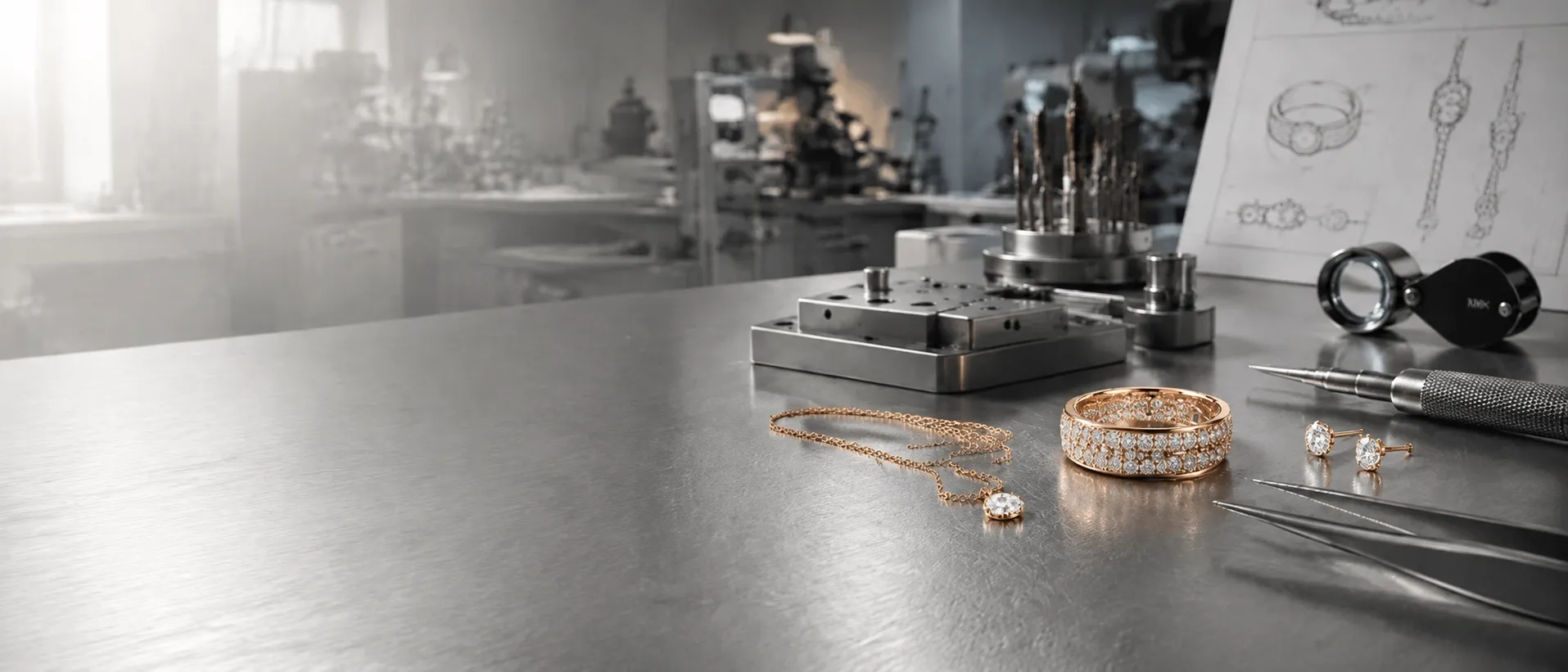
What changes when you manufacture women's jewelry?
The manufacturing is identical; the specification is not. Women's ranges run lighter sections, finer detail, more finish variants and far more stone setting — and the earring category, which barely features in men's ranges, brings the strictest compliance limit in EU jewelry law with it.
What actually changes
Not the alloys, not the machines and not the tolerances. What changes is section thickness, size range and finish preference — and those three move the unit price.
Categories in this segment
Ranked by the share of a typical range. Each links through to the full category page with its sizing, processes and compliance limit.
| Category | What differs in this segment |
|---|---|
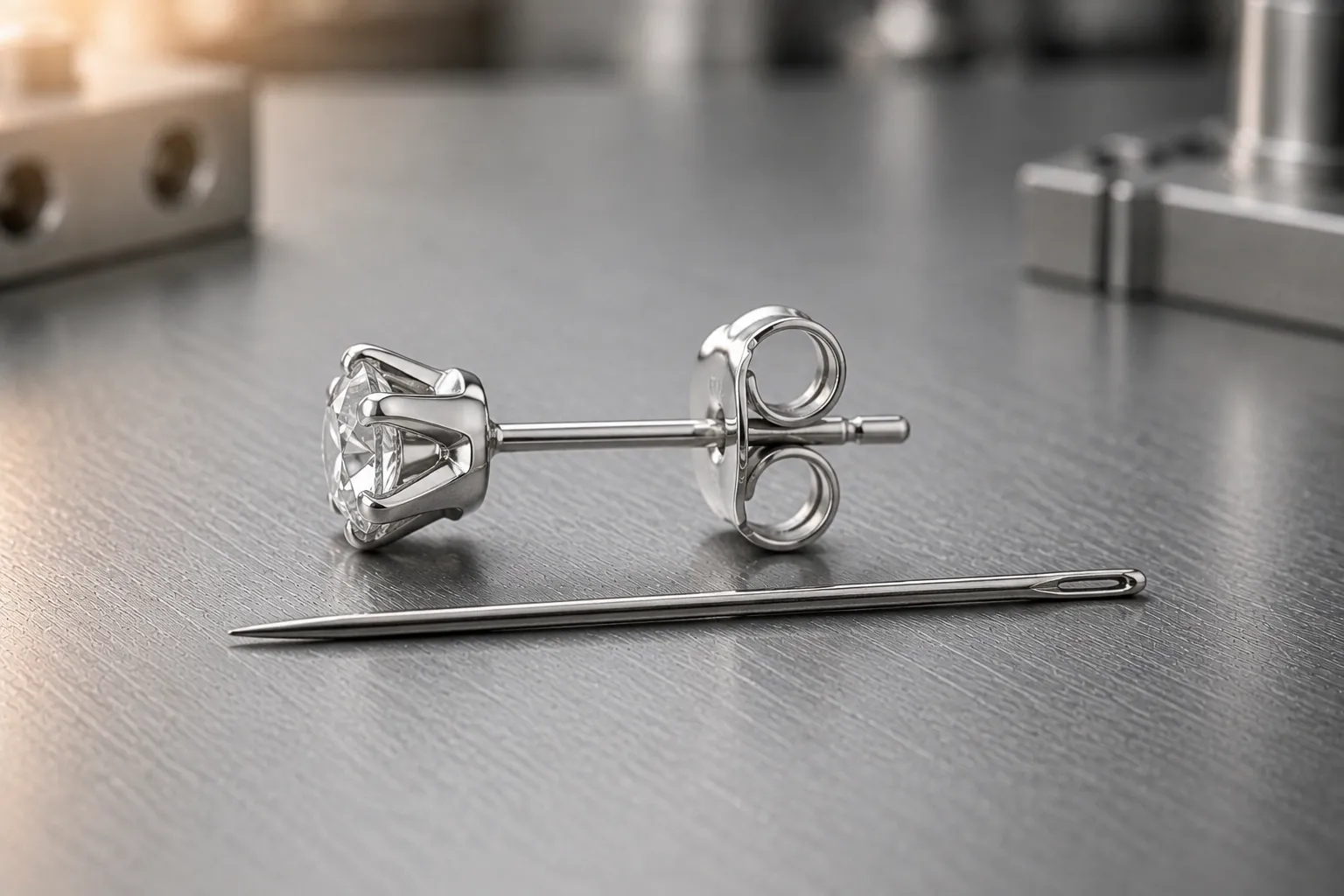
| Earrings | Highest volume category — and the 0.2 µg/cm²/week nickel limit |
| Necklaces & Pendants | Finer chain, layered sets, delicate pendants |
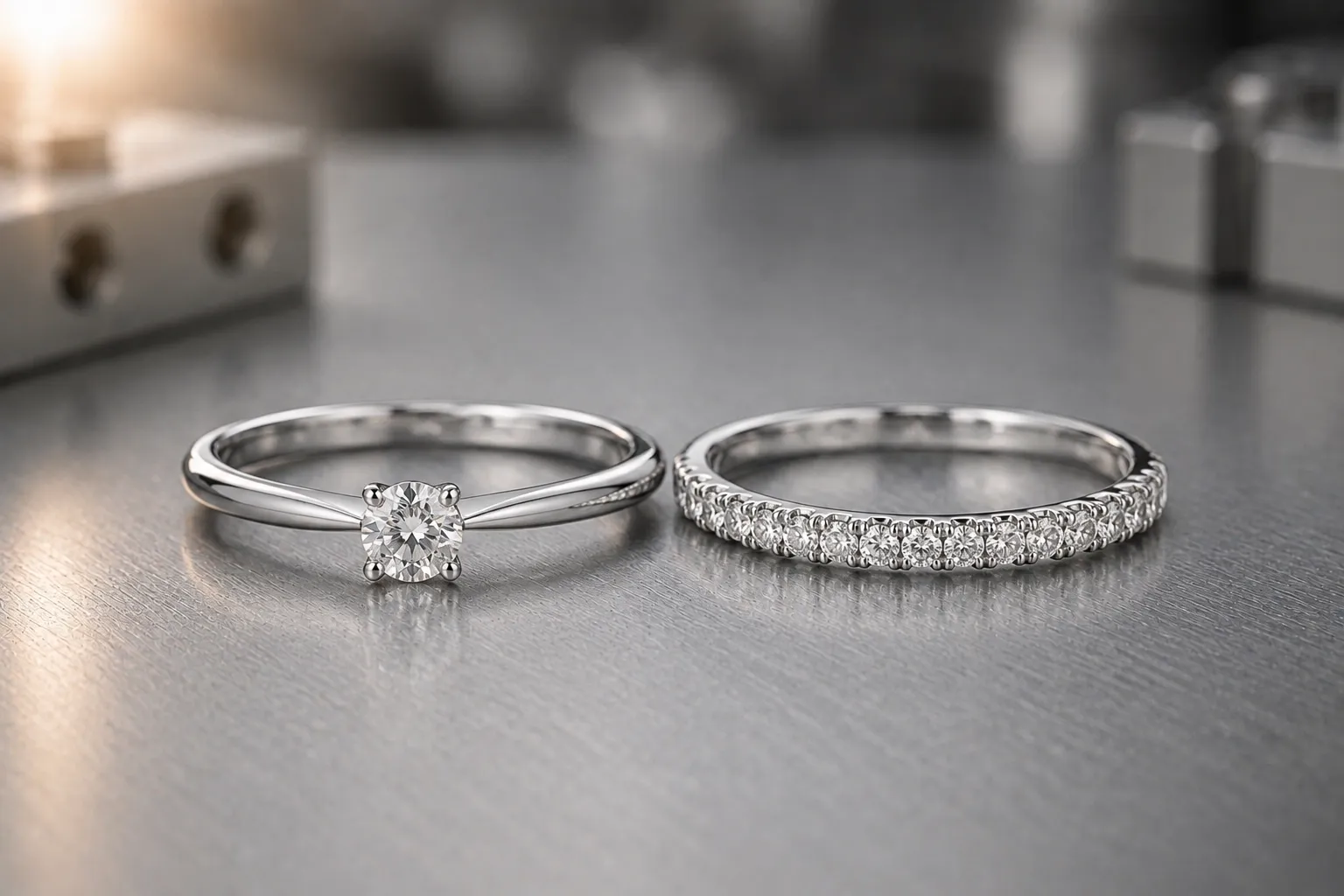
| Rings | Stacking, stone-set, narrower bands |
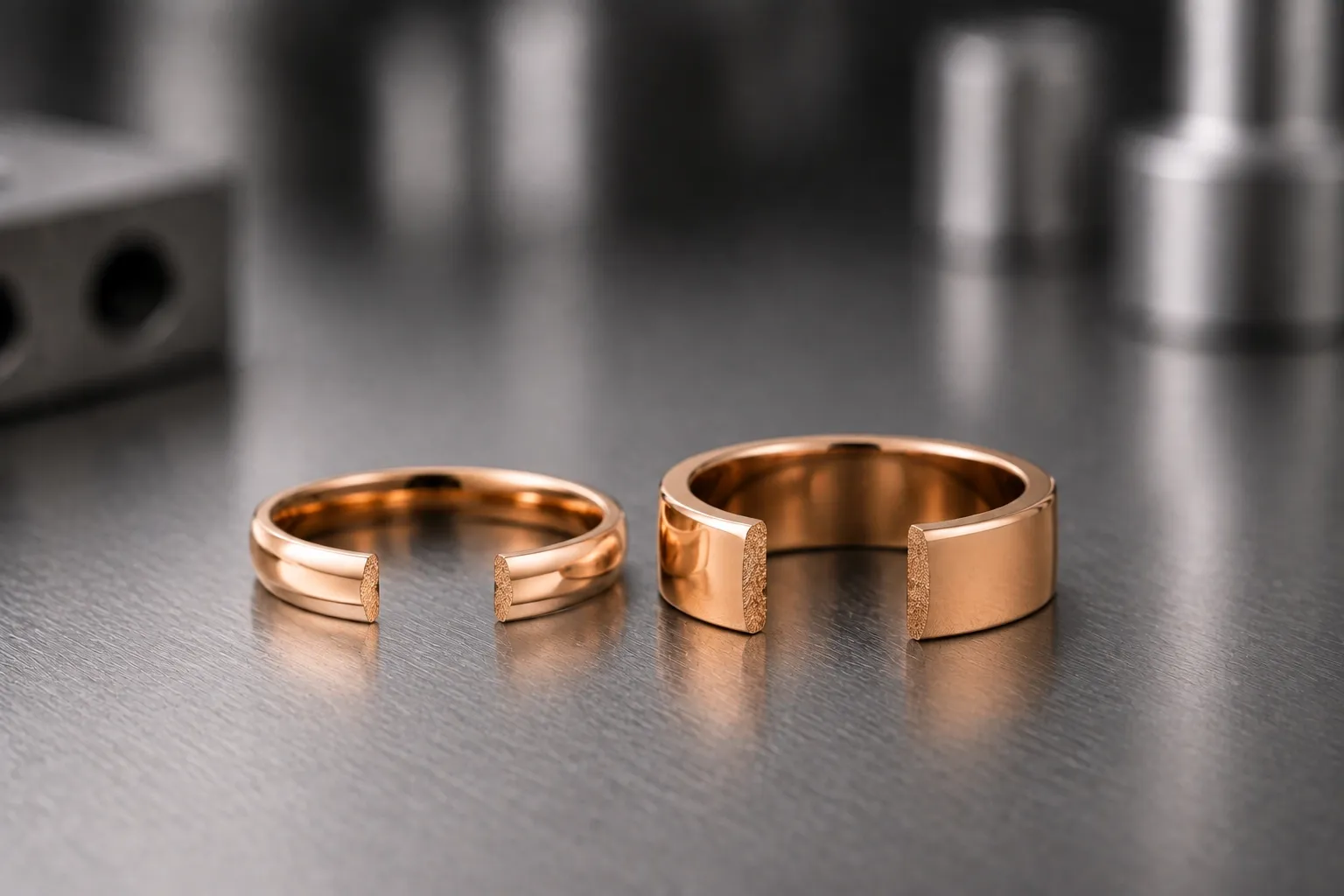
| Bracelets & Bangles | Cuffs and fine chain bracelets |
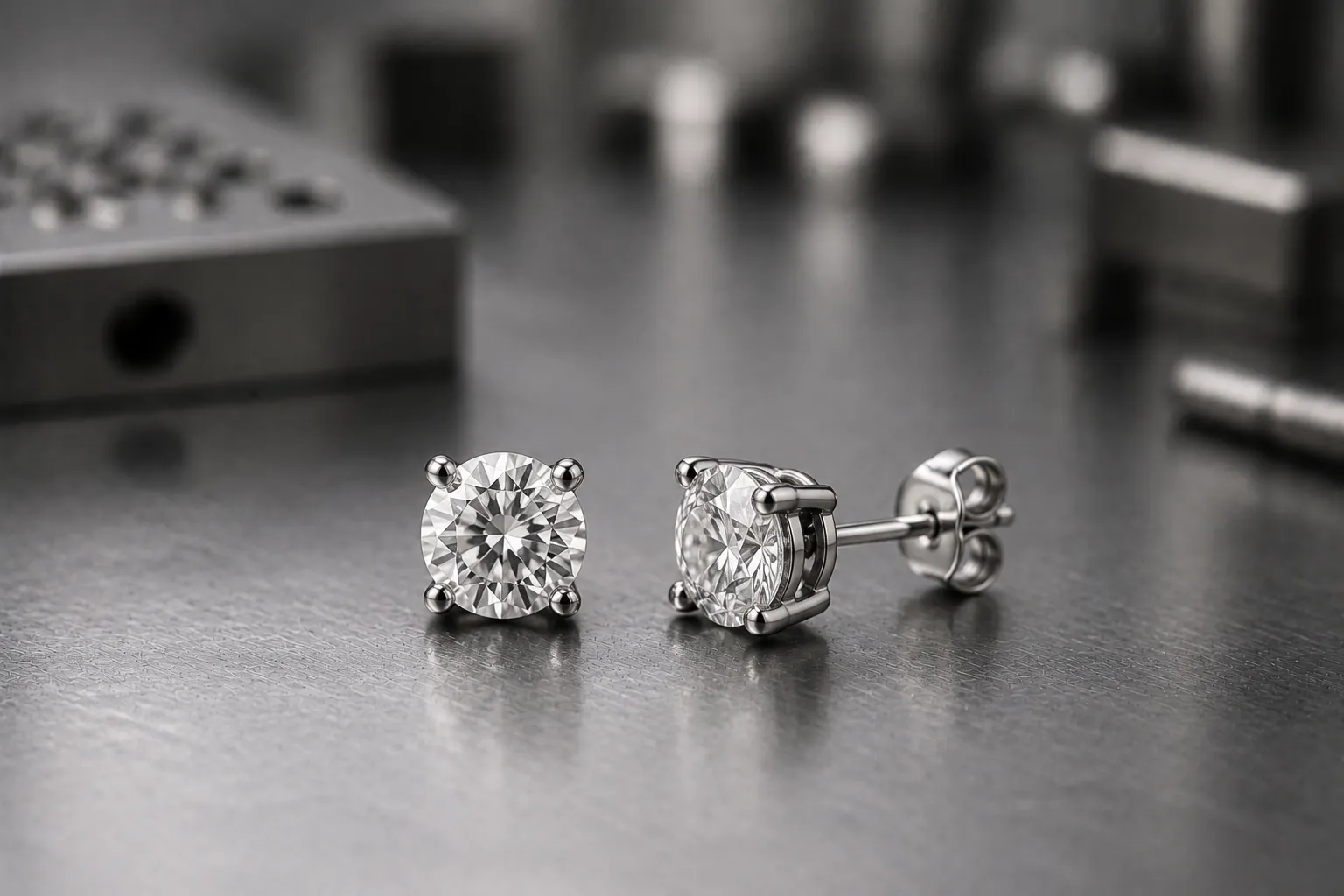
01Stud0.8 mm post 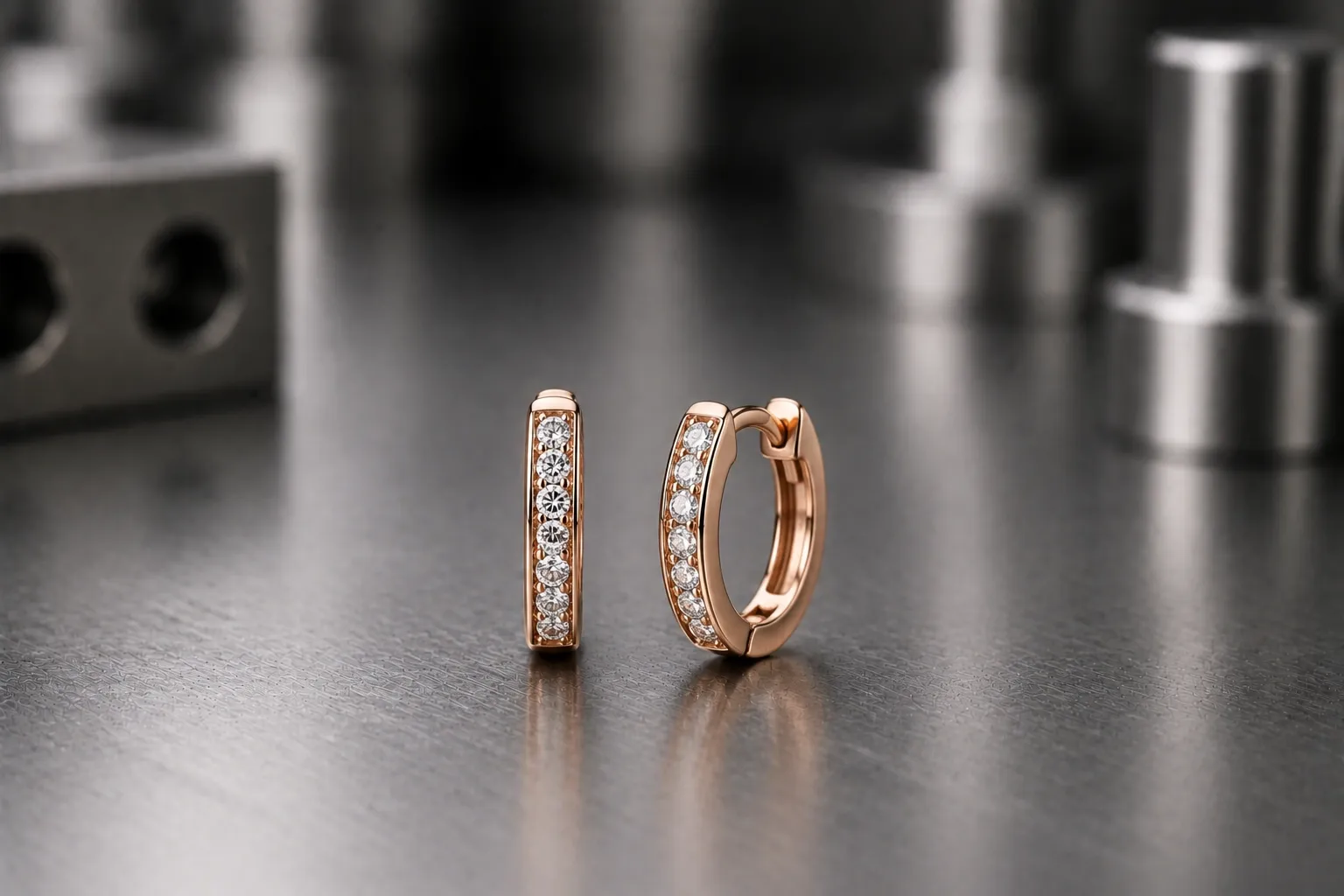
02Huggie8 mm diameter 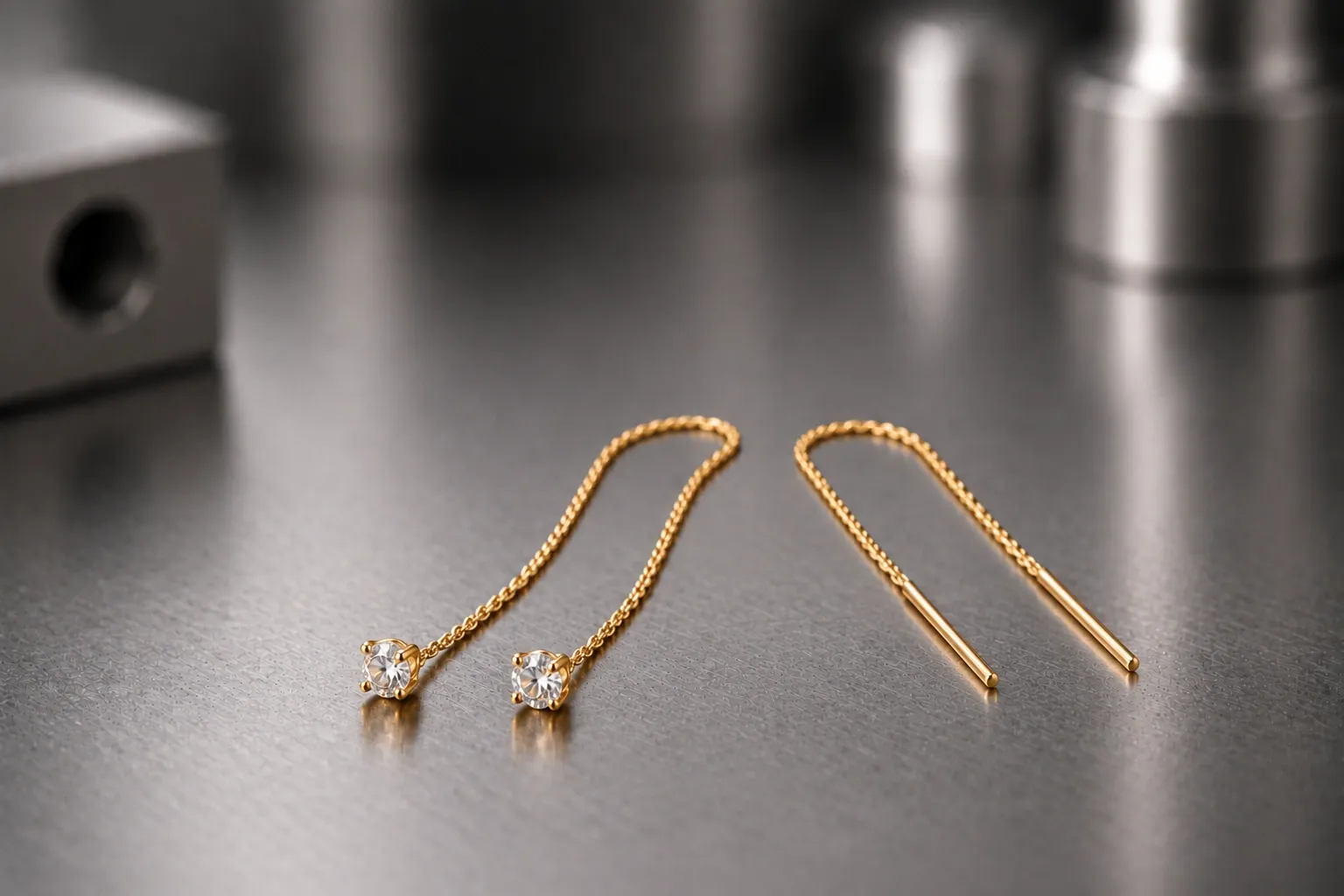
03Threader0.8 mm chain 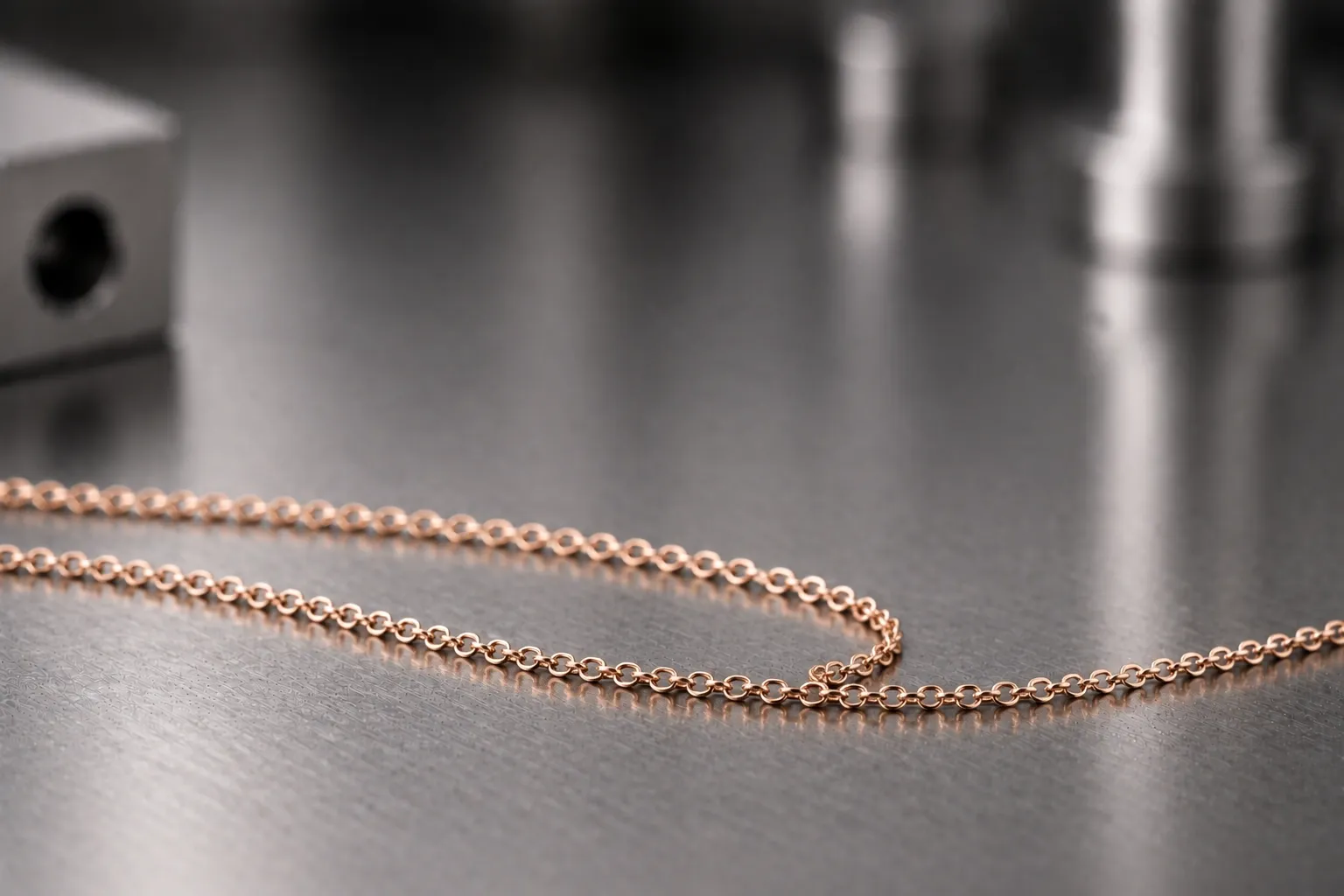
04Cable chain1.5 mm · 45 cm 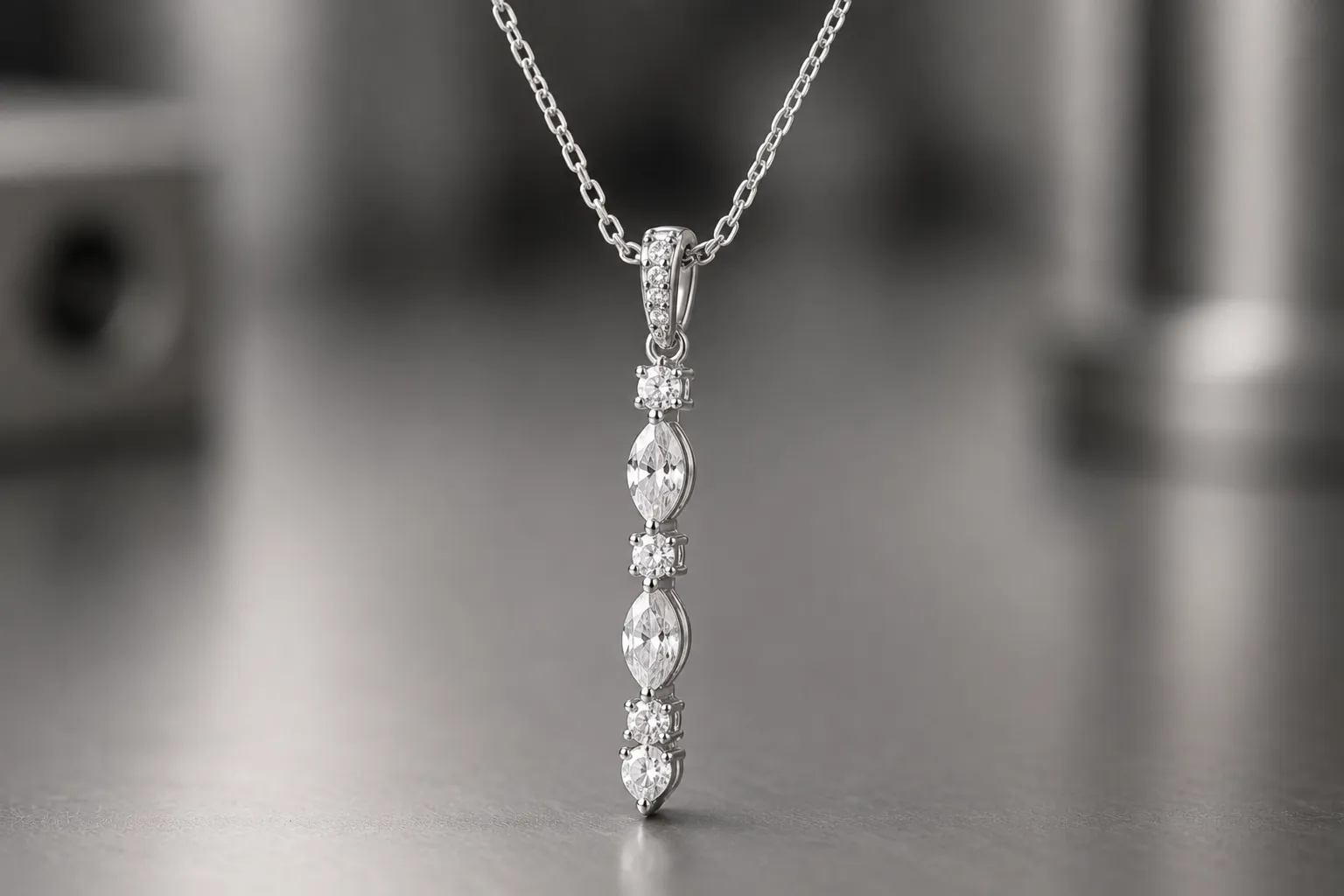
05Cast pendant12 mm · 0.8 mm wall 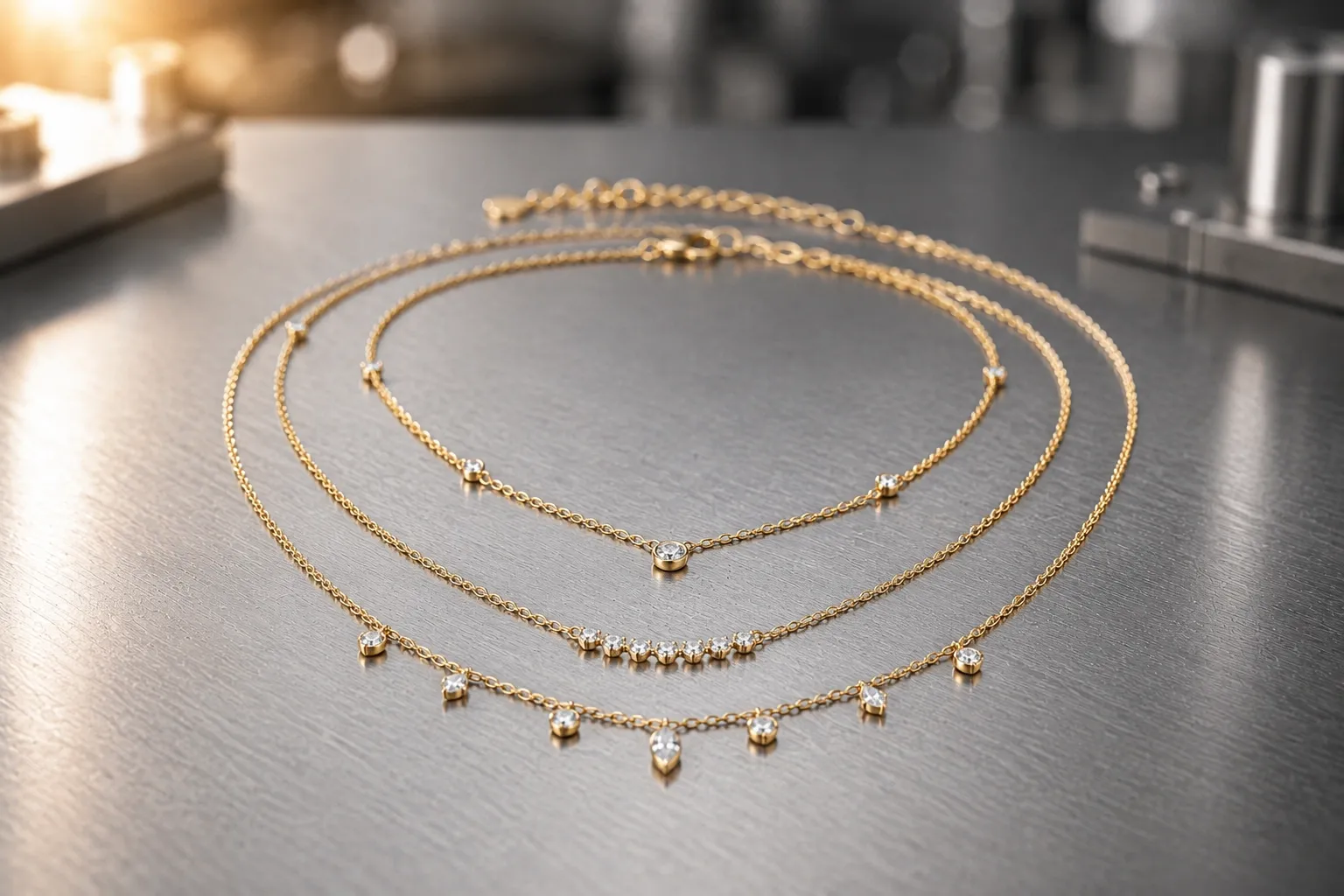
06Layered set40 / 45 / 50 cm 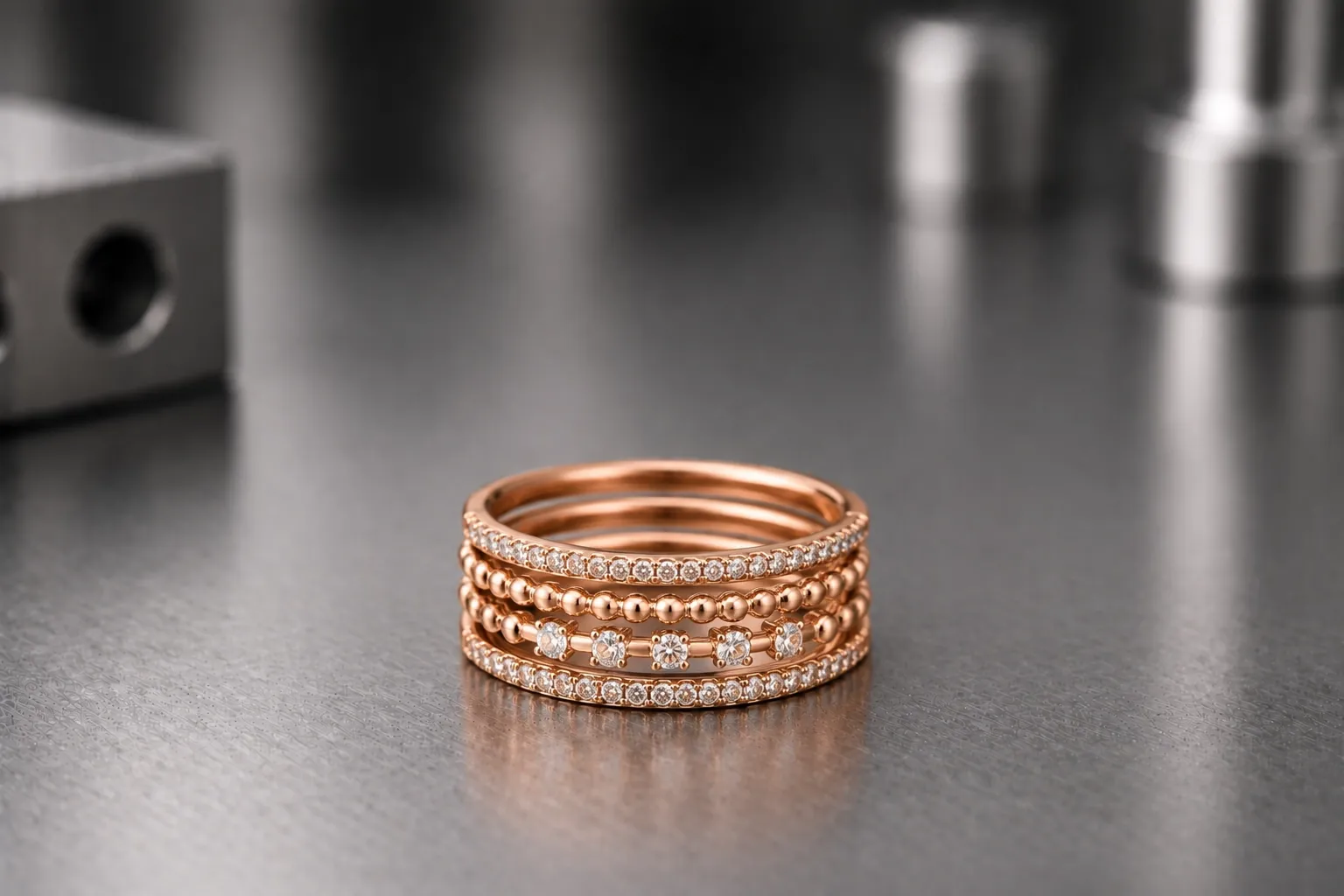
07Stacking rings2 mm wide · US 6 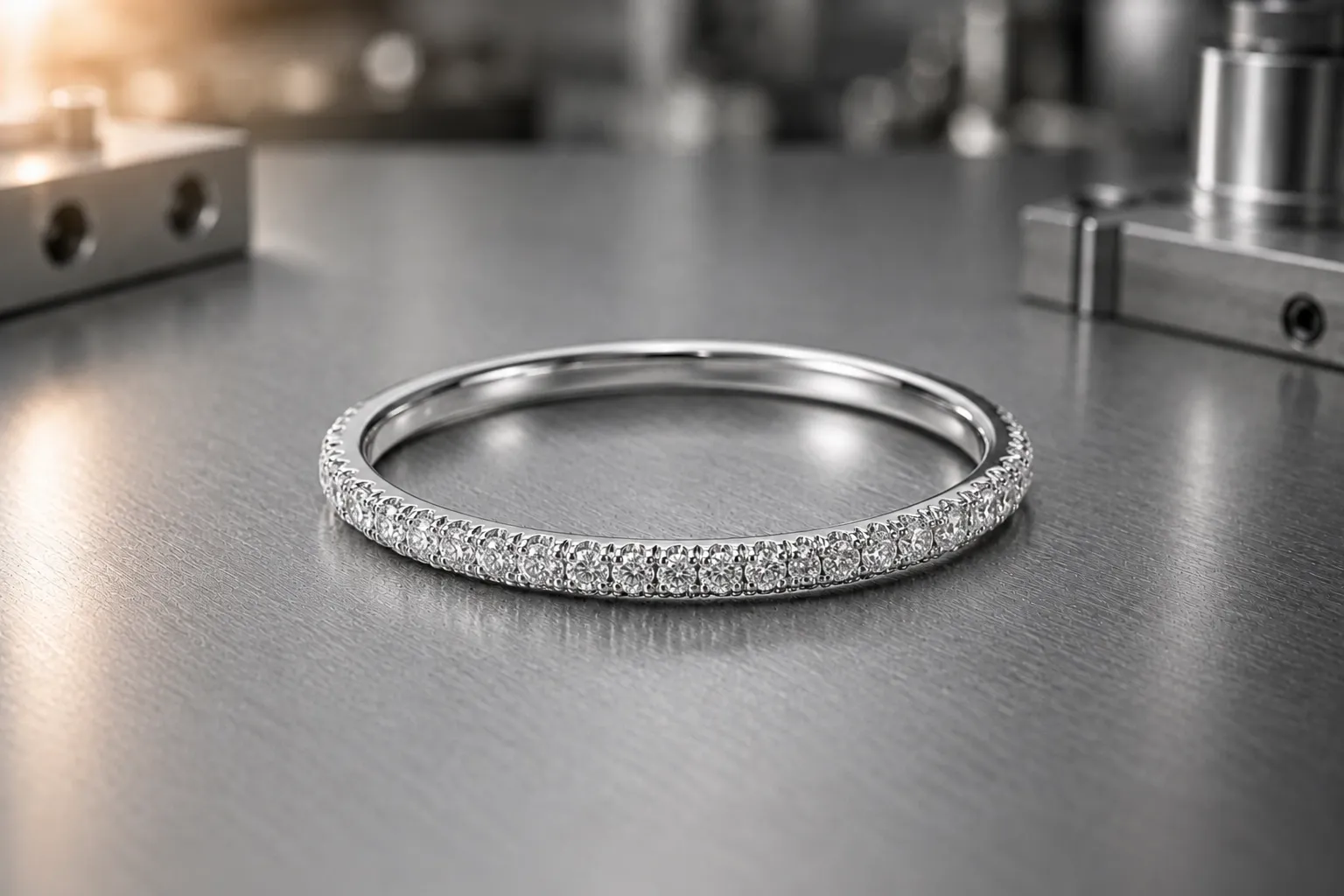
08Pavé ring32 stones set 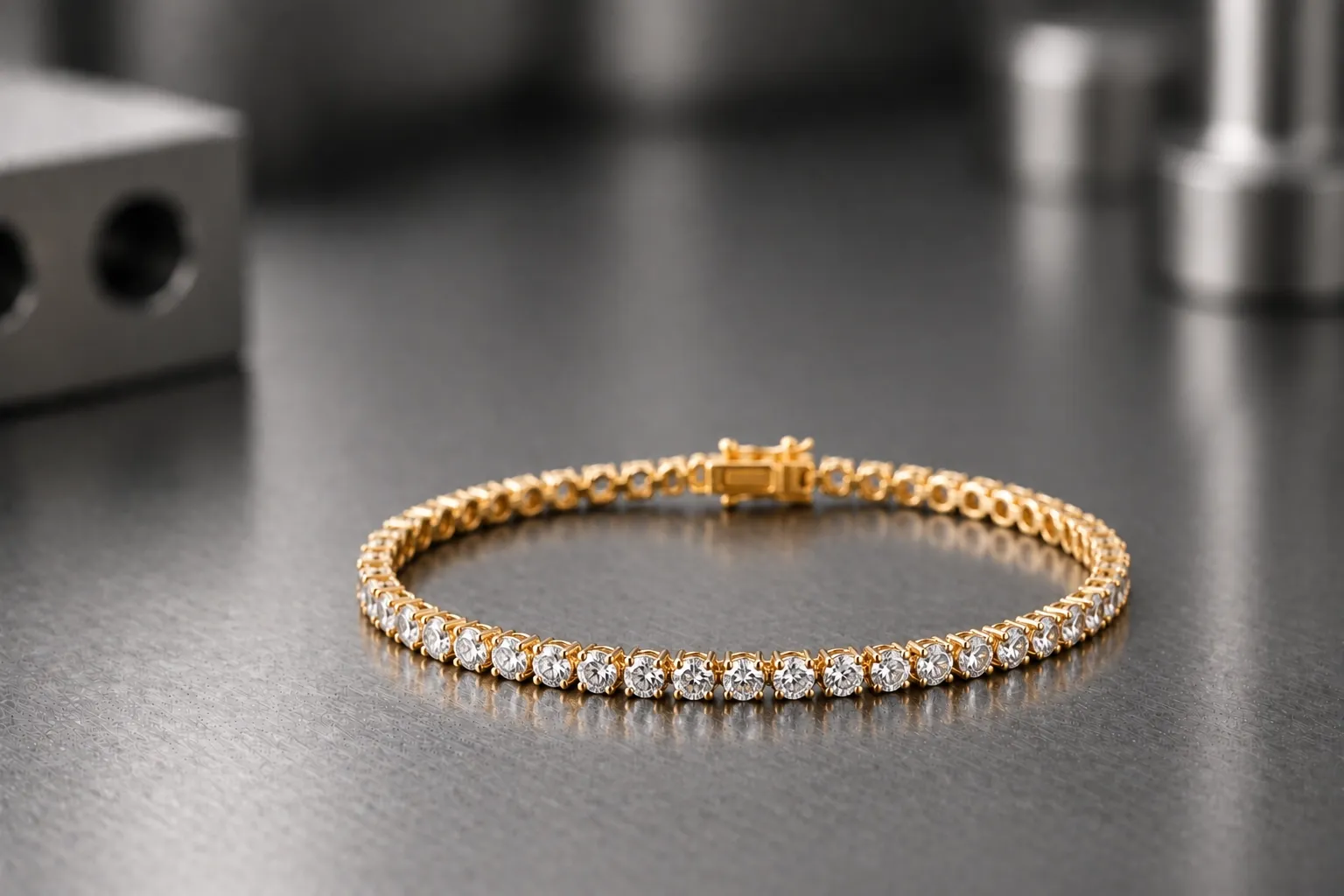
09Tennis bracelet17 cm 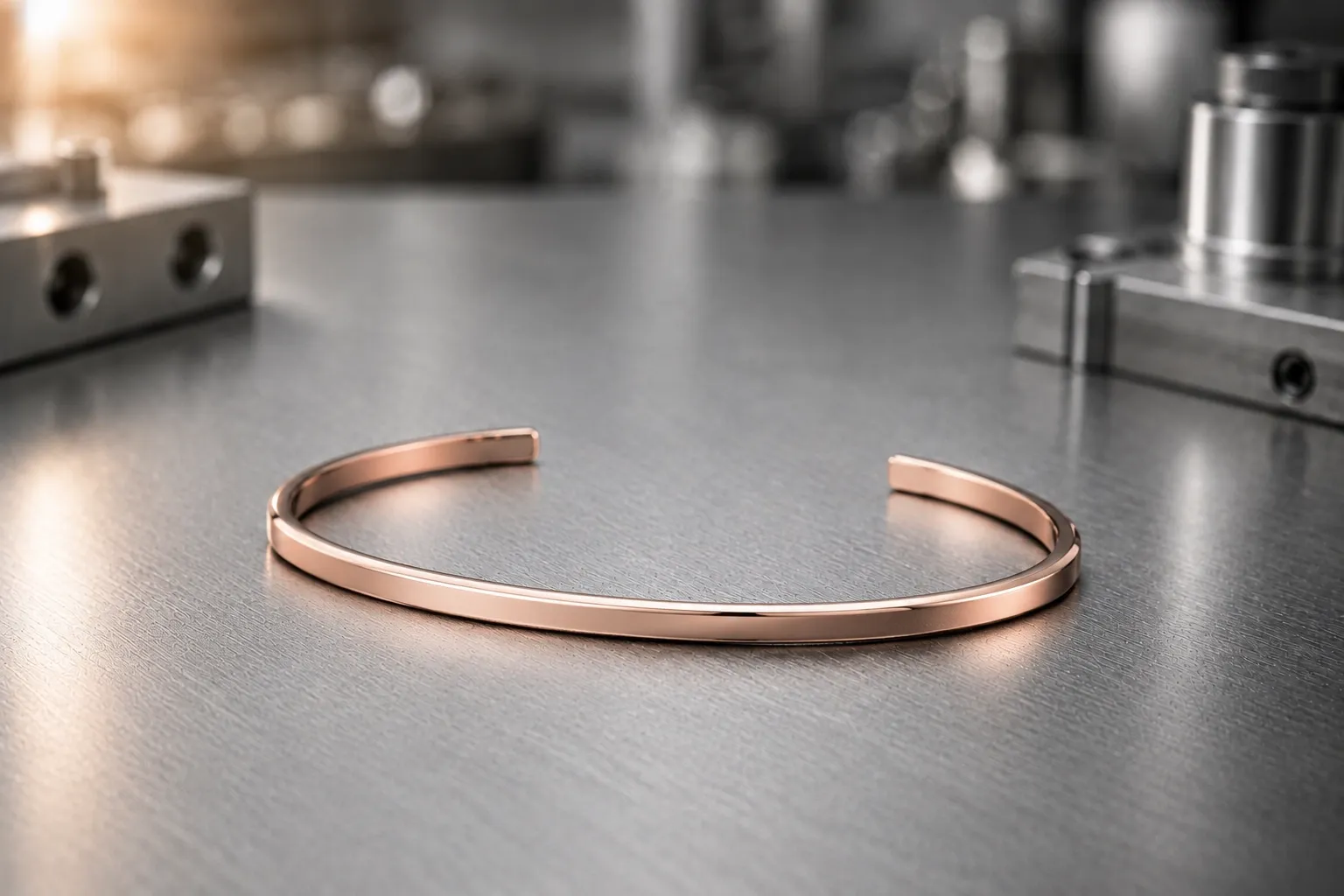
10Fine cuff3 mm wide 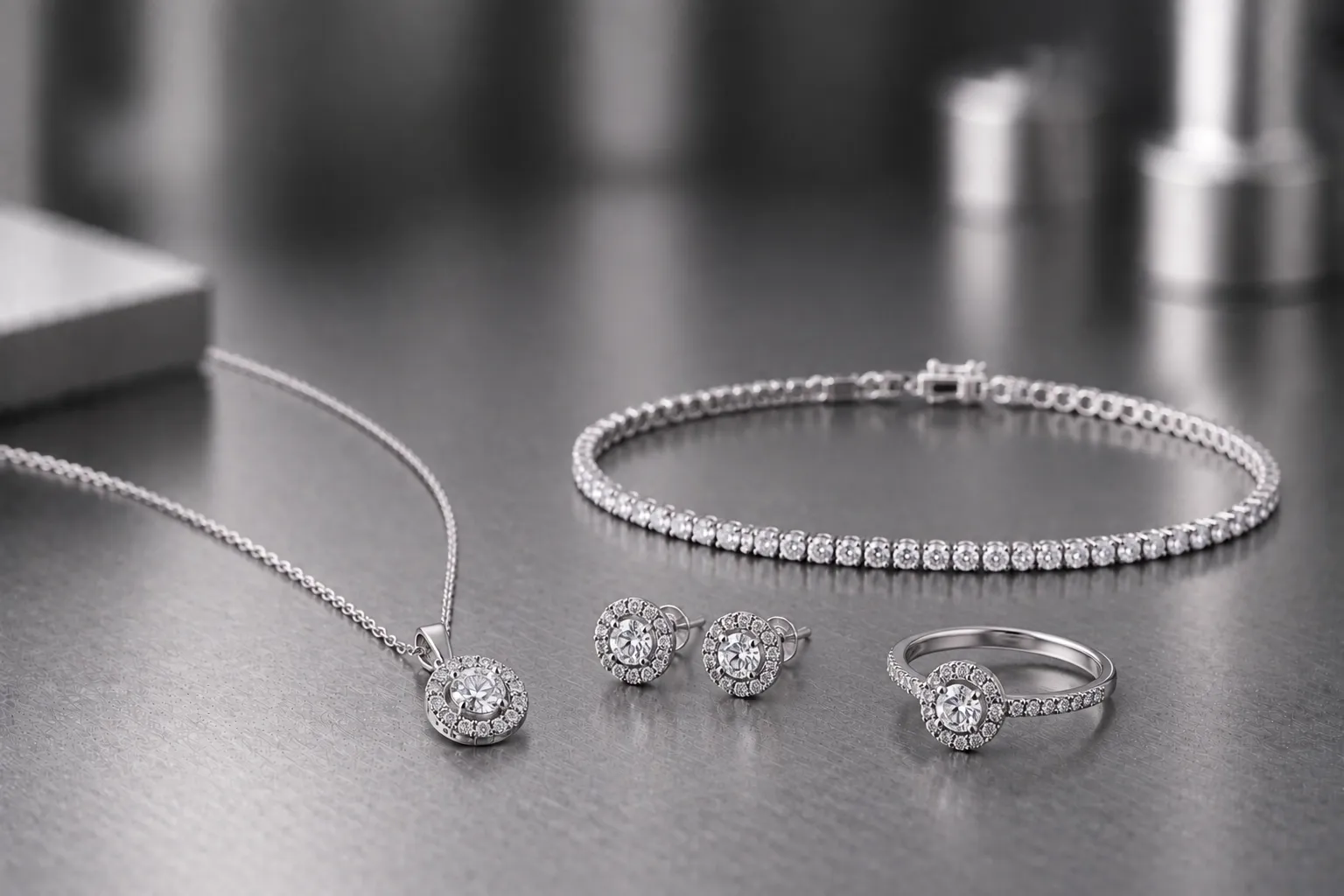
11Rhodium setRhodium plated · anti-tarnish 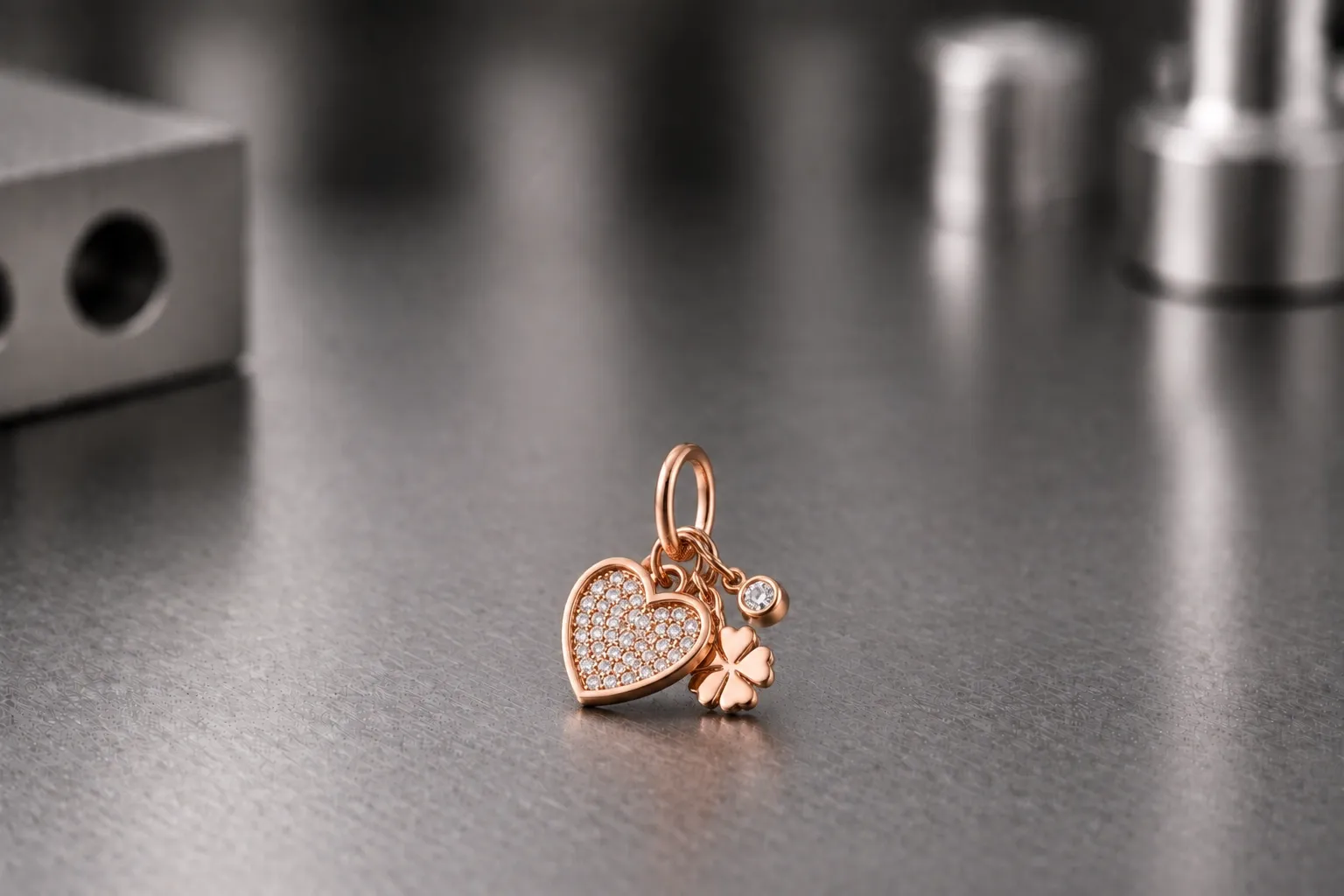
12Charm8 mm
Swipe · 12 styles
Sizing conventions
These are the dimensions a quotation needs. Size distribution in particular should be specified rather than assumed flat — it is rarely flat.
| Ring sizes | US 4–9 typical, 6–7 the peak |
|---|---|
| Band width | 1.5–6 mm |
| Chain gauge | 0.8–3 mm |
| Necklace lengths | 40–50 cm, plus 5 cm extender |
| Earring posts | 0.8 mm diameter standard |
What it does to cost
Lighter pieces shift cost away from metal and toward labour, plating and stone setting. A fine 925 chain and a delicate cast pendant may weigh a gram between them, so the metal line is small and the operation count decides the price — the opposite of a heavy men's piece.
| Material | Density g/cm³ | Effect of heavier sections on unit price |
|---|---|---|
| 316L steel | 7.98 | Small — metal is a few cents either way |
| Titanium | 4.51 | Large — metal dominates the price |
| 925 silver | 10.36 | Large — metal dominates the price |
| Brass | 8.47 | Small — metal is a few cents either way |
| Zinc alloy | 6.6 | Small — metal is a few cents either way |
| Copper / bronze | 8.96 (Cu) · 8.8 (bronze) | Moderate — metal is a real line |
Weight matters most where raw metal cost is highest. See the full cost breakdown.
Women's jewelry manufacturing — buyer questions
Each answer stands alone and can be read without the rest of this page.
What compliance requirement matters most for women's jewelry?
The EU nickel-release limit for pierced ears — 0.2 µg/cm²/week under REACH Annex XVII entry 27, measured to EN 1811 — because earrings are the highest-volume category in most women's ranges. That limit is two and a half times stricter than the one applying to rings and bracelets, and it eliminates plated base metals from earring posts unless a nickel-free barrier is specified.
Does lighter women's jewelry cost proportionally less?
Rarely, because metal is usually the smallest line. Labour is priced per operation, and a delicate cast pendant with fine detail carries as many operations as a heavier one — sometimes more, because thin sections need more careful finishing. On light pieces the price is set by operations and plating, not by grams.
How many finish variants should a women's range launch with?
As few as the range can bear, usually one or two. Each plating colour is a separate production batch with its own setup and its own minimum, so a six-style range in three colourways is eighteen batches before anything has sold. Launching in one finish and adding colourways once styles prove is what keeps a first order affordable.
What is the minimum wall thickness for delicate women's pieces?
0.8 mm for lost-wax casting and 0.3 mm for stamping. Below the casting minimum, molten metal fails to fill the cavity and pieces come out with misruns. Very fine designs are often better stamped or machined than cast, or redesigned so the delicate element is a separate component assembled afterwards.
Not answered here? All buyer questions →
Get a quote in one working day
Send the style list, the material and the size distribution. You get an itemised price per style, the tooling cost as its own line, and the compliance route for your market. Production runs on our own floor in Qingxi, Dongguan, Guangdong.
- 01Reply within one working day, Guangdong business hours.
- 02Itemised cost sheet — mold quoted separately, not folded into the unit price.
- 03NDA on request before any file is shared.