
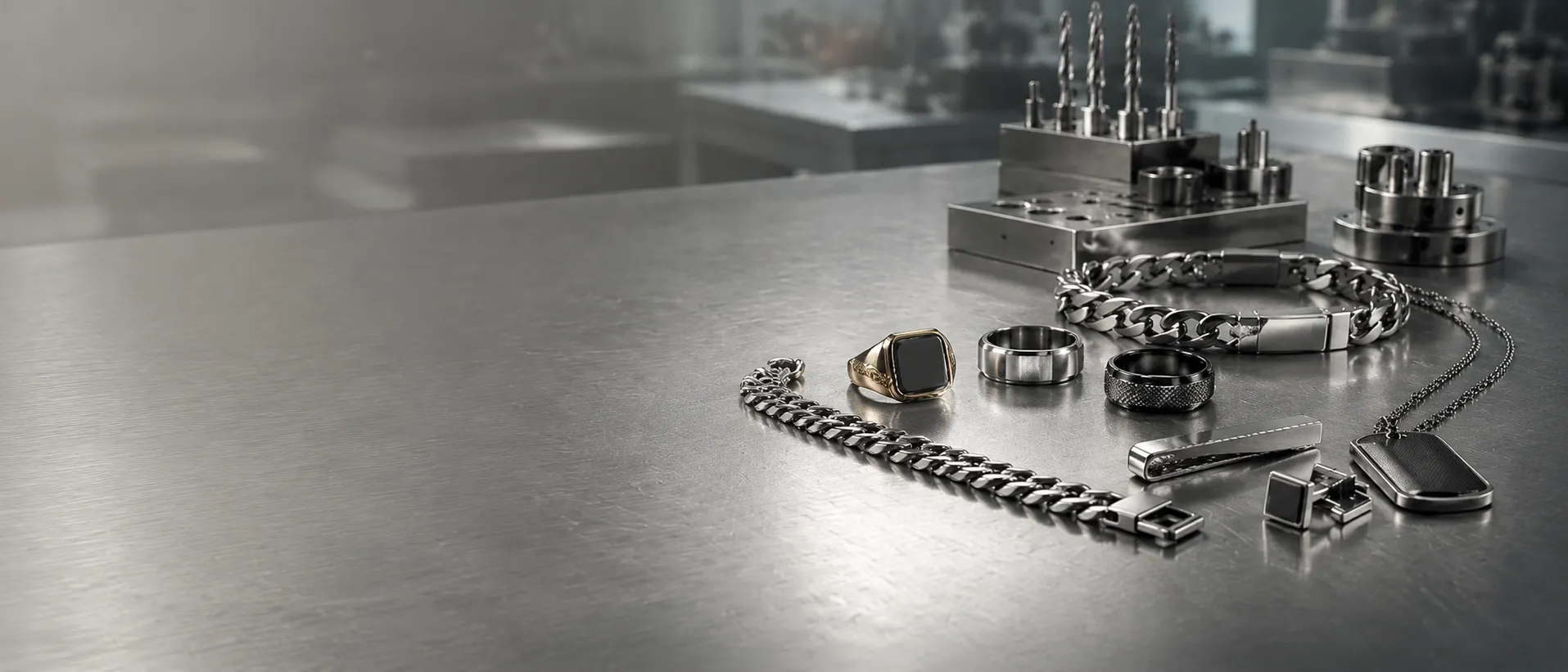
What changes when you manufacture men's jewelry?
Manufacturing does not change by gender — the same alloys run on the same machines. What changes is the specification: heavier sections, larger size ranges, wider chain gauges, and a strong bias toward finishes that need no maintenance. Those shifts move the unit price and the material choice in predictable directions.
What actually changes
Not the alloys, not the machines and not the tolerances. What changes is section thickness, size range and finish preference — and those three move the unit price.
Categories in this segment
Ranked by the share of a typical range. Each links through to the full category page with its sizing, processes and compliance limit.
| Category | What differs in this segment |
|---|---|
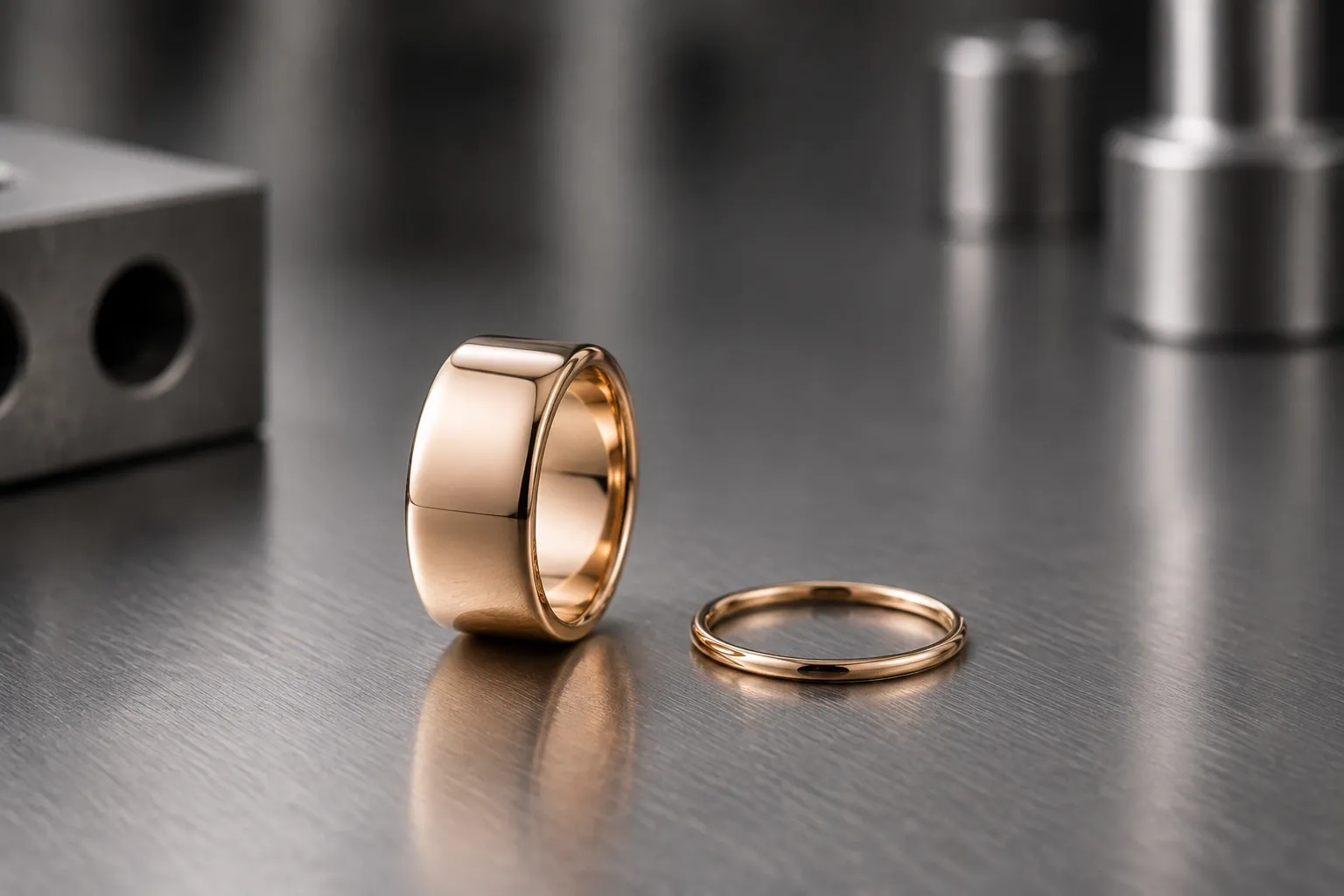
| Rings | Wider bands, 6–12 mm, sizes running to US 14 |
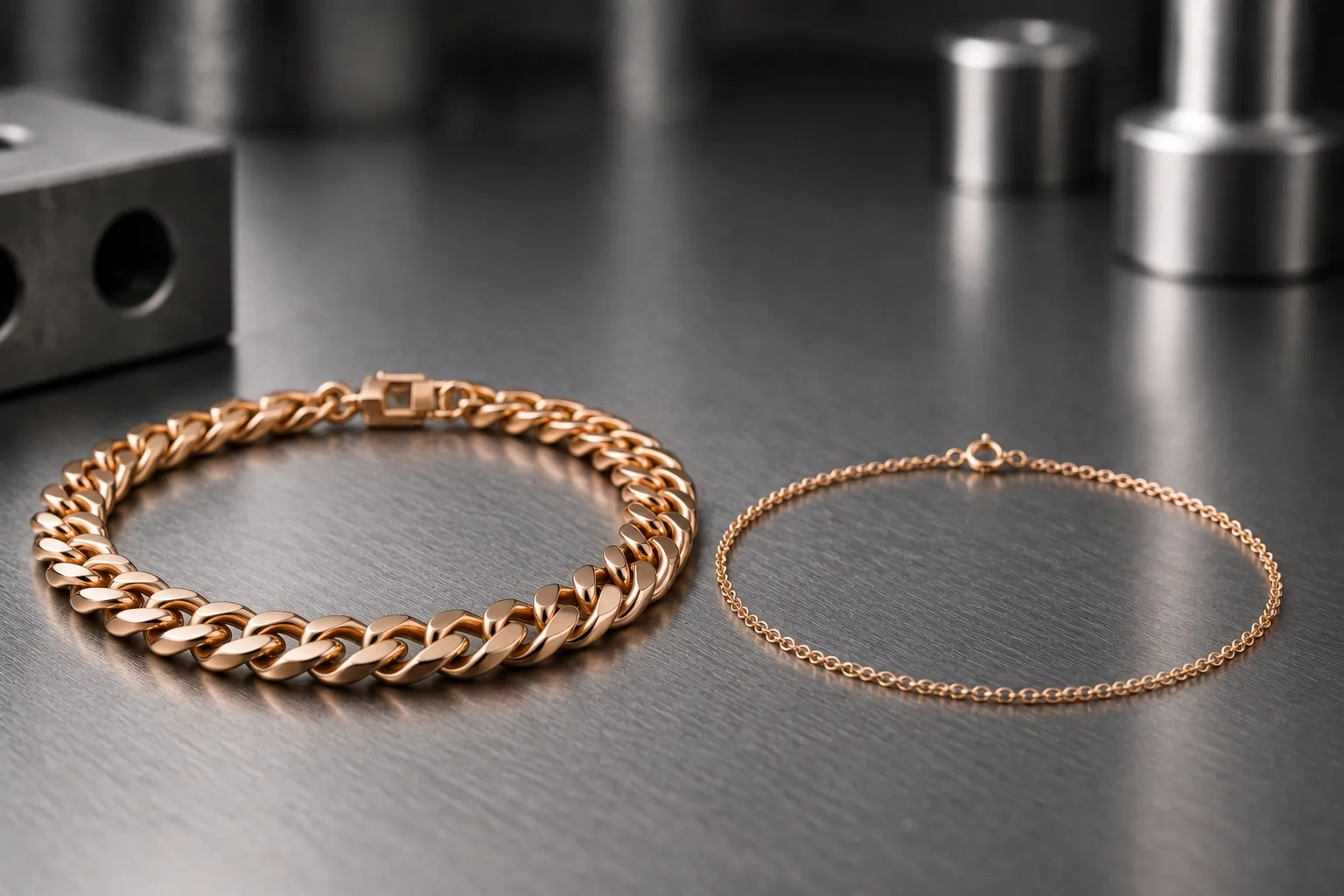
| Chains | Heavier gauges, 3–12 mm, Cuban and curb dominant |
| Bracelets & Bangles | Link and chain bracelets over cuffs |
| Cufflinks & Men's accessories | Corporate gifting and wedding volume |
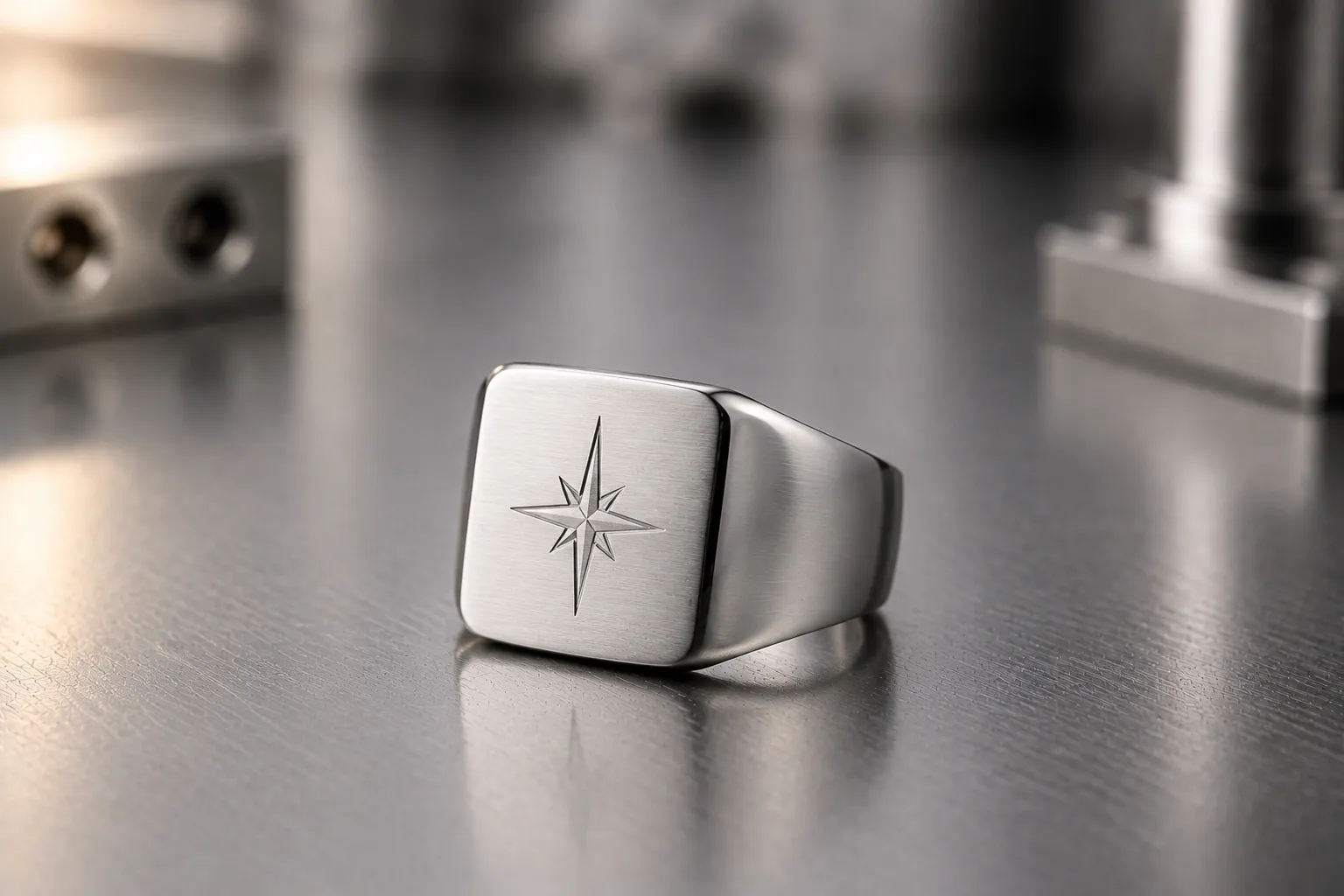
01Signet12 mm wide · US 11 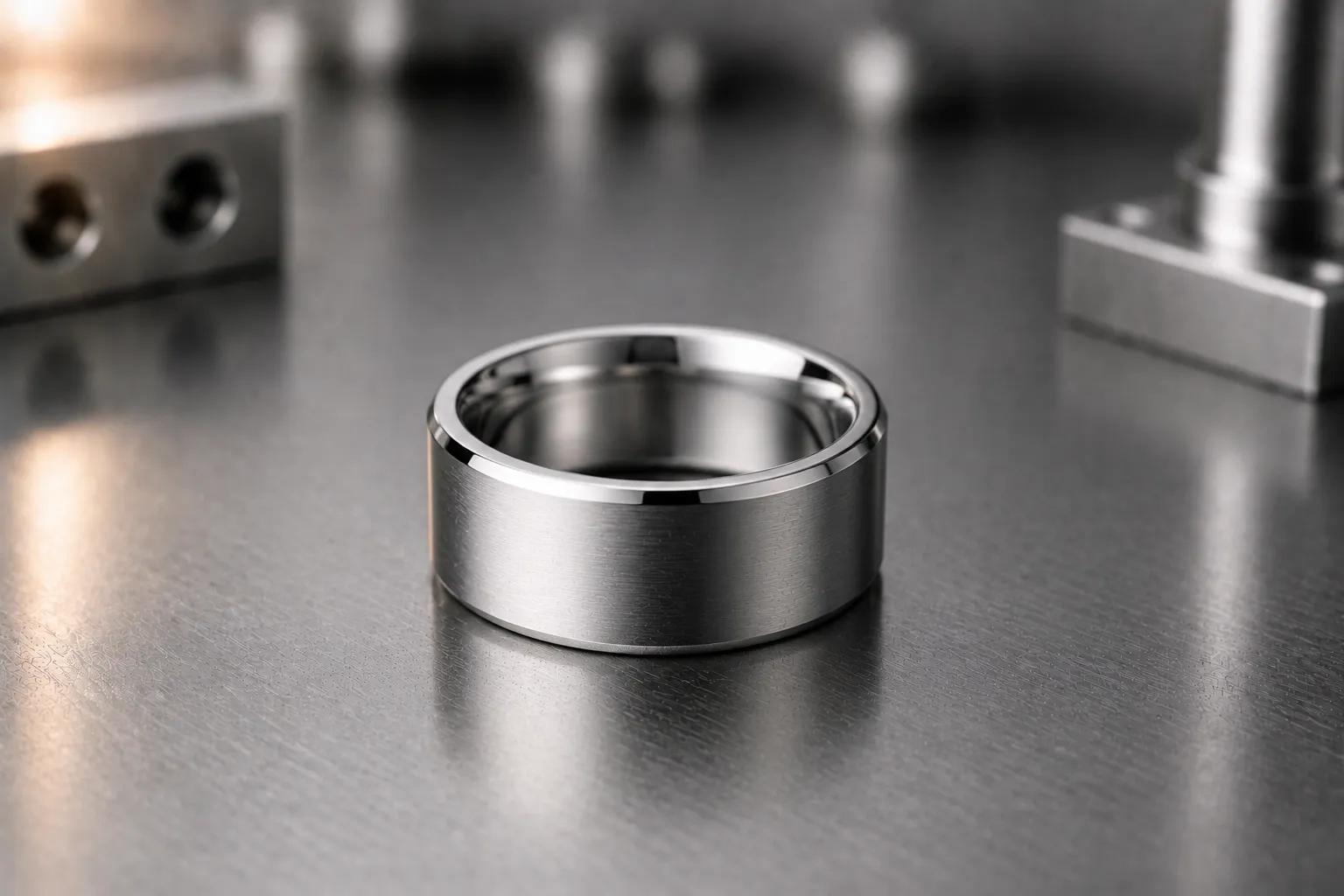
02Plain band8 mm wide · 2.5 mm thick 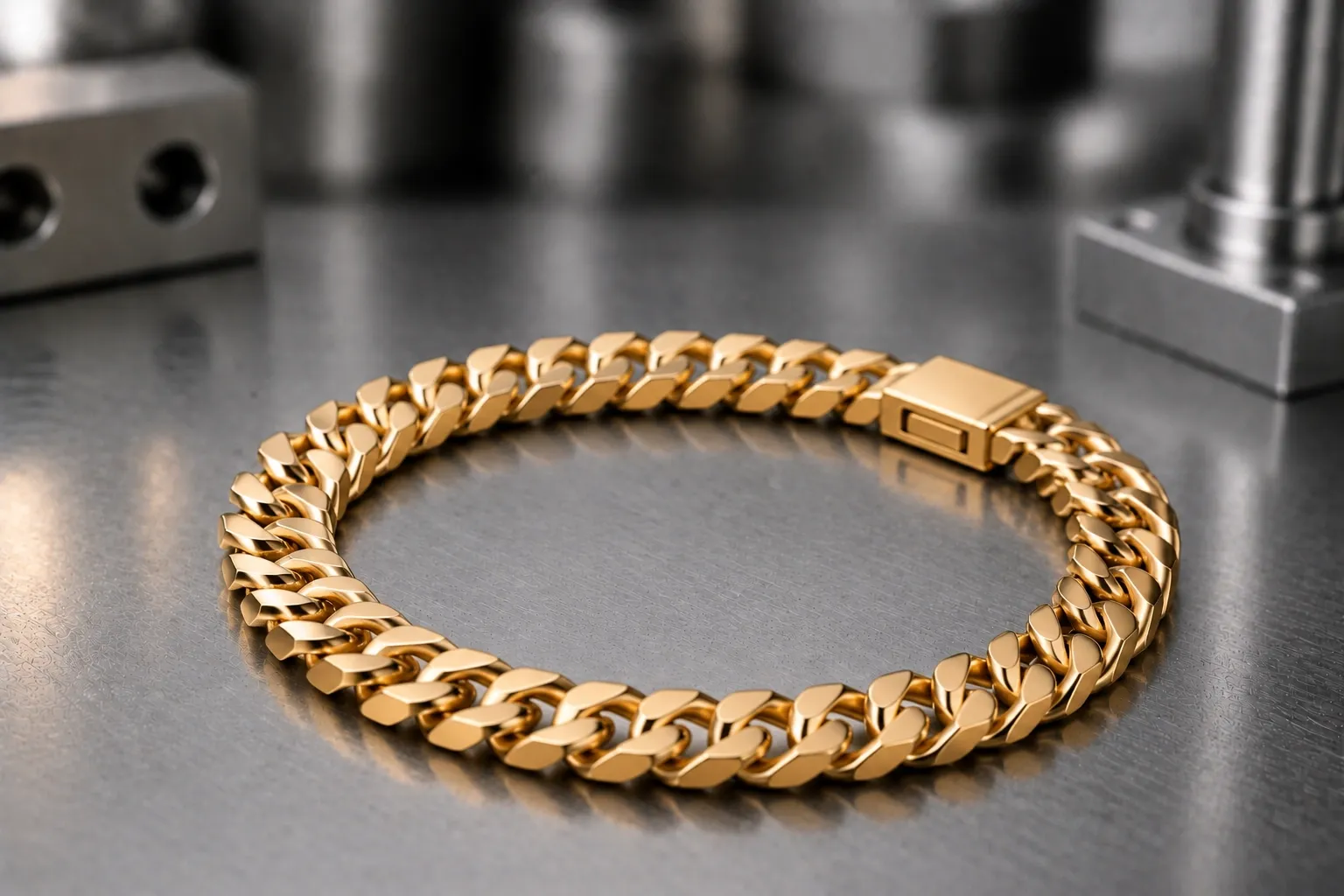
03Cuban chain10 mm gauge 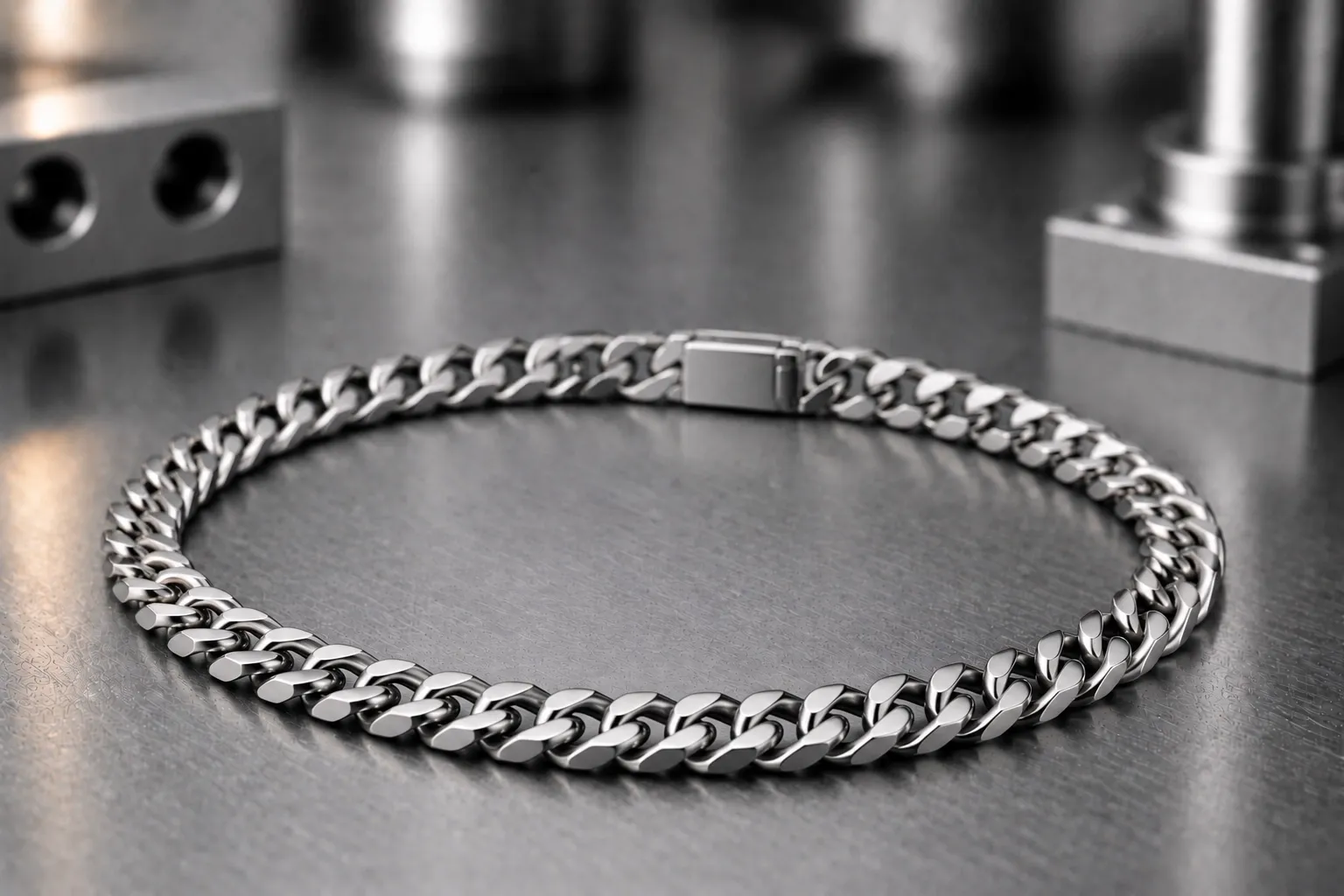
04Curb chain8 mm gauge 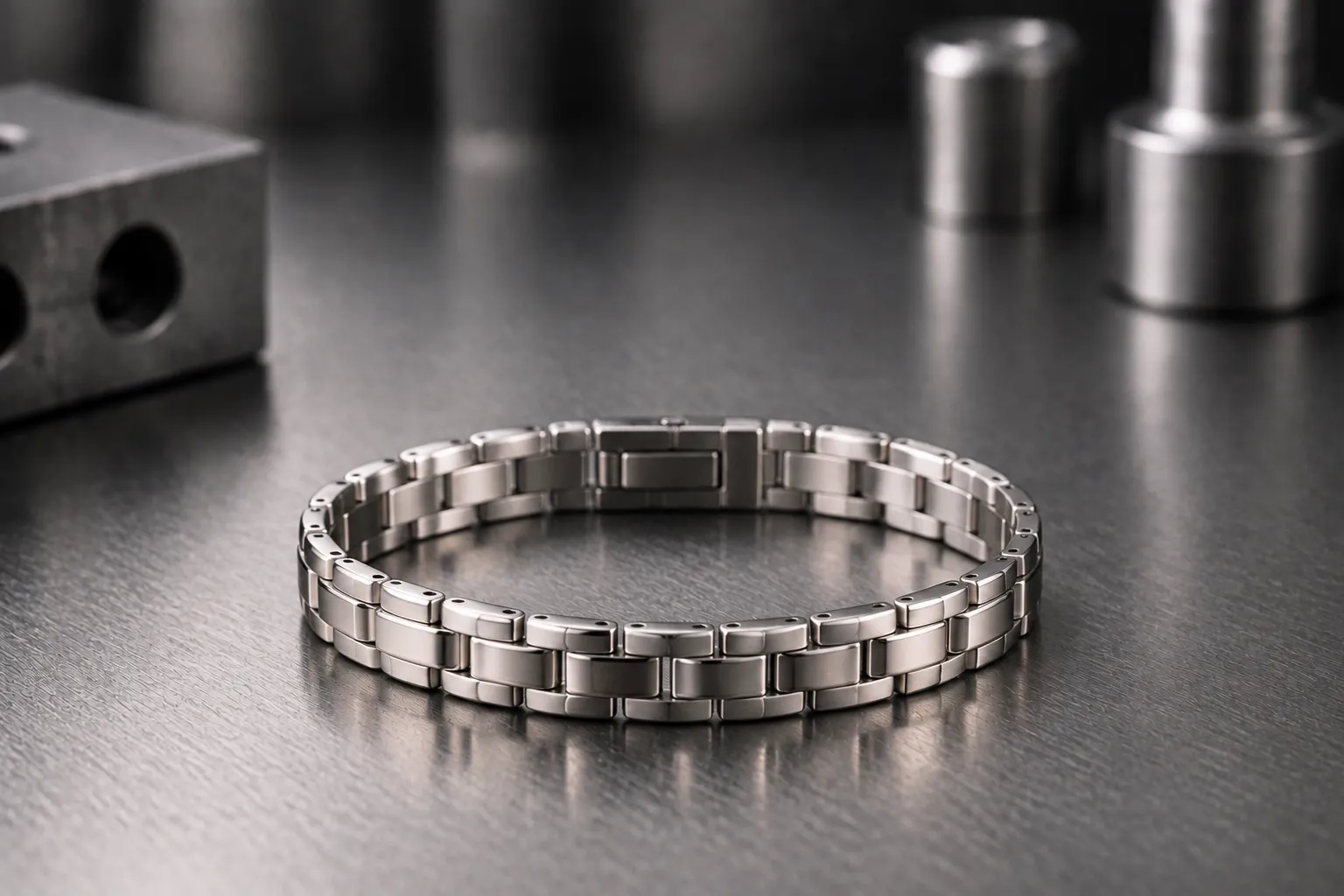
05Link bracelet21 cm · 14 mm wide 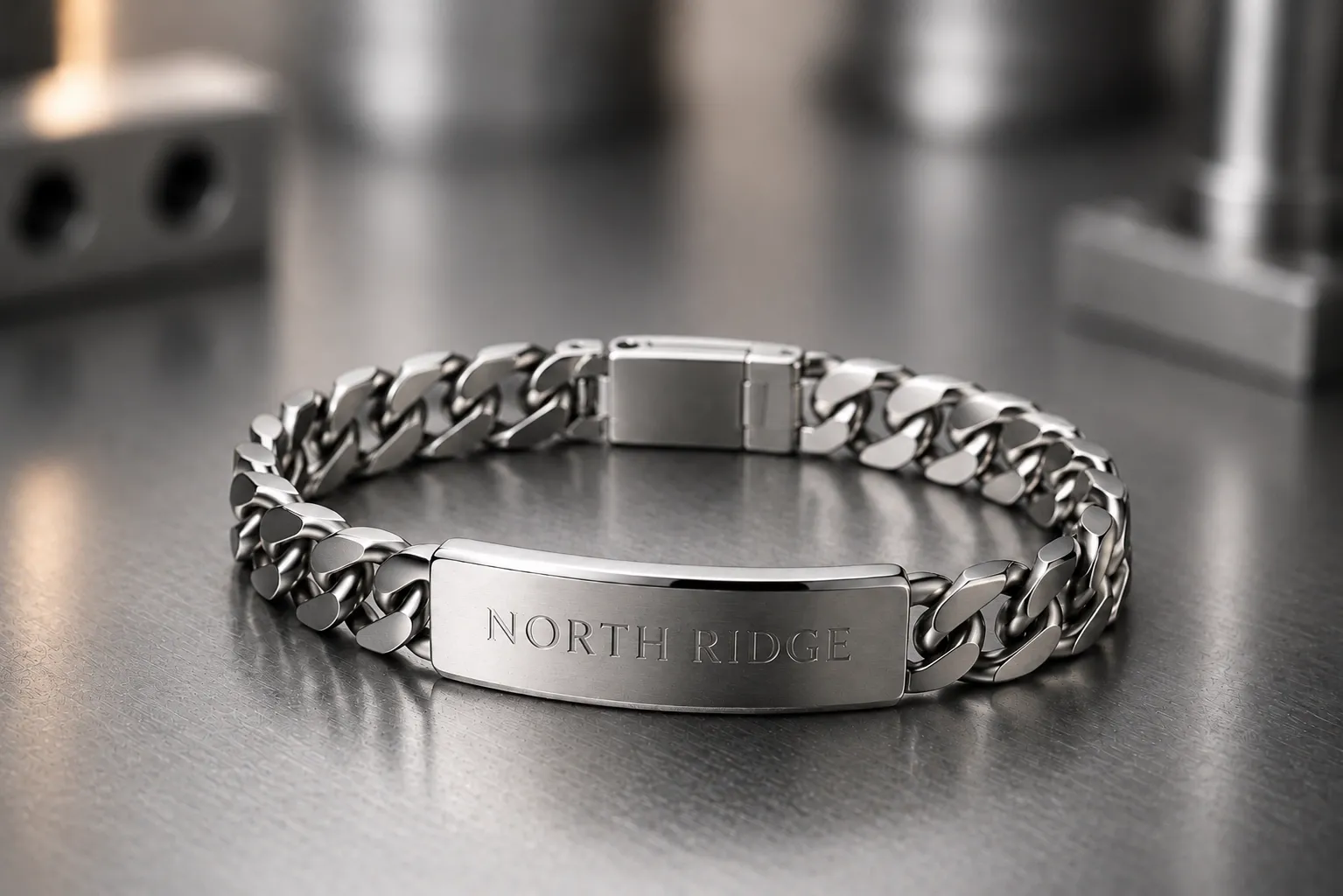
06ID bracelet20 cm · engraved plate 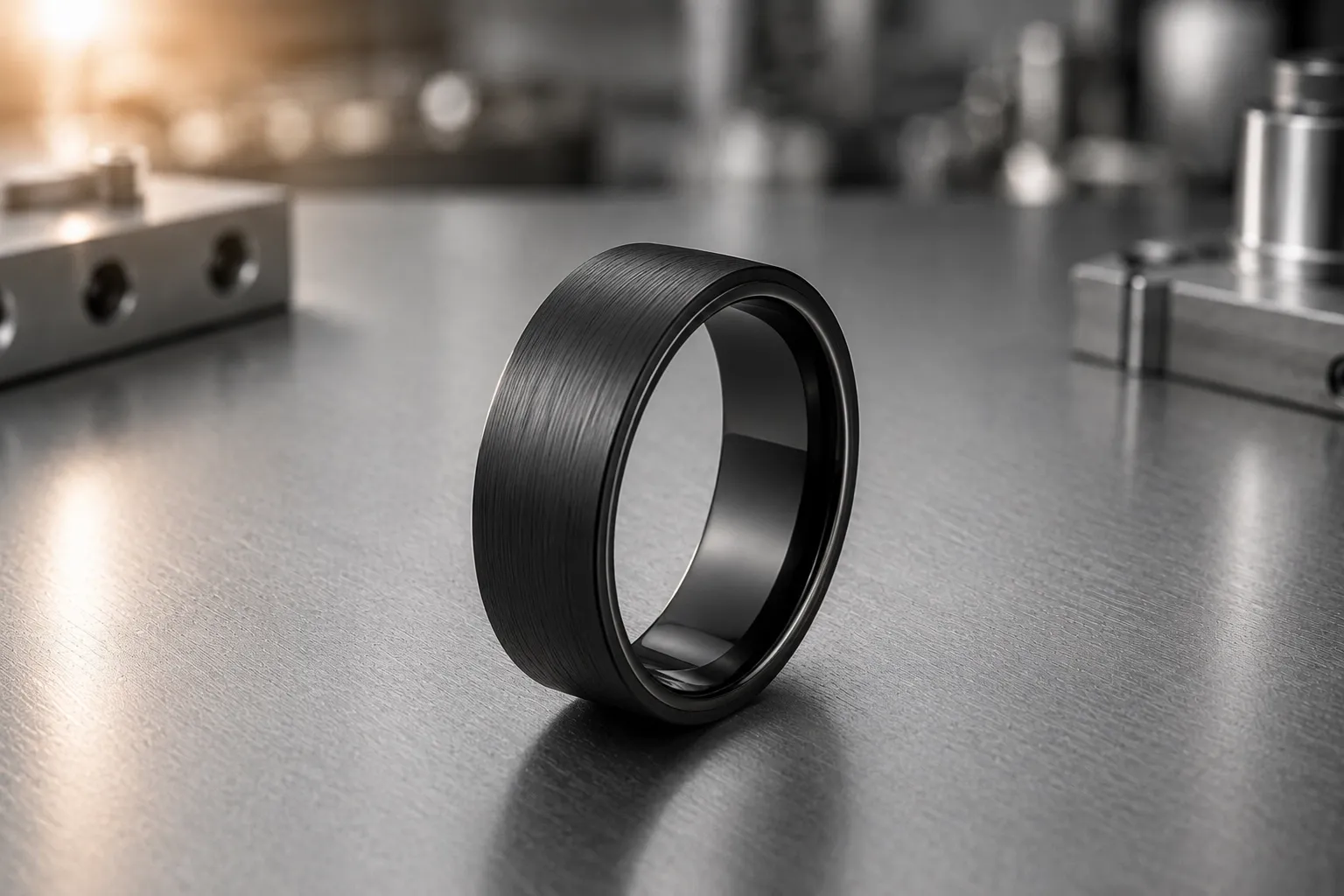
07Black PVD ringBlack PVD on brushed 316L 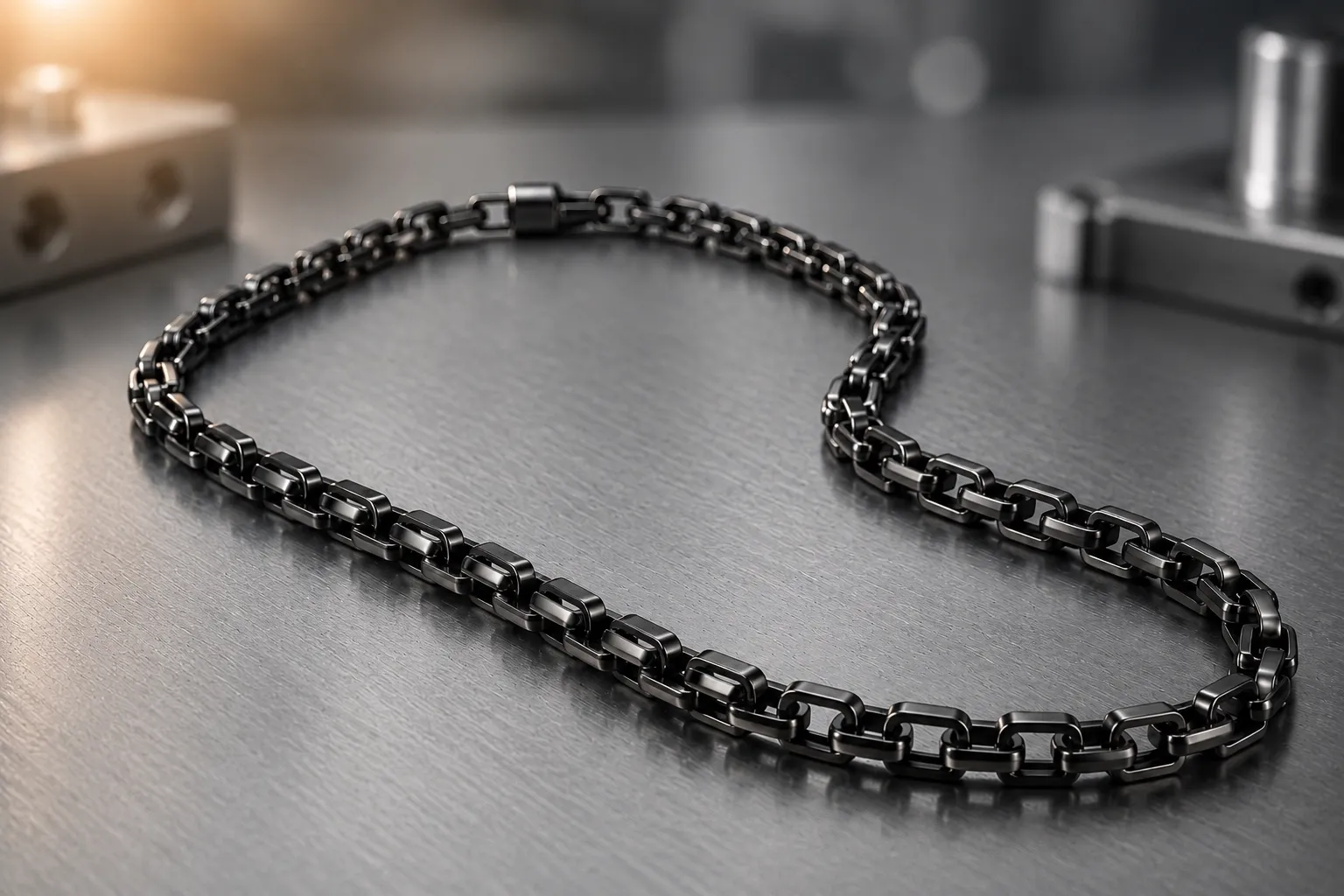
08Gunmetal chainGunmetal IP · 6 mm 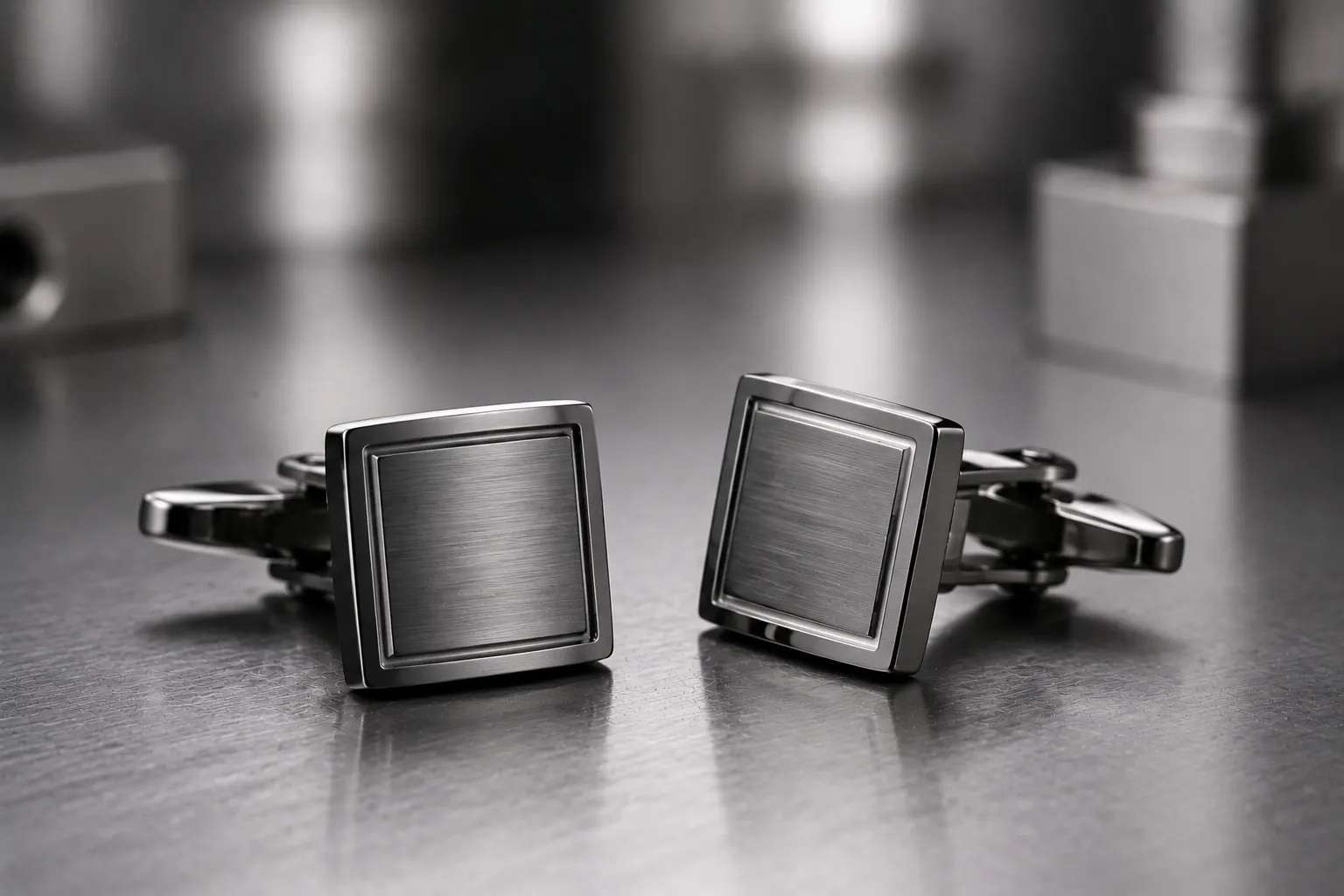
09Cufflinks18 mm face 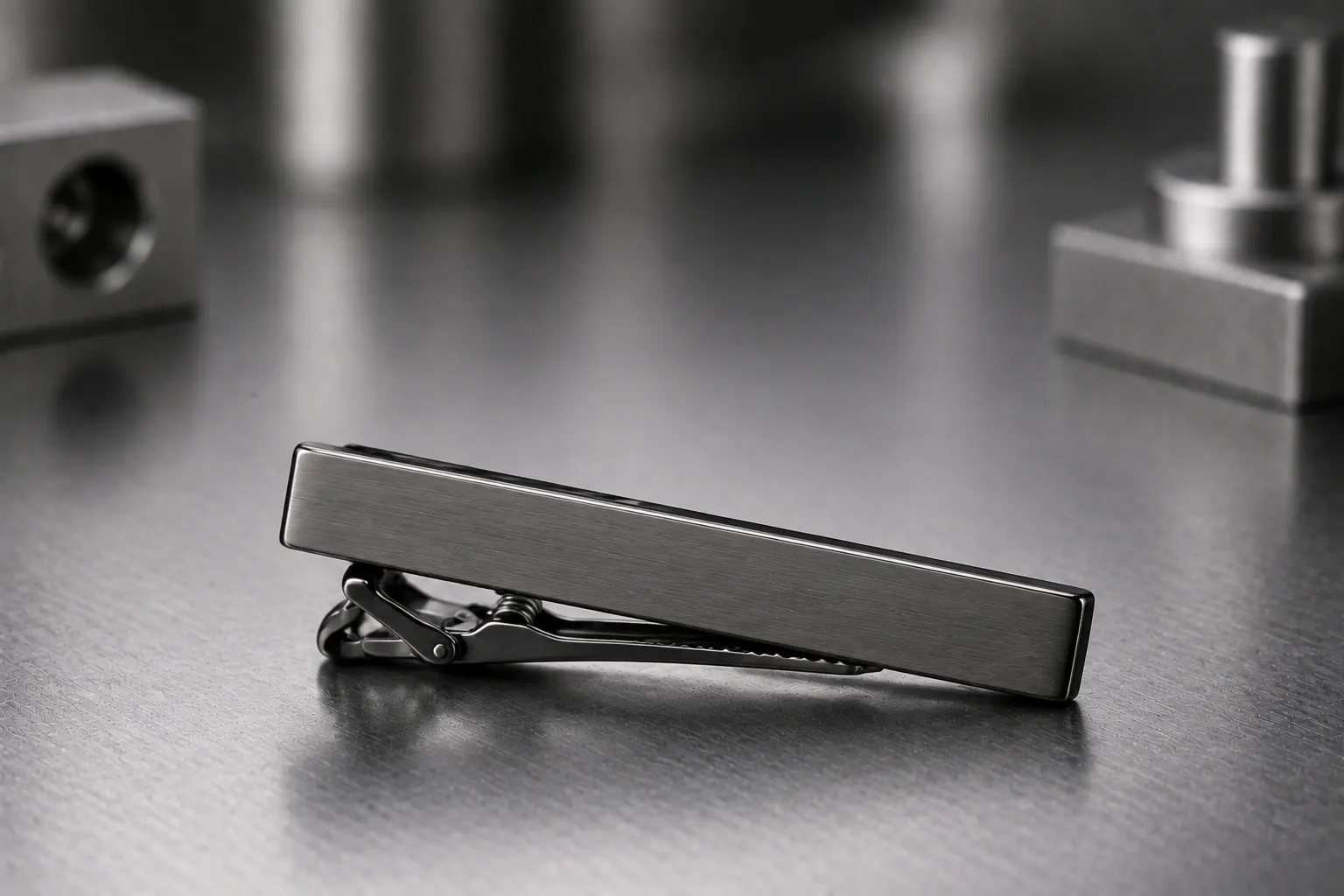
10Tie bar55 mm 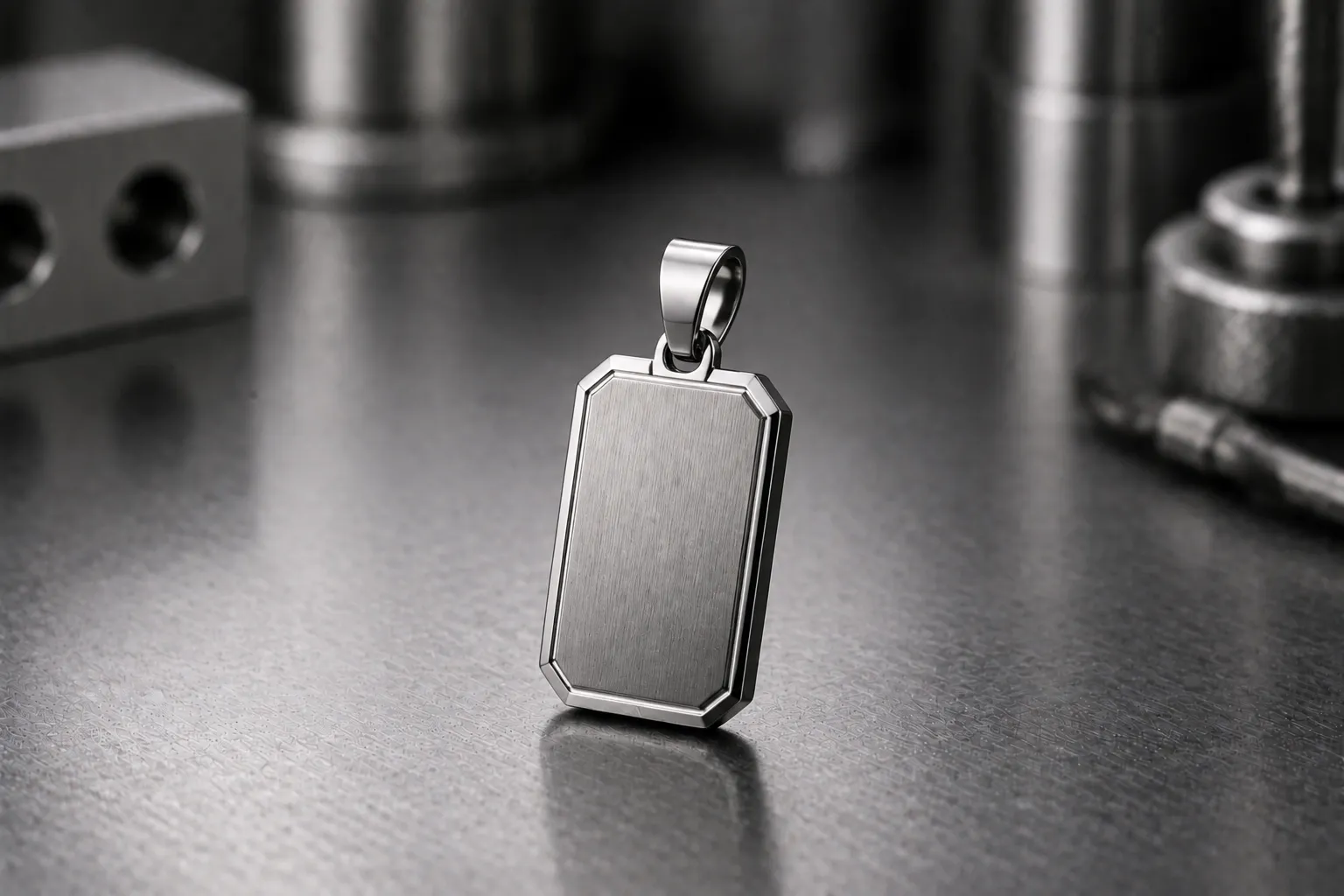
11Pendant30 mm · 3 mm thick 
12Titanium bandTitanium · 44% lighter than steel
Swipe · 12 styles
Sizing conventions
These are the dimensions a quotation needs. Size distribution in particular should be specified rather than assumed flat — it is rarely flat.
| Ring sizes | US 8–14 typical, 9–11 the peak |
|---|---|
| Band width | 6–12 mm |
| Chain gauge | 3–12 mm |
| Bracelet length | 19–23 cm |
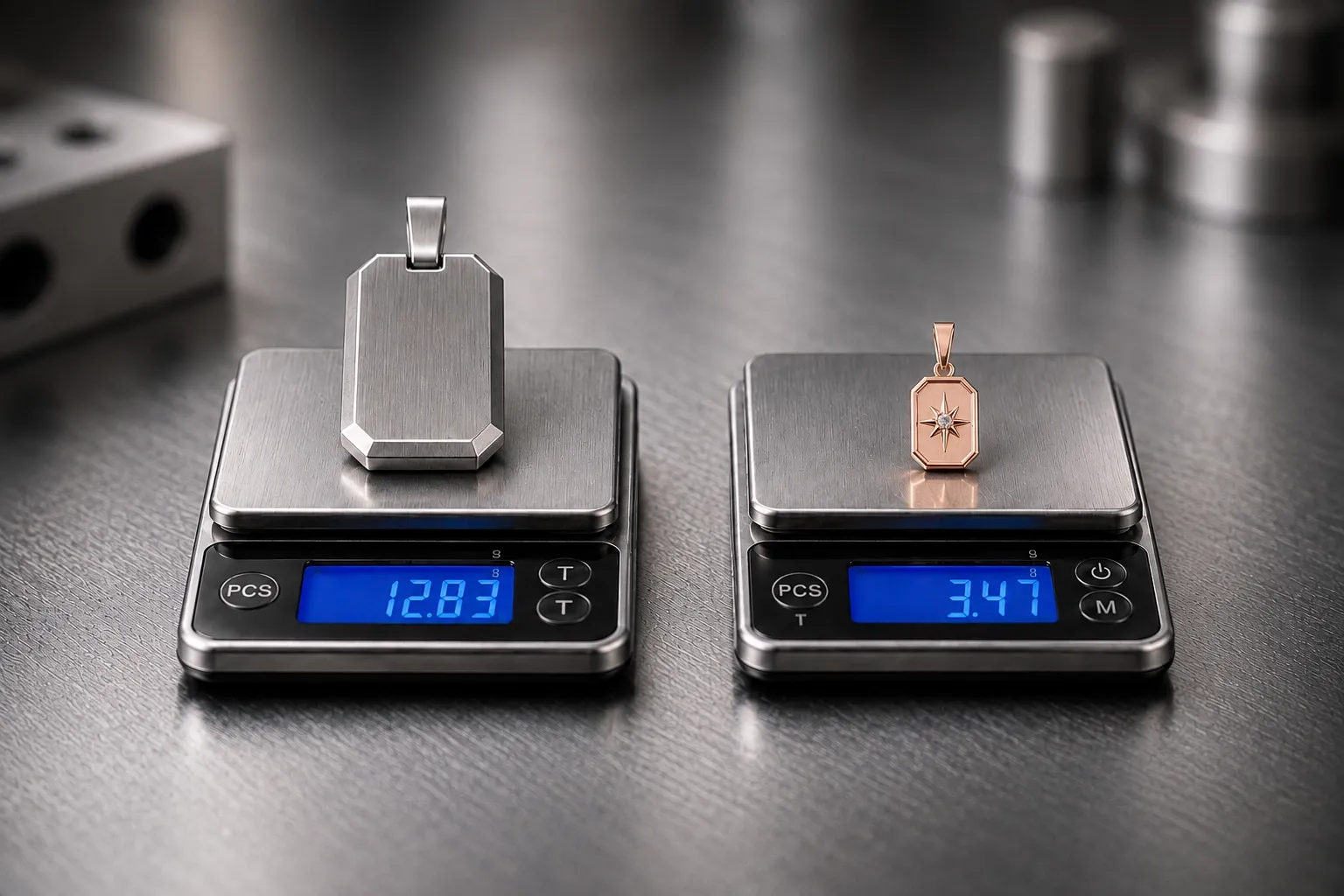
| Piece weight | Typically 2–4× a comparable women’s piece |
What it does to cost
Heavier sections mean more metal per piece, which matters most on 925 silver where metal dominates the unit price and least on 316L where it is a few cents. A men's silver curb chain can cost several times a women's version of the same design purely on weight.
| Material | Density g/cm³ | Effect of heavier sections on unit price |
|---|---|---|
| 316L steel | 7.98 | Small — metal is a few cents either way |
| Titanium | 4.51 | Large — metal dominates the price |
| 925 silver | 10.36 | Large — metal dominates the price |
| Brass | 8.47 | Small — metal is a few cents either way |
| Zinc alloy | 6.6 | Small — metal is a few cents either way |
| Copper / bronze | 8.96 (Cu) · 8.8 (bronze) | Moderate — metal is a real line |
Weight matters most where raw metal cost is highest. See the full cost breakdown.
Men's jewelry manufacturing — buyer questions
Each answer stands alone and can be read without the rest of this page.
What is the best material for men's jewelry?
316L stainless steel, for most ranges. Men's pieces are typically heavier, worn continuously and rarely removed, and 316L needs no protective plating, resists deformation at 150–190 HV and does not tarnish. Titanium suits buyers who find heavy steel uncomfortable — it is 44% lighter by volume. 925 silver is used where the piece is sold on metal value, at a substantially higher cost per piece because of the weight.
Which finishes suit men's jewelry best?
Brushed and satin mechanical finishes hide the scratches that heavy daily wear produces, which is why they dominate the segment. Black and gunmetal PVD wears for years and suits the aesthetic. High-mirror polish looks best on day one and shows every mark by month three — it is the finish most often regretted on a heavy men's piece.
How does men's sizing affect cost?
Through weight. A US 11 band at 8 mm wide uses roughly two to three times the metal of a US 6 band at 3 mm. On 316L that is a few cents. On 925 silver, where metal is more than half the unit price, it can double the piece cost. Size distribution should be specified in the purchase order, not assumed flat.
Do men's chains need soldered links?
Yes, in almost every case. Men's chains are heavier, carry more load and are subject to more force in wear, and a butted chain — links closed but not joined — will pull open. Butted chain costs less and photographs identically, so it must be specifically excluded in the purchase order rather than assumed against.
Not answered here? All buyer questions →
Get a quote in one working day
Send the style list, the material and the size distribution. You get an itemised price per style, the tooling cost as its own line, and the compliance route for your market. Production runs on our own floor in Qingxi, Dongguan, Guangdong.
- 01Reply within one working day, Guangdong business hours.
- 02Itemised cost sheet — mold quoted separately, not folded into the unit price.
- 03NDA on request before any file is shared.