
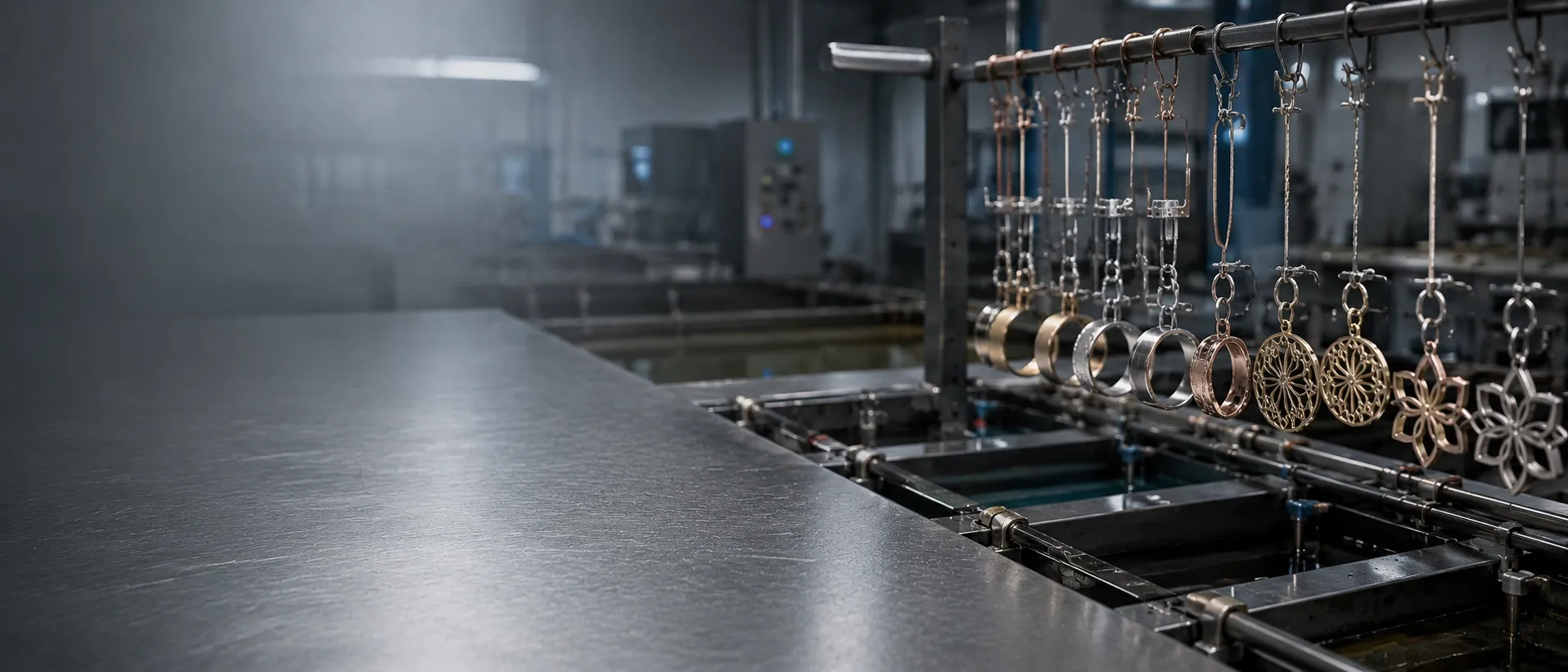
Electroplating
The piece is made the cathode in an electrolyte bath and metal ions are deposited onto it by an electric current, building a coating whose thickness is set by current and time.
- Tolerance
- ±20% on deposited thickness
- Min. wall
- n/a
- Tooling
- None — bath setup per colour batch
- Batch fit
- Batches of one colour
How it works
The piece is made the cathode in an electrolyte bath and metal ions are deposited onto it by an electric current, building a coating whose thickness is set by current and time.
Gold, rose gold, rhodium and black finishes on brass, zinc alloy and silver are the work this route is chosen for. It runs on Brass, Zinc alloy, 925 silver, Copper, 316L stainless steel and suits batches of one colour.
Production steps
Each step below is a separate labour operation, and labour is priced per operation rather than per piece. That is why a 6-step route costs what it does.
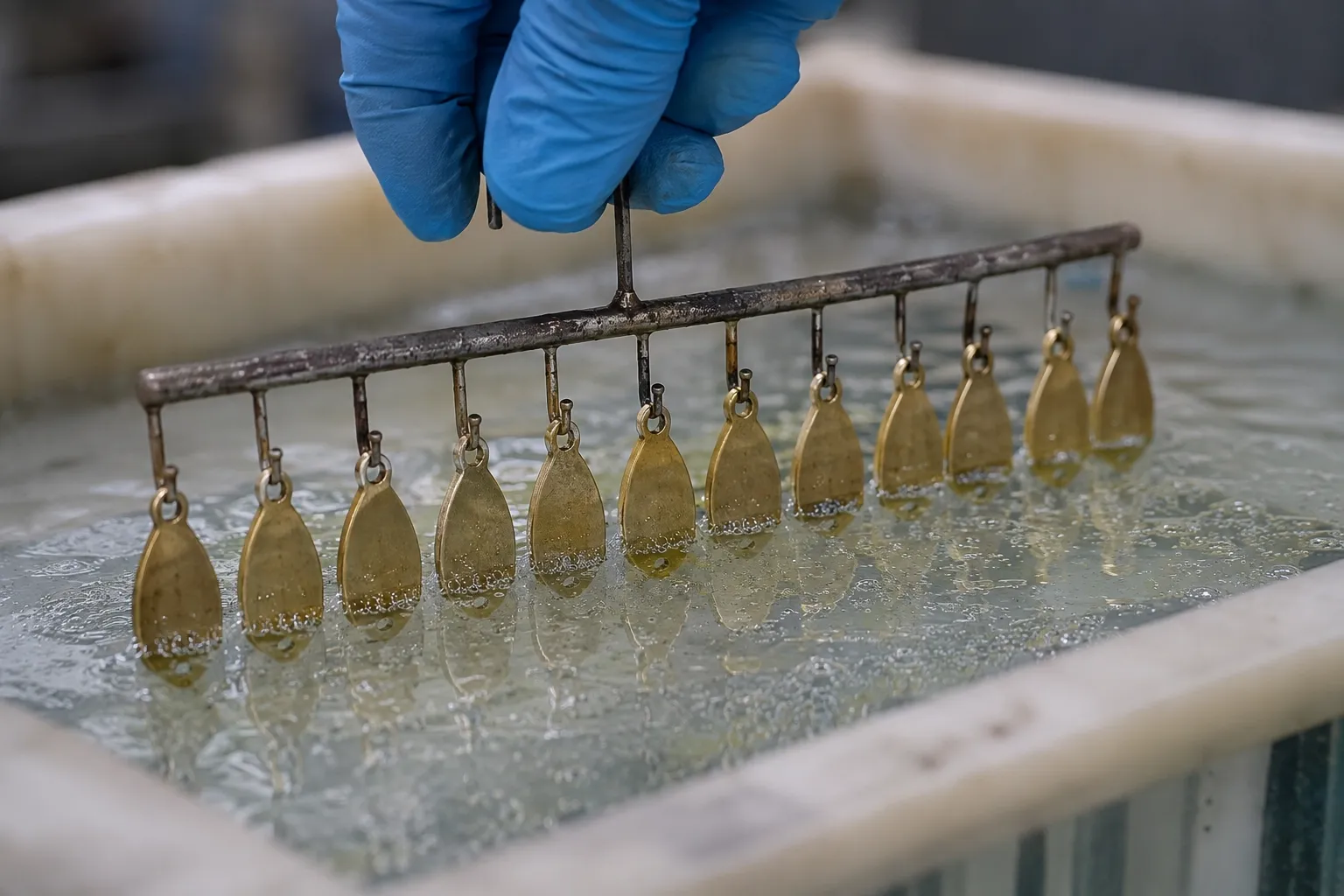
Ultrasonic degrease and acid activation 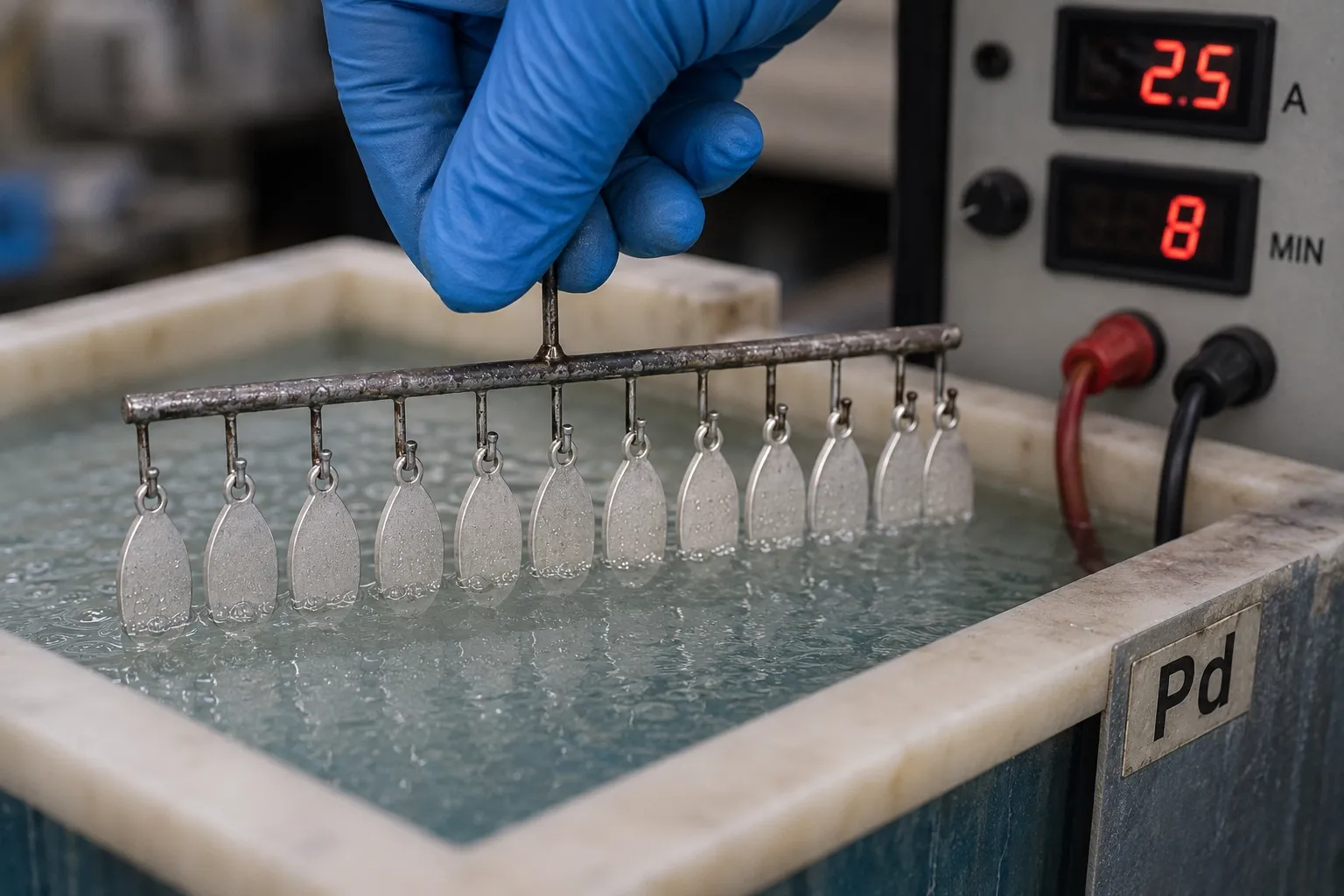
Barrier layer deposited — nickel, or palladium/copper where nickel-free is required 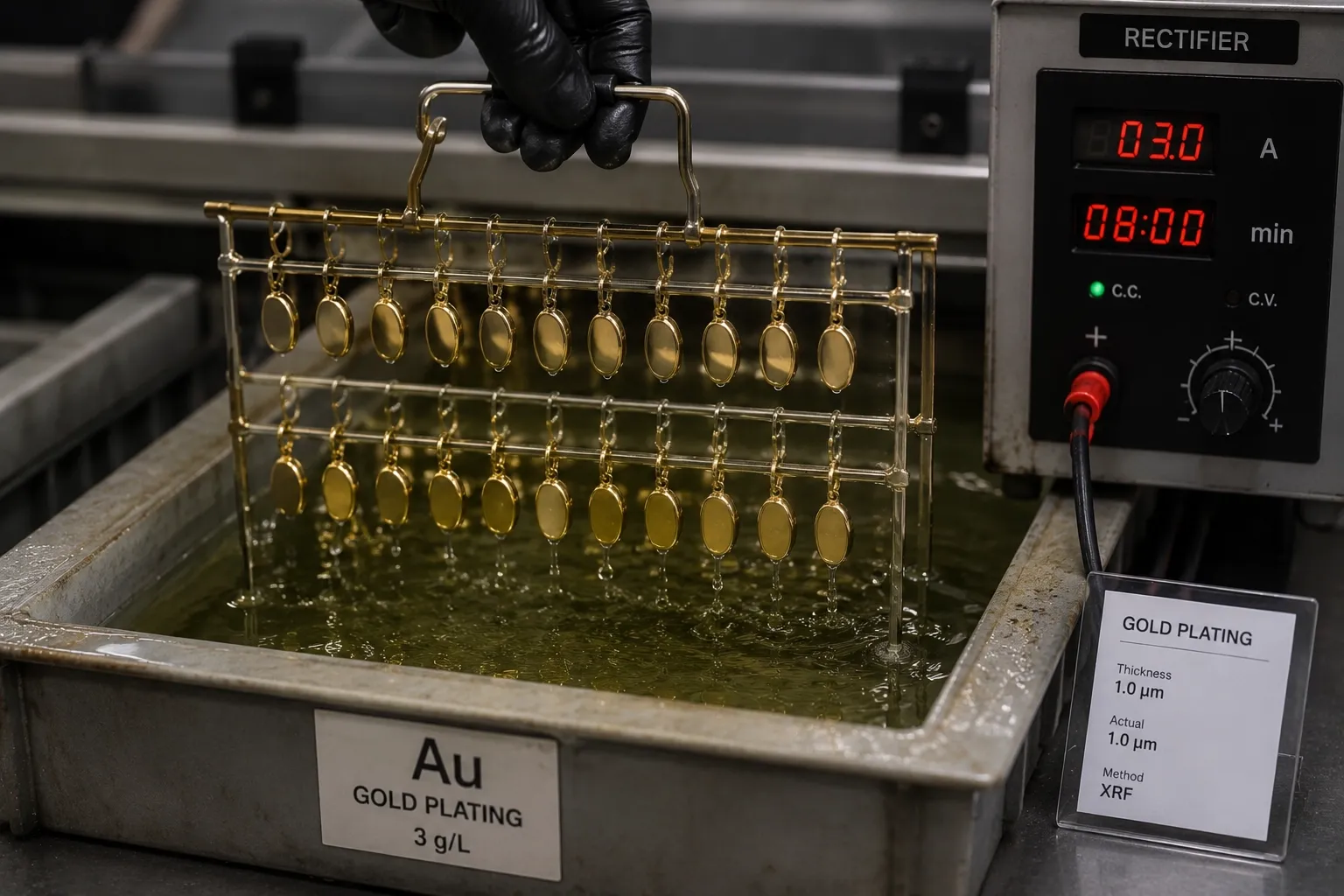
Colour layer deposited to the specified micron thickness 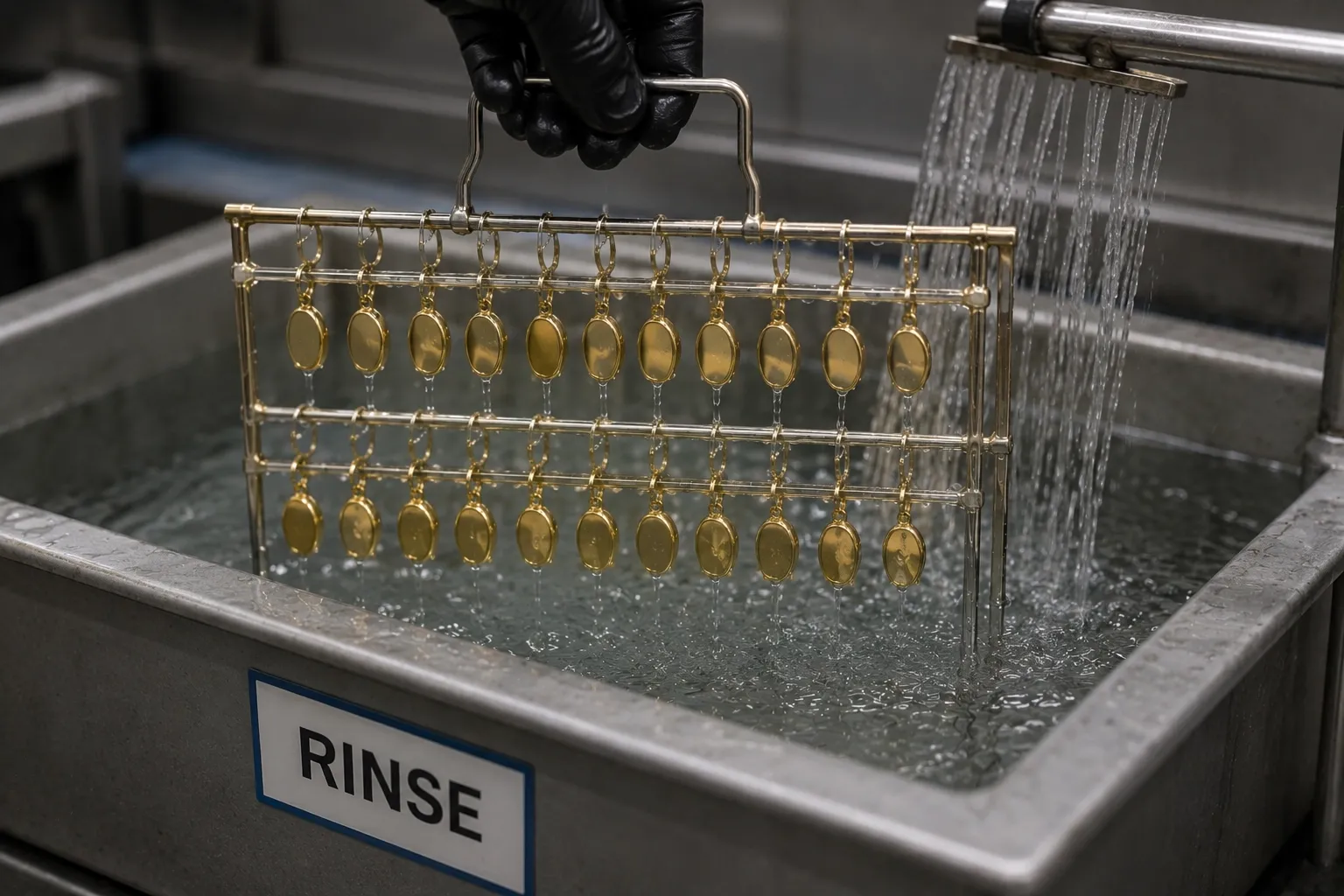
Rinse and neutralise 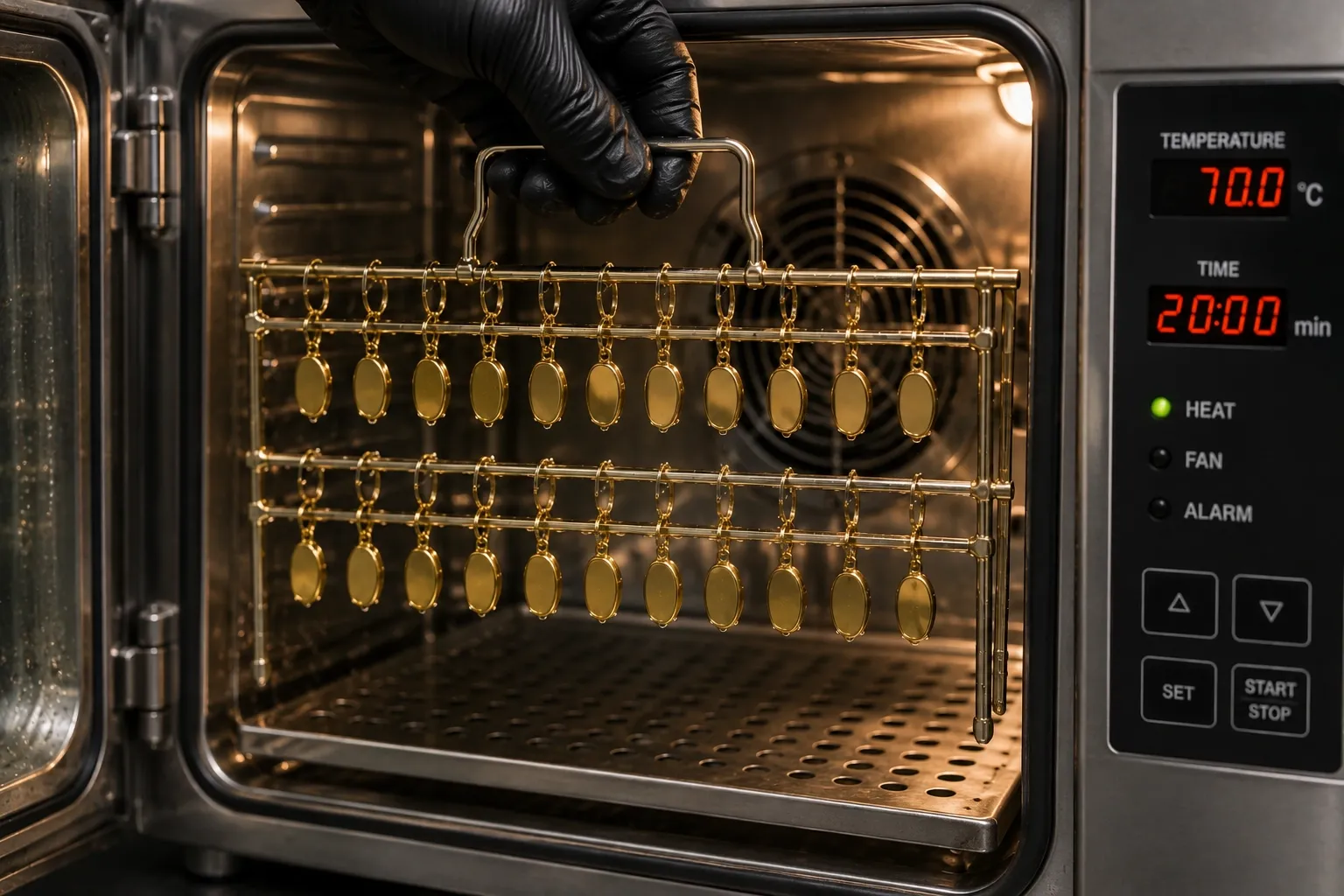
Dry and, where specified, seal with e-coat 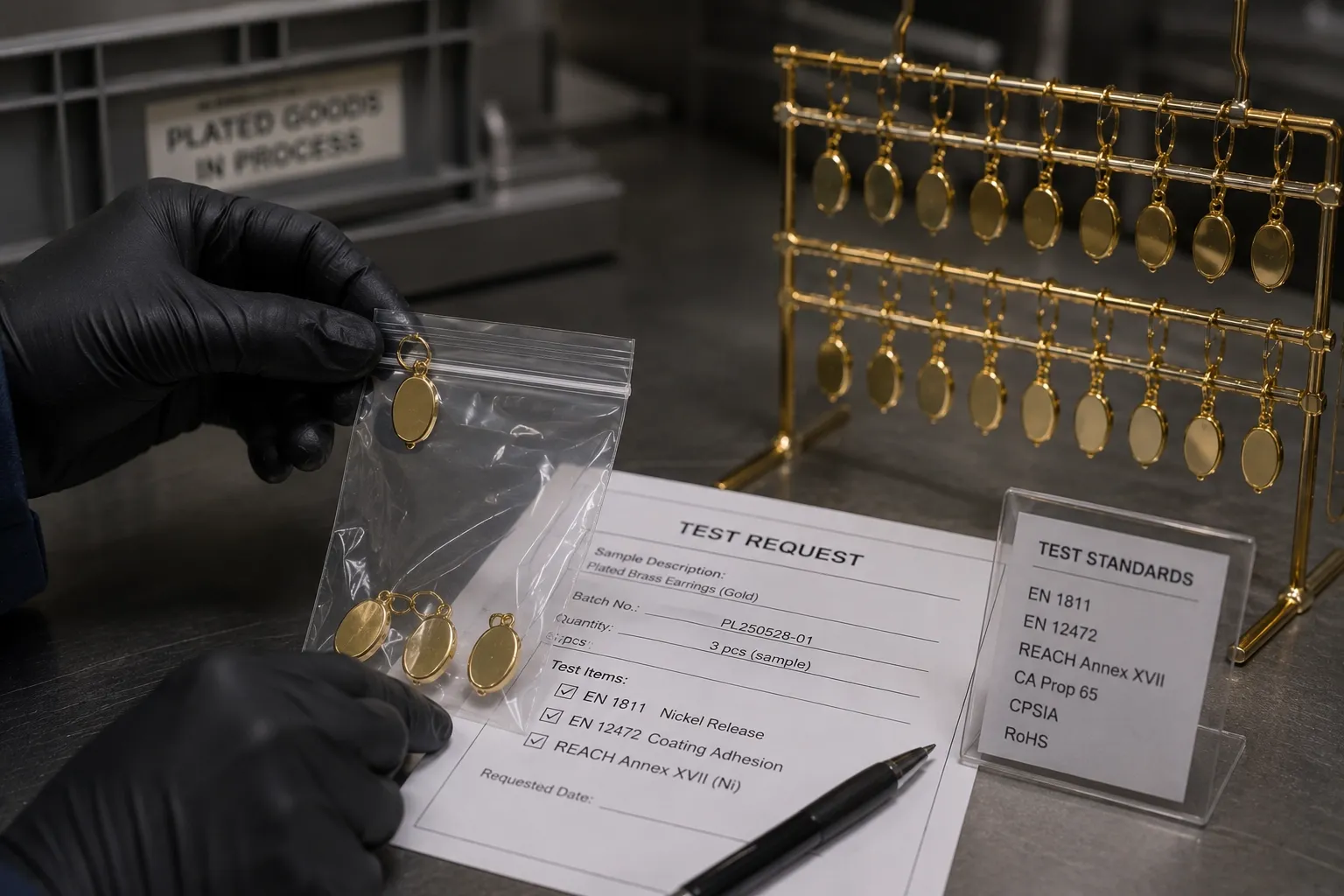
Batch sample sent for adhesion and nickel-release testing where required
Process parameters
These are engineering properties of the process itself. They hold at any competent factory and can be checked against a manufacturing reference.
| Dimensional tolerance | ±20% on deposited thickness |
|---|---|
| Minimum wall / section | n/a |
| Tooling cost | None — bath setup per colour batch |
| Suited to | Batches of one colour |
| Cycle time | 1–2 days per batch |
| Materials accepted | Brass, Zinc alloy, 925 silver, Copper, 316L stainless steel |
Tooling ranges are industry-typical. A firm figure is quoted against your CAD file — see the cost breakdown.
Plating vs PVD / IP coating
Choose electroplating for the widest colour range, lowest cost and compatibility with zinc alloy; choose PVD for hardness and wear life on stainless steel and titanium.
Compare with pvd / ip coating →Materials and categories this suits
Process, material and product category are one decision seen from three sides. These are the combinations that actually work.
| 316L steel | ASTM A276 / EN 1.4404 |
|---|---|
| 925 silver | ASTM B700 / EN ISO 9202 (925 fineness) |
| Brass | ASTM B36 / EN CW508L |
| Zinc alloy | ASTM B86 (Zamak 3 / Zamak 5) |
| Chains | Gold on brass and silver chain |
|---|---|
| Cufflinks & Men's | Gold, rhodium and gunmetal finishes |
What to watch out for
Electroplating — buyer questions
Each answer stands alone and can be read without the rest of this page.
What tolerance can electroplating hold?
Electroplating holds ±20% on deposited thickness on production parts, with a minimum wall or section of n/a. The piece is made the cathode in an electrolyte bath and metal ions are deposited onto it by an electric current, building a coating whose thickness is set by current and time. Tighter tolerances than this normally mean a secondary machining operation rather than a change to the primary process.
How much does tooling cost for electroplating?
Tooling for this route is none — bath setup per colour batch, quoted as a one-off line and invoiced separately from the unit price. The buyer owns the tooling and it is not charged again on a reorder. Full tooling ranges for every route are on the manufacturing cost page.
What order quantity does electroplating suit?
This route suits batches of one colour. Below that range the setup cost dominates the unit price; above it, a different route is usually cheaper per piece. Choose electroplating for the widest colour range, lowest cost and compatibility with zinc alloy; choose PVD for hardness and wear life on stainless steel and titanium.
Which metals can be processed this way?
Brass, Zinc alloy, 925 silver, Copper, 316L stainless steel. This is where nickel enters an otherwise nickel-free piece — the conventional barrier layer is nickel, and it sits directly under the surface that touches skin. For EU-bound and pierced-ear items, specify a nickel-free barrier in writing.
Plating or pvd / ip coating — which is right for my design?
Choose electroplating for the widest colour range, lowest cost and compatibility with zinc alloy; choose PVD for hardness and wear life on stainless steel and titanium.
Not answered here? All buyer questions →
Quote a plating run
Send the CAD file or a sketch. You get the tooling cost as its own line, the unit price at your quantity, and a straight answer on whether plating is the right route for the design — we will say so if it is not. Production runs in Qingxi, Dongguan, Guangdong.
- 01Reply within one working day, Guangdong business hours.
- 02Itemised cost sheet — mold quoted separately, not folded into the unit price.
- 03NDA on request before any file is shared.