
How much does a jewelry mold cost, and why is MOQ set per colour?
Tooling and MOQ are the two numbers that decide whether a range is viable, and they are the two most suppliers refuse to publish. Tooling is a one-off charge for making the thing that makes the pieces. MOQ is set per style and per plating colour, not per order — and that distinction changes the cost of a launch more than any unit price negotiation.
Tooling cost by mold type
Six routes, six very different tooling bills. The cheapest tooling belongs to the most expensive per-piece route, and the most expensive tooling to the cheapest — which is the whole economics of the decision.
| Tooling | Forming route | Cost | Lead time | Life | Notes |
|---|---|---|---|---|---|
| Silicone mold | Lost-wax casting | $30–80 | 2–4 days | ~500–1,000 wax injections | Cut around a 3D-printed or machined master. Cheapest route into casting; the master is the real cost driver. |
| Vulcanised rubber mold | Lost-wax casting | $50–120 | 3–5 days | ~2,000–5,000 injections | Tougher than silicone and holds dimension better over a long run. The default for repeat casting programmes. |
| Steel stamping die — simple | Stamping / die striking | $150–500 | 5–10 days | 100,000+ strikes | Single-station blank or emboss. Once cut, the per-piece labour is the lowest of any route. |
| Steel stamping die — progressive | Stamping / die striking | $500–2,000 | 10–20 days | 100,000+ strikes | Multi-station: blanks, forms and pierces in one press stroke. Only pays back at volume. |
| Die-casting die | Zinc alloy die casting | $600–2,500 | 15–25 days | 50,000–200,000 shots | Hardened steel, water-cooled. The highest tooling cost on the site and the lowest per-piece cost at scale. |
| No tooling | CNC machining | Programming & setup only | 1–3 days | n/a | Cut directly from stock. The correct route for small runs and for designs still changing. |
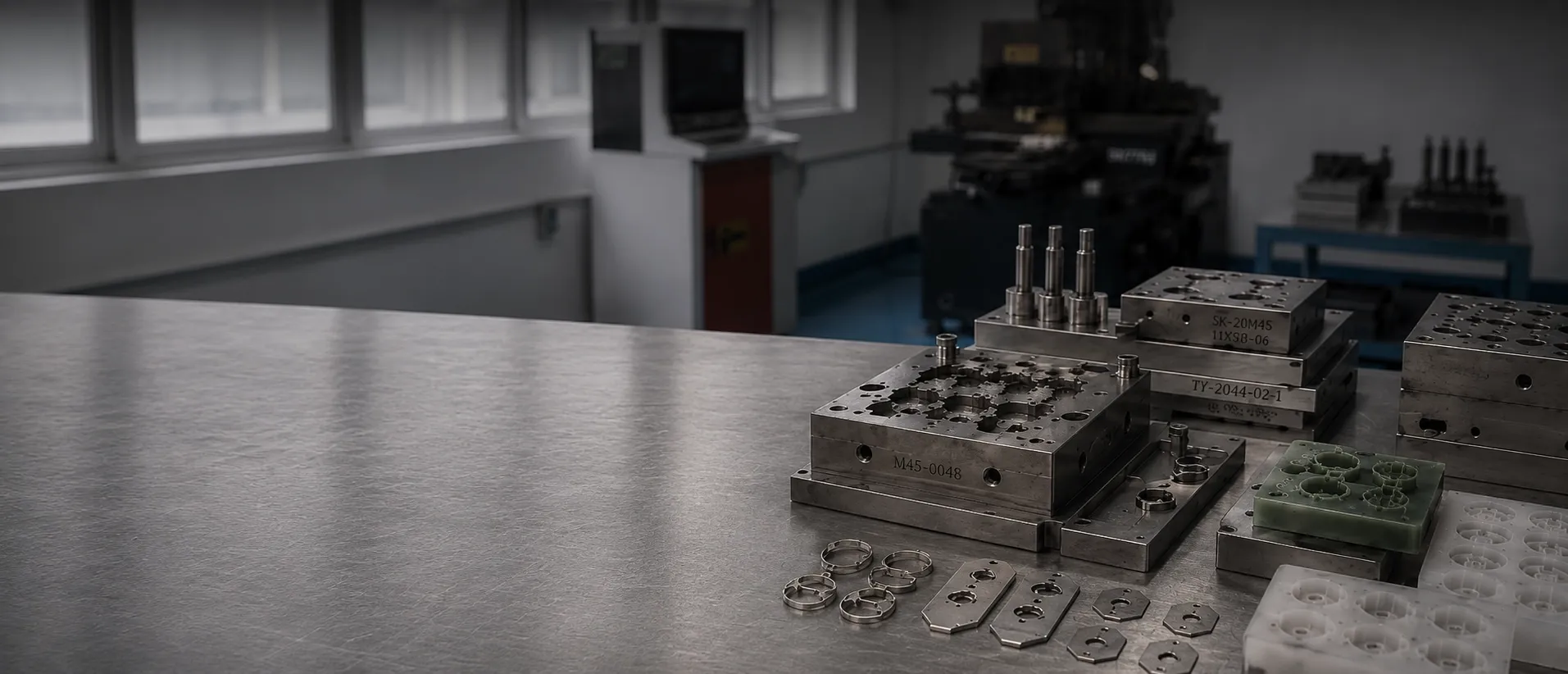
Lead time is tooling only and runs before sampling begins. Stamping dies are cut in our own wire EDM room.
industry-typical
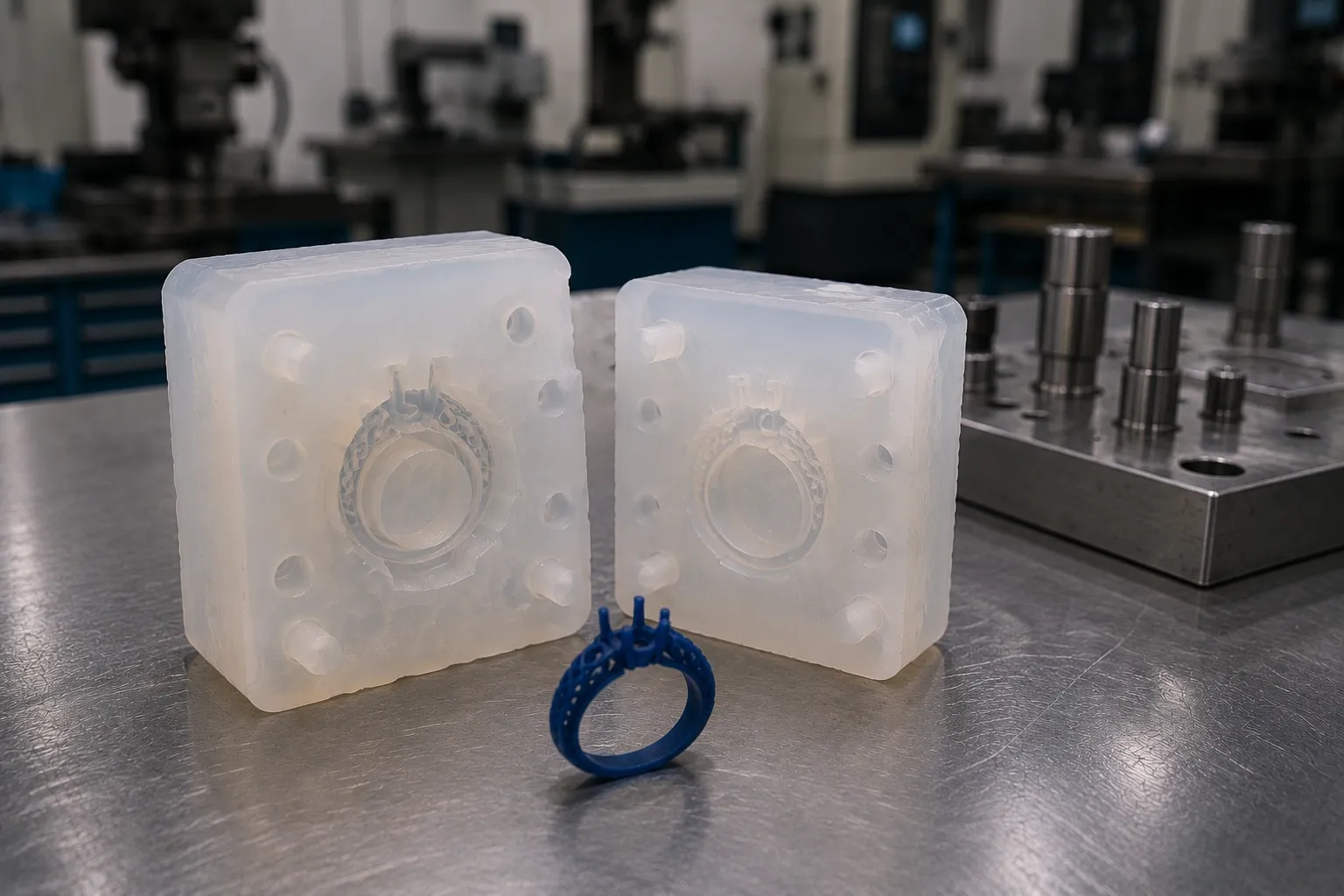
01Silicone moldLost-wax casting · ~500–1,000 wax injections 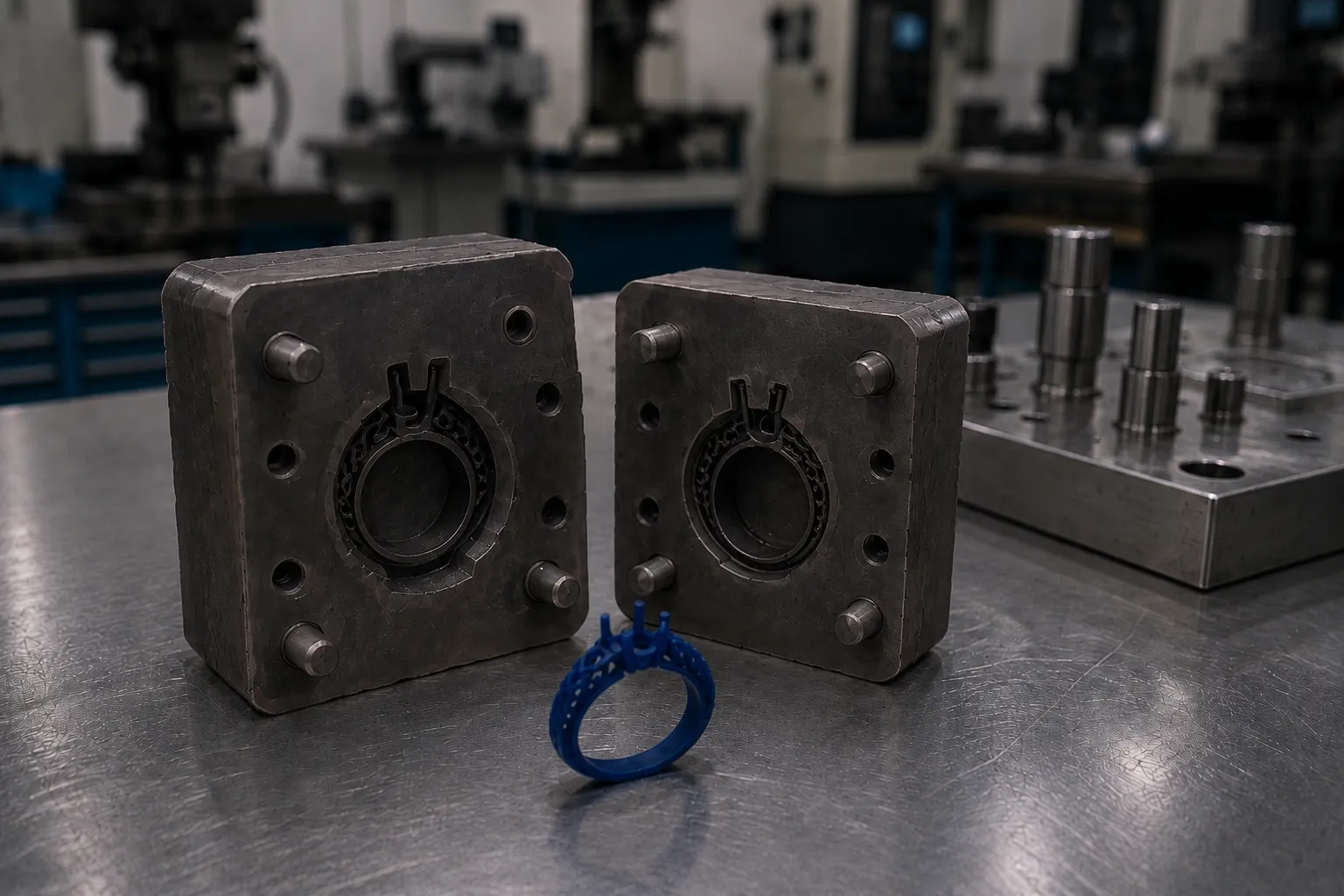
02Vulcanised rubber moldLost-wax casting · ~2,000–5,000 injections 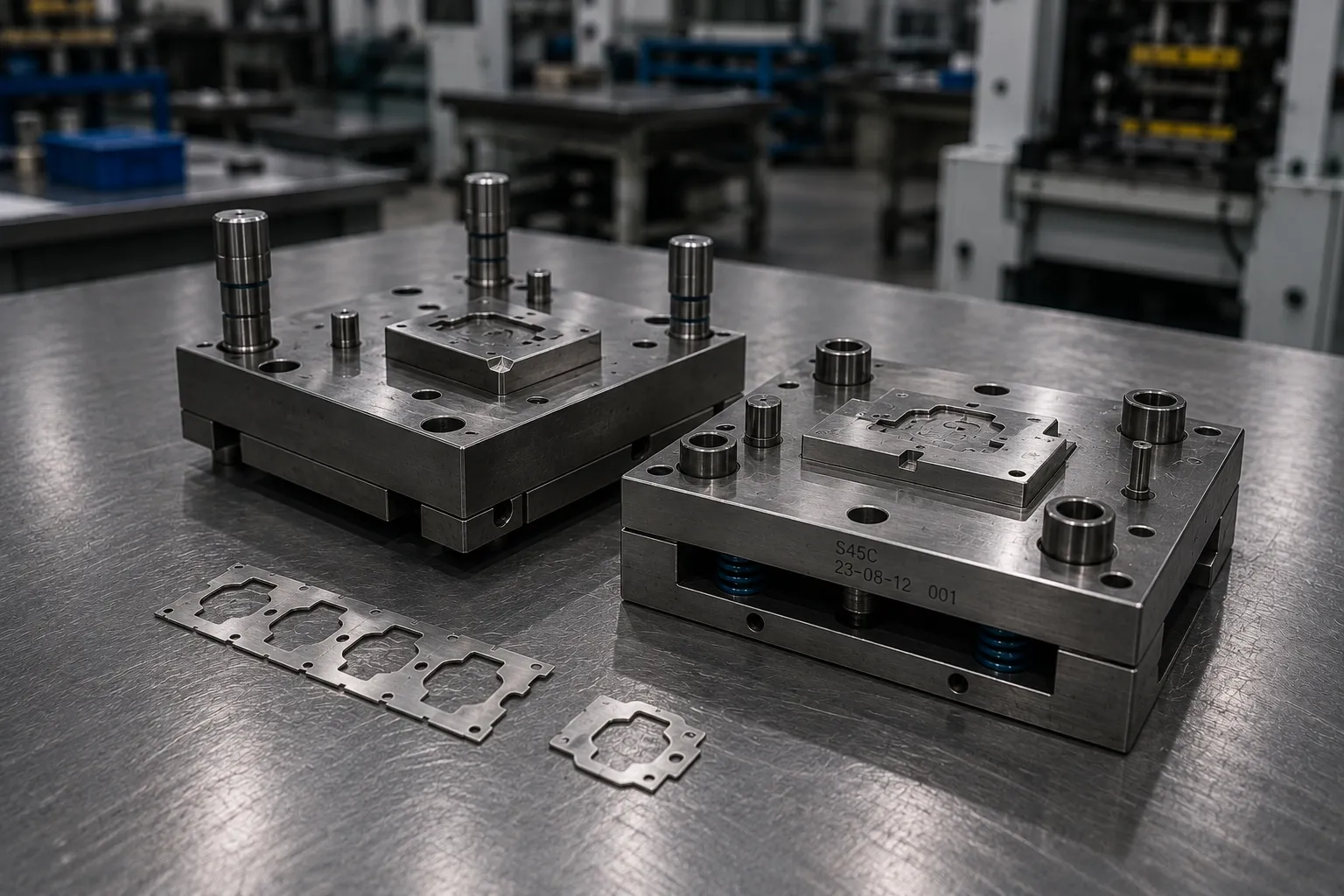
03Steel stamping die — simpleStamping / die striking · 100,000+ strikes 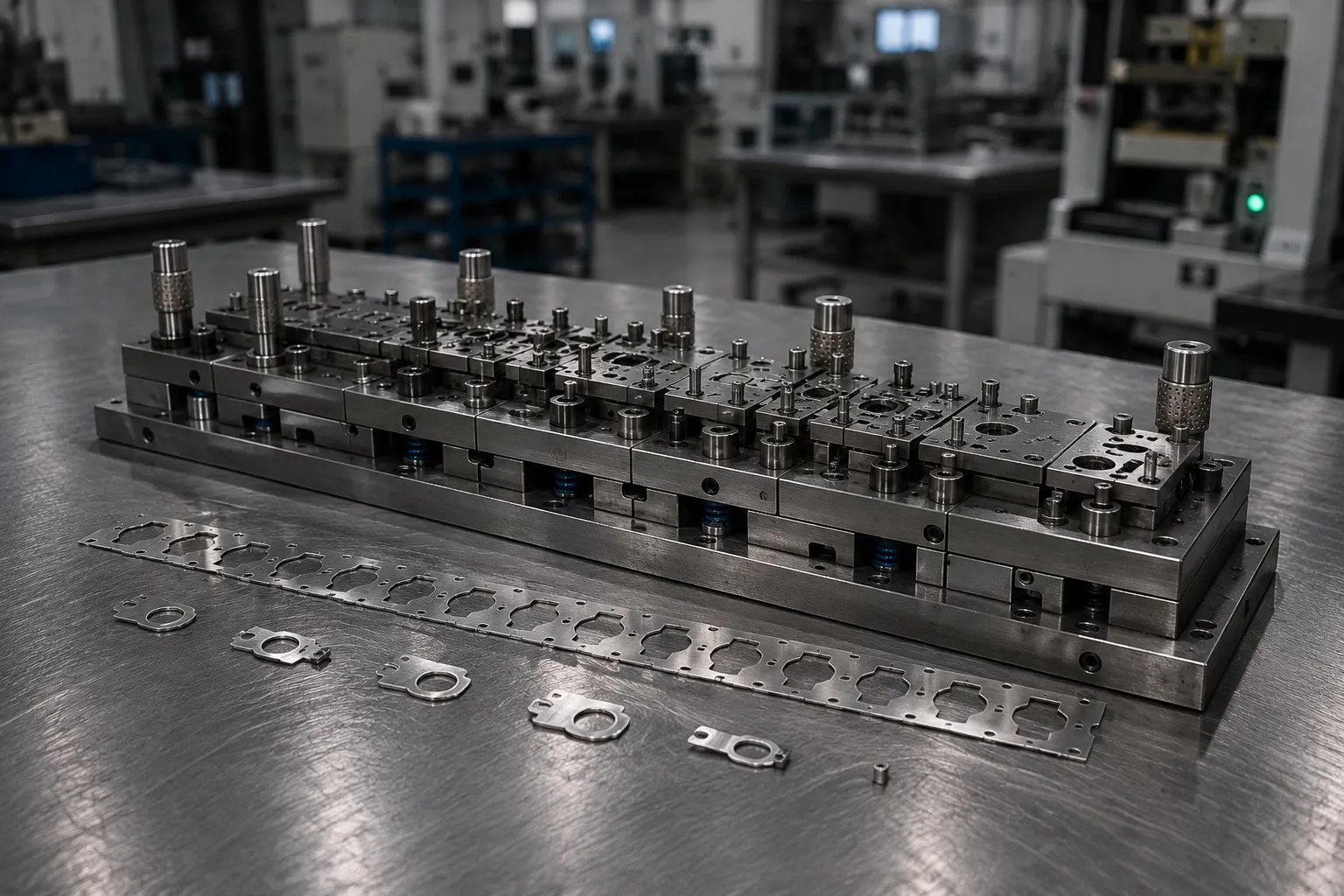
04Steel stamping die — progressiveStamping / die striking · 100,000+ strikes 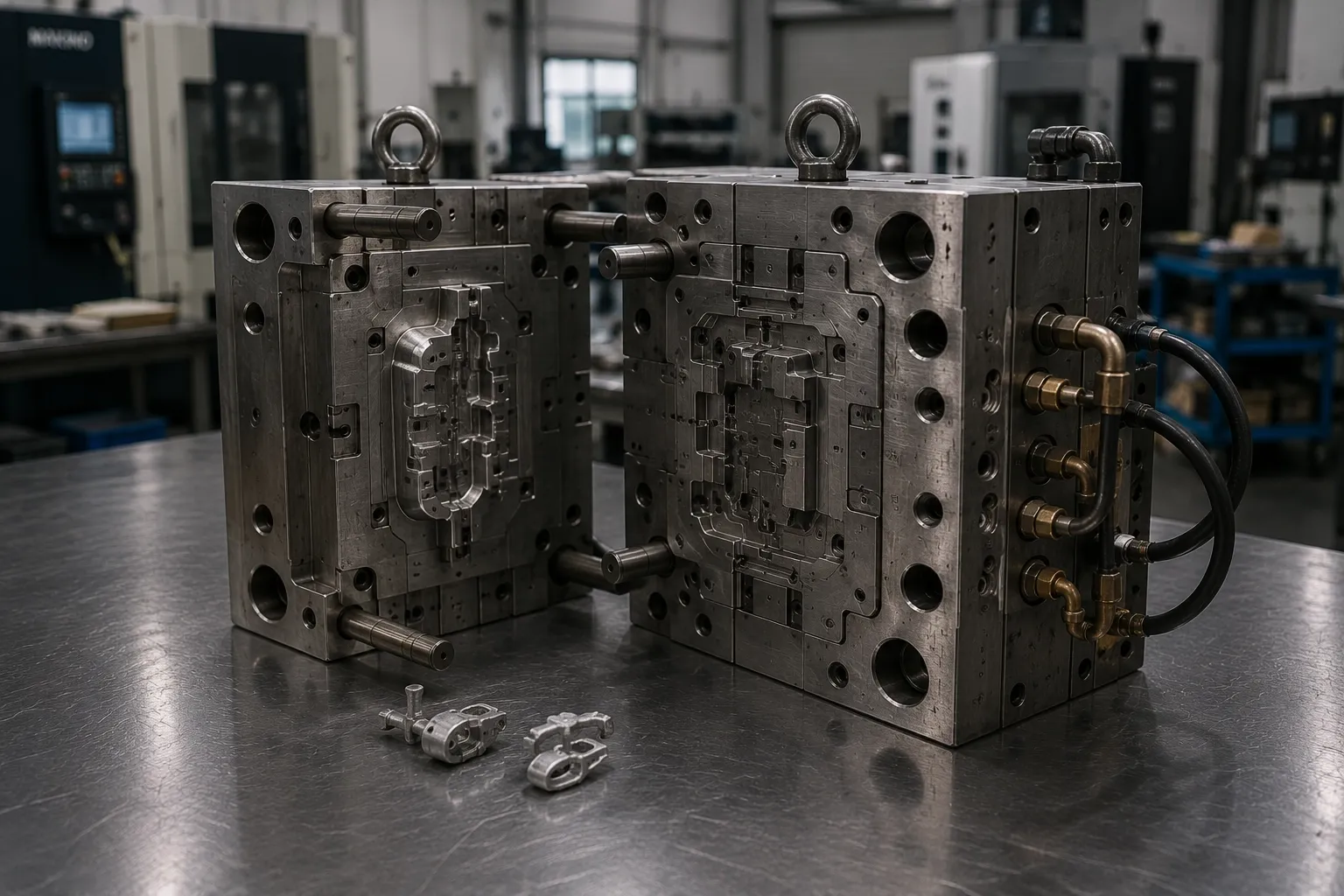
05Die-casting dieZinc alloy die casting · 50,000–200,000 shots 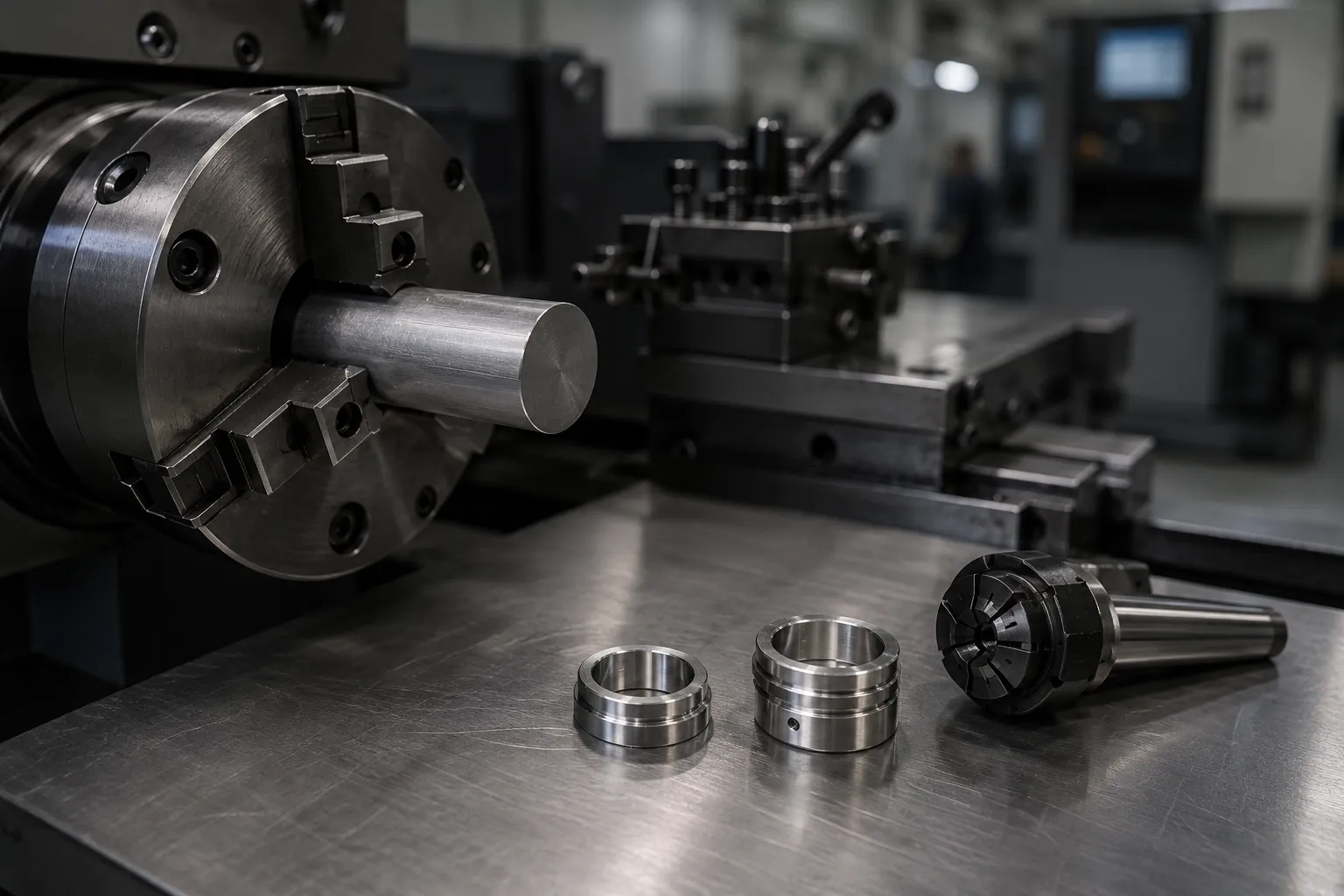
06No toolingCNC machining · Programming & setup only
Swipe · 6 styles
Why MOQ is set per colour
The minimum order quantity is 500 pieces per style, per plating colour. The second half of that sentence is the part that changes launch budgets.
Plating is a batch process. The bath is prepared to the specified chemistry, parts are racked or loaded into a barrel, the batch runs to the specified micron thickness, and the line is changed over for the next colour. That preparation and changeover costs the same whether the batch holds fifty pieces or five hundred.
So a design offered in gold, rose gold and black is three production batches, each with its own setup, its own first-article check and its own minimum. It is not one order of 500 pieces divided three ways.
| Range | Styles | Colours | Batches | Minimum total pcs |
|---|---|---|---|---|
| Single style, one finish | 1 | 1 | 1 | 500 |
| Single style, three finishes | 1 | 3 | 3 | 1,500 |
| Three styles, one finish | 3 | 1 | 3 | 1,500 |
| Three styles, two finishes | 3 | 2 | 6 | 3,000 |
| Six styles, three finishes | 6 | 3 | 18 | 9,000 |
Batches = styles × colours. Each batch carries its own setup and its own 500-piece minimum. Uncoated stainless steel styles do not carry a plating batch at all, which is one way to keep a first range small.
What a launch actually costs
Tooling plus minimum quantity, for three realistic first ranges. Unit prices are the ranges from the manufacturing cost page; tooling is from the table above.
- Tooling — simple steel die
- $150–500
- Plating batches
- None
- Units — 1 × 500
- 500 pcs
- Unit price
- $0.60–1.20
- First order
- $450–1,100
Uncoated stainless carries no plating batch at all, which removes both a setup cost and a lead-time stage.
- Tooling — 3 × simple die
- $450–1,500
- Plating batches
- 3
- Units — 3 × 500
- 1,500 pcs
- Unit price
- $0.87–1.71
- First order
- $1,755–4,065
The common shape of a considered first order: enough styles to make a range, one finish to keep batch count down.
- Tooling — mixed
- $500–3,000
- Plating batches
- 18
- Units — 18 × 500
- 9,000 pcs
- Unit price
- $1.31–2.77
- First order
- $12,290–27,930
Eighteen batches before anything has sold. Almost always better staged: launch in one finish, add colourways once a style proves.
Who owns the mold
Tooling ownership is a contractual question that costs nothing to settle at quotation stage and is expensive to argue about later.
| Charged as | A separate one-off line, never inside the unit price |
|---|---|
| Ownership | The buyer — tooling is stored under the buyer’s account |
| Reorder | No second tooling charge for the same design |
| Design ownership | The buyer’s; NDA signed before files are received |
| Resale | Client designs and tooling are never used for another buyer |
| Transfer | Tooling can be released or shipped to the buyer on request |
| Stamping dies | Cut in our own wire EDM room, so revisions do not queue behind an outside die shop |
| MOQ | 500 pcs per style, per plating colour |
When tooling pays back
The choice between a cheap mold with expensive pieces and expensive tooling with cheap pieces is arithmetic, not preference.
| Route | Tooling | Operations | Scrap | Crossover point |
|---|---|---|---|---|
| CNC machining | None | 2–4 | 3–5% | Cheapest below ~200 pcs; never competitive above ~2,000 |
| Lost-wax casting | $30–120 | 6–9 | 5–8% | Wins on tooling; loses per piece from ~1,000 pcs |
| Stamping — simple die | $150–500 | 3–5 | 3–5% | Pays back against casting around 1,000–3,000 pcs |
| Stamping — progressive | $500–2,000 | 3–5 | 3–5% | Needs ~10,000 pcs to beat a simple die |
| Die casting | $600–2,500 | 4–6 | 4–6% | Volume decorative work, ~20,000 pcs and up |
Crossover points are indicative and shift with piece complexity. The reliable rule: tooling cost is fixed and per-piece cost is not, so quantity always favours the more expensive tooling.
industry-typical
How to cut tooling spend
- Freeze the CAD before tooling is cut. A stamping die usually cannot be modified — a design change means a new die, not an adjustment.
- Launch in one finish. Colour count multiplies batches faster than style count multiplies tooling. Add colourways once a style has sold.
- Share tooling across sizes where the geometry allows. A pendant offered in two sizes needs two molds; the same pendant on two chain lengths needs one.
- Start on CNC while the design is unproven. No tooling cost at all, higher per piece — the right trade for a first few hundred units.
- Use uncoated stainless steel for at least one style. No plating batch, no plating setup, no plating lead time, and no coating to fail in wear.
- Ask for tooling to be quoted separately, always. A supplier who will not separate it is amortising it across an assumed quantity you have not agreed to.
Where buyers lose money
Questions buyers ask about this
Each answer is self-contained and can be read without the rest of the page.
How much does a jewelry mold cost?
It depends entirely on the forming route. A silicone mold for lost-wax casting is the cheapest tooling in jewelry at roughly $30–80 and takes 2–4 days to cut. A vulcanised rubber mold runs $50–120 and survives a far longer production life. A simple single-station steel stamping die is $150–500; a progressive die that blanks, forms and pierces in one press stroke is $500–2,000. A zinc die-casting die is the most expensive at $600–2,500. CNC machining needs no tooling at all — only programming and setup.
Why is jewelry MOQ set per plating colour rather than per style?
Because each plating colour is a separate production batch. The bath is prepared, the parts are racked or barrelled, the batch runs, and the bath is changed for the next colour — that setup cost is the same whether the batch is fifty pieces or five hundred. So the MOQ of 500 pieces applies per style per colour: one design in gold, rose gold and black is three batches of 500, totalling 1500 pieces, not 500 split three ways.
Do I own the mold I paid for?
Yes. Tooling is quoted and invoiced as a separate line, it is stored under the buyer's account, and there is no second tooling charge on a reorder of the same design. An NDA is signed before design files are received, and client designs and tooling are never used for another buyer. When tooling is instead folded into the unit price, it is amortised across an assumed quantity — which is why a smaller reorder from that kind of supplier silently costs more per piece.
How long does jewelry tooling take to make?
A silicone mold takes 2–4 days and a rubber mold 3–5. A simple steel stamping die takes 5–10 days, a progressive die 10–20, and a die-casting die 15–25. That time runs before sampling begins, so it sits on top of the sampling and production lead times rather than inside them. Stamping dies are cut in our own wire EDM room, which is why a tooling revision does not queue behind an outside die shop.
Can I avoid paying for tooling on a first order?
Yes — use CNC machining, which cuts directly from stock with no tooling at all, or start with a design that suits an existing standard component. CNC costs more per piece and does not get cheaper with quantity, so it suits a first run of a few hundred pieces while the design is still being proven. Once the design is frozen and quantities rise, cutting a die pays back quickly.
At what quantity does a stamping die pay for itself against casting?
Usually somewhere between 1,000 and 3,000 pieces, depending on how many labour operations the cast version needs. Casting carries 6–9 operations against 3–5 for stamping, plus a higher scrap allowance of 5–8% against 3–5%. The cast route wins on tooling by several hundred dollars and loses on every single piece after that, so the crossover is a function of quantity, not of design quality.
Not answered here? All buyer questions →
Get the number for your actual order
The ranges on this page are the structure. A quotation puts your design, quantity, material and finish into it and returns a single itemised figure.
- 01Reply within one working day, Guangdong business hours.
- 02Itemised cost sheet — mold quoted separately, not folded into the unit price.
- 03NDA on request before any file is shared.