
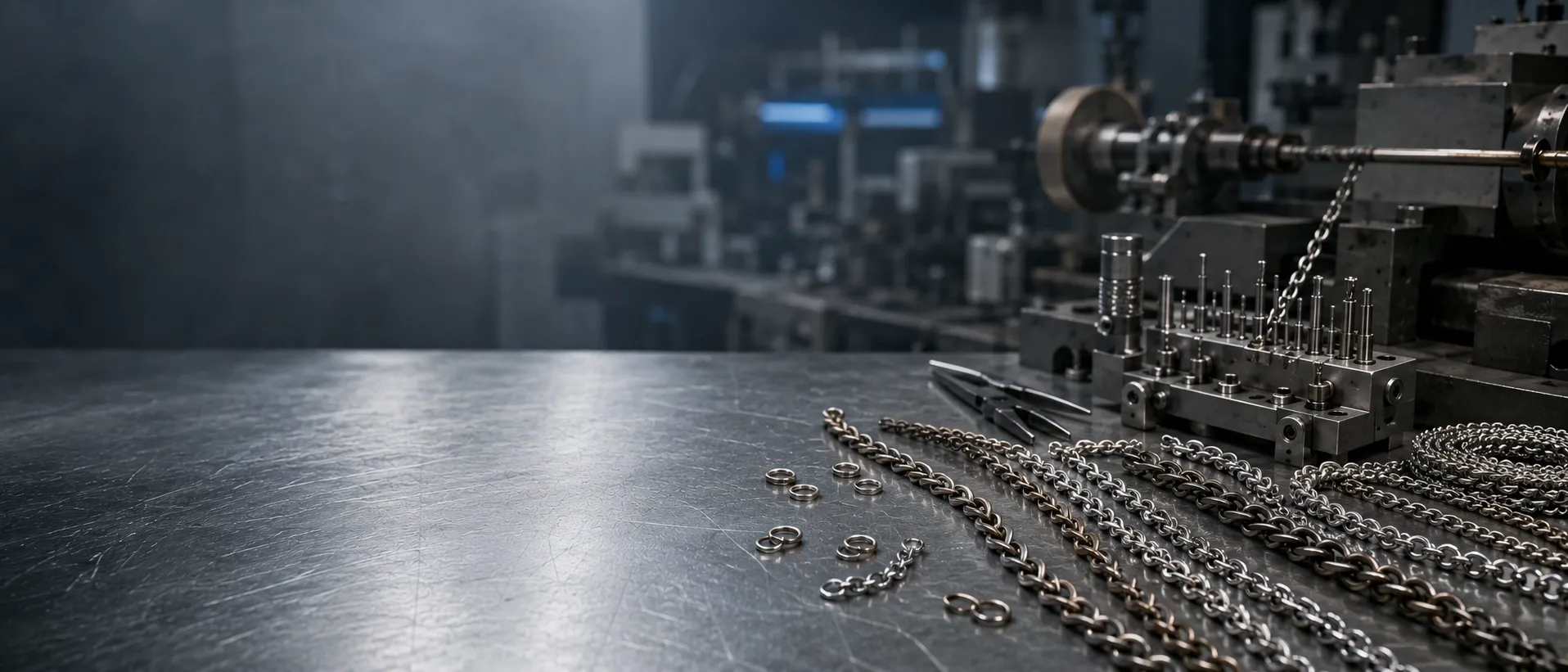
Chain making
Wire is fed, cut, bent into links and interlocked continuously by a chain machine, then soldered or welded closed and finished as a length.
- Tolerance
- ±0.1 mm on link pitch
- Min. wall
- 0.5 mm wire
- Tooling
- Machine setup per link style
- Batch fit
- Continuous lengths, cut to order
How it works
Wire is fed, cut, bent into links and interlocked continuously by a chain machine, then soldered or welded closed and finished as a length.
Twelve link styles in continuous lengths, 0.8–12 mm gauge are the work this route is chosen for. It runs on 316L stainless steel, 925 silver, Brass and suits continuous lengths, cut to order.
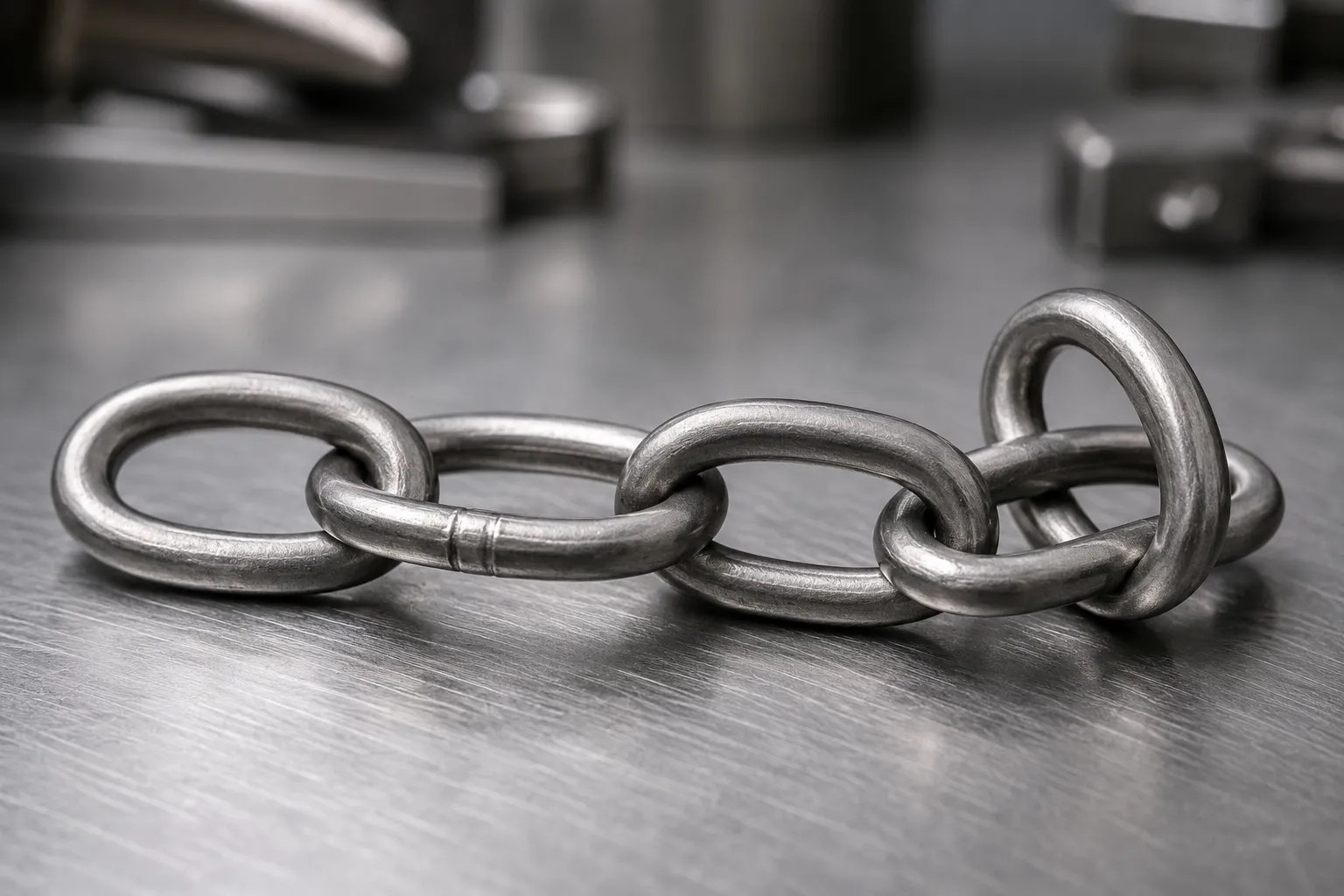
01CableRound links, each turned 90° to the last 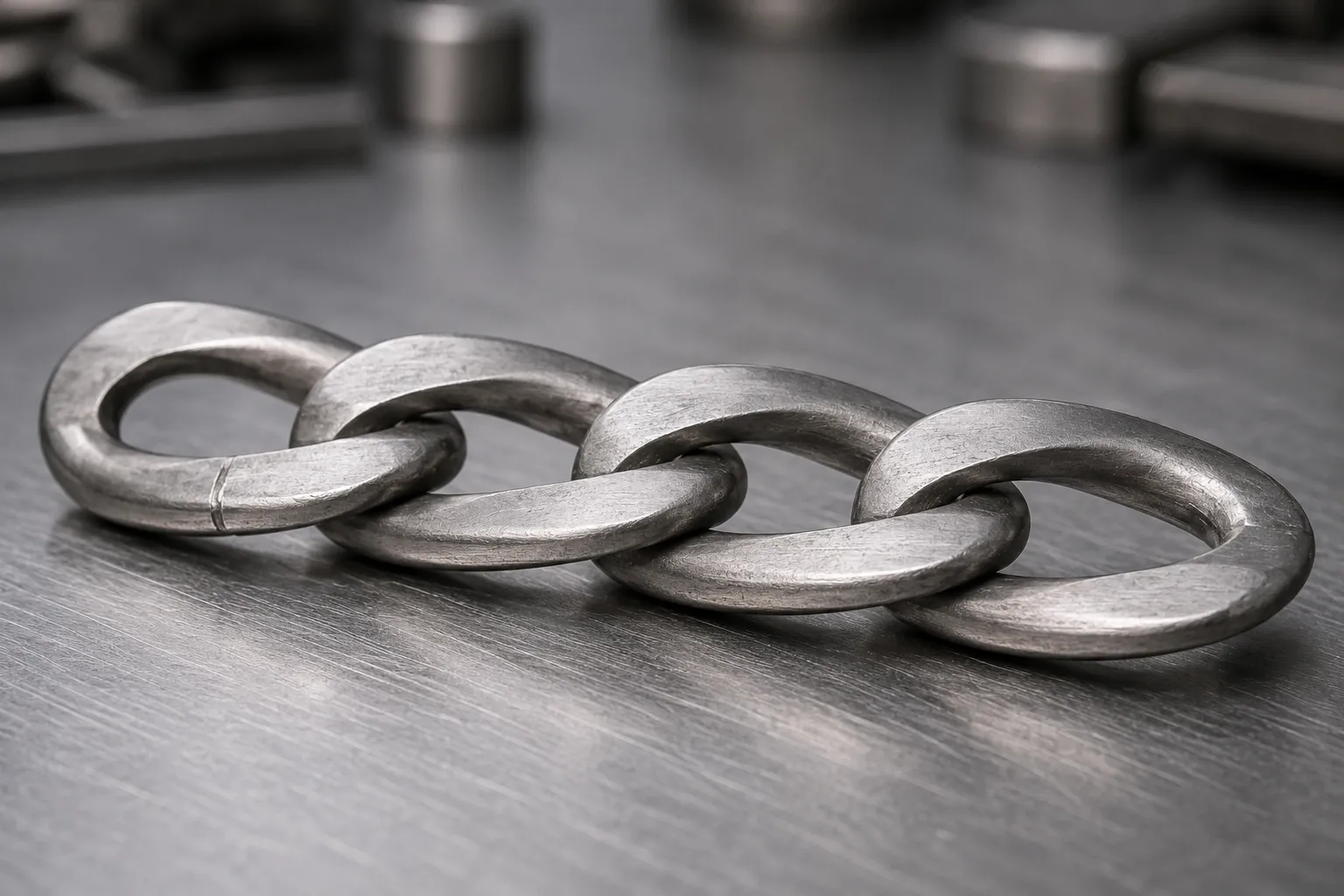
02CurbOval links twisted so the chain lies flat 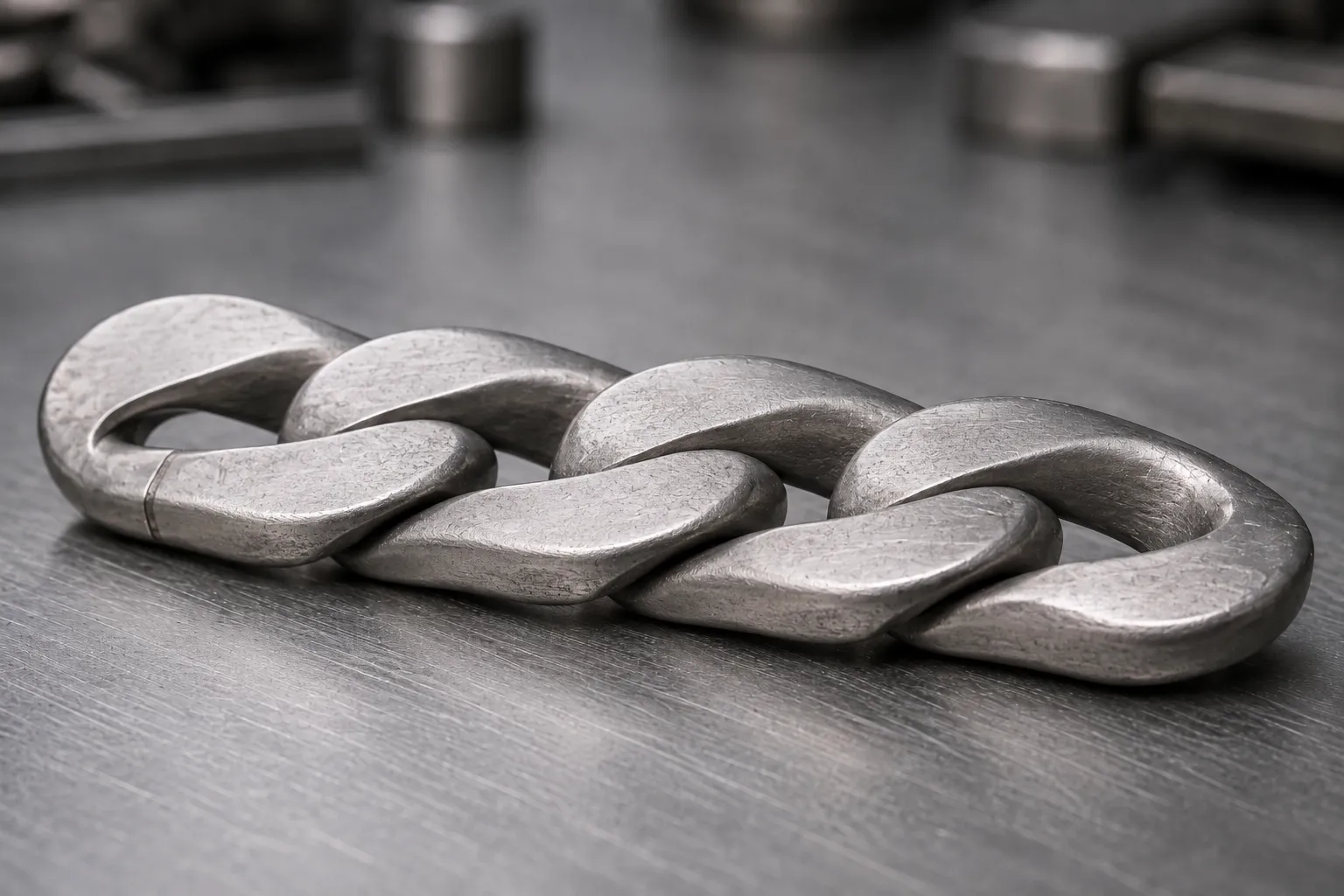
03CubanCurb links flattened and tightly interlocked 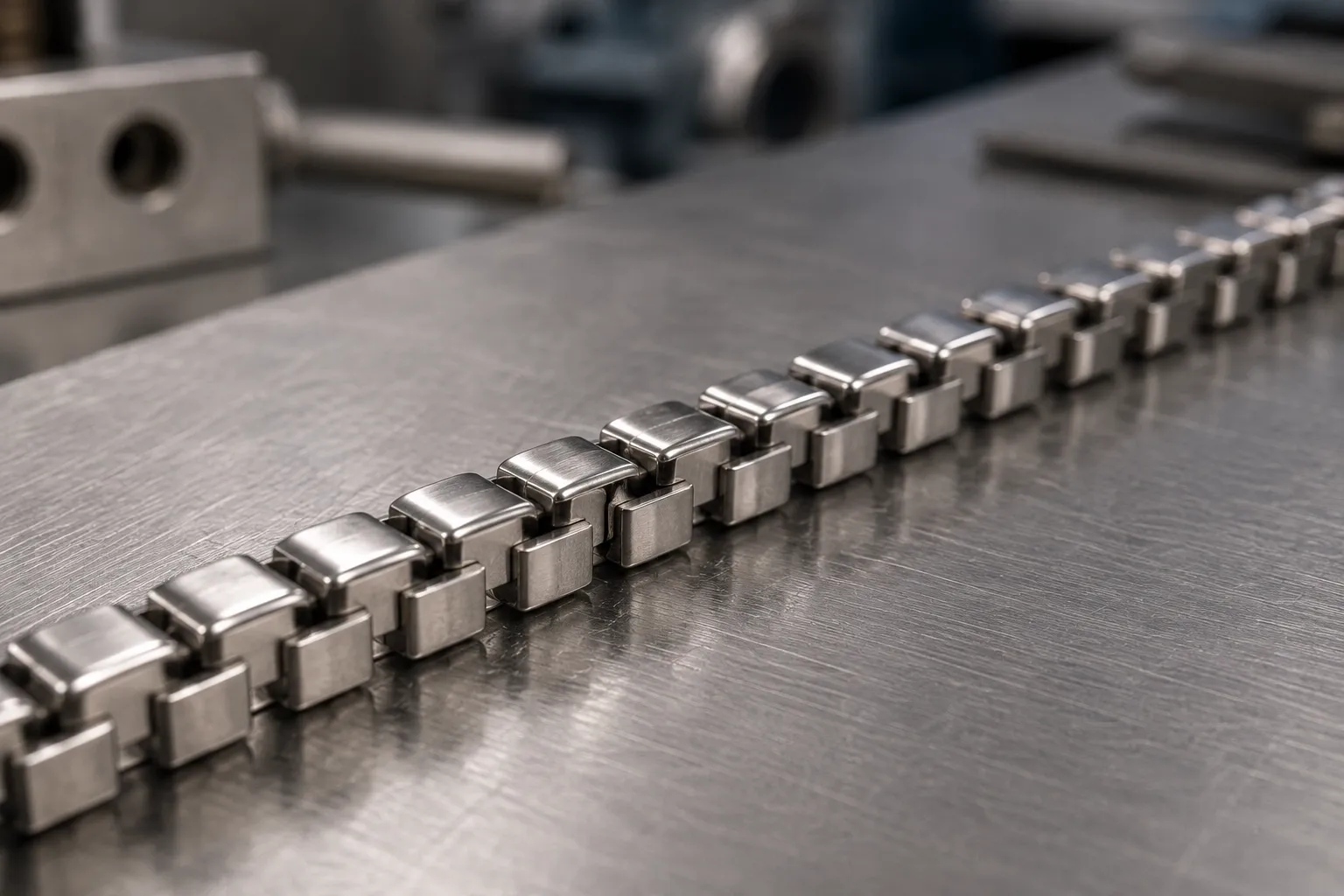
04BoxSquare links, each seating inside the next 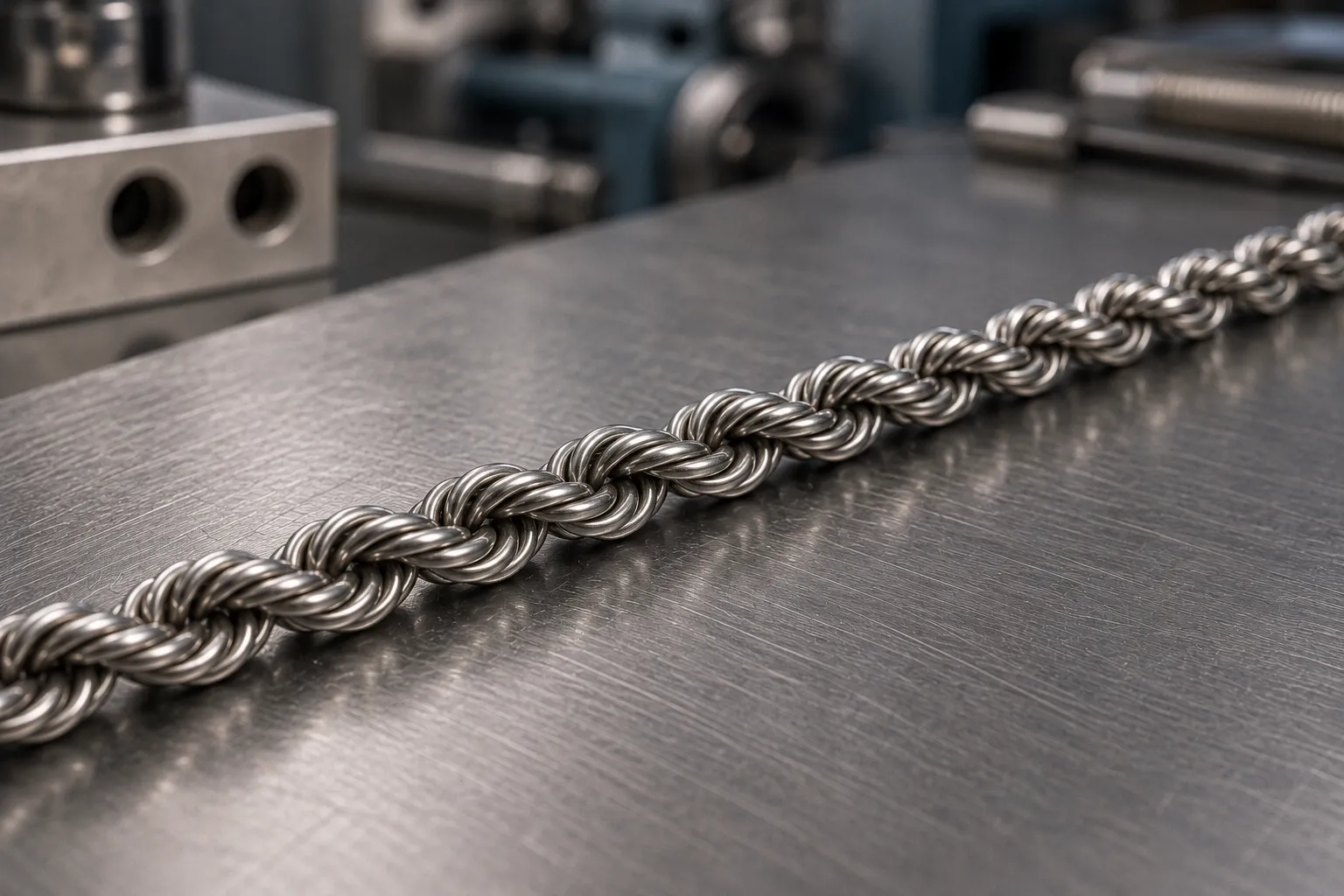
05RopeLinks set in pairs, spiralling around the axis 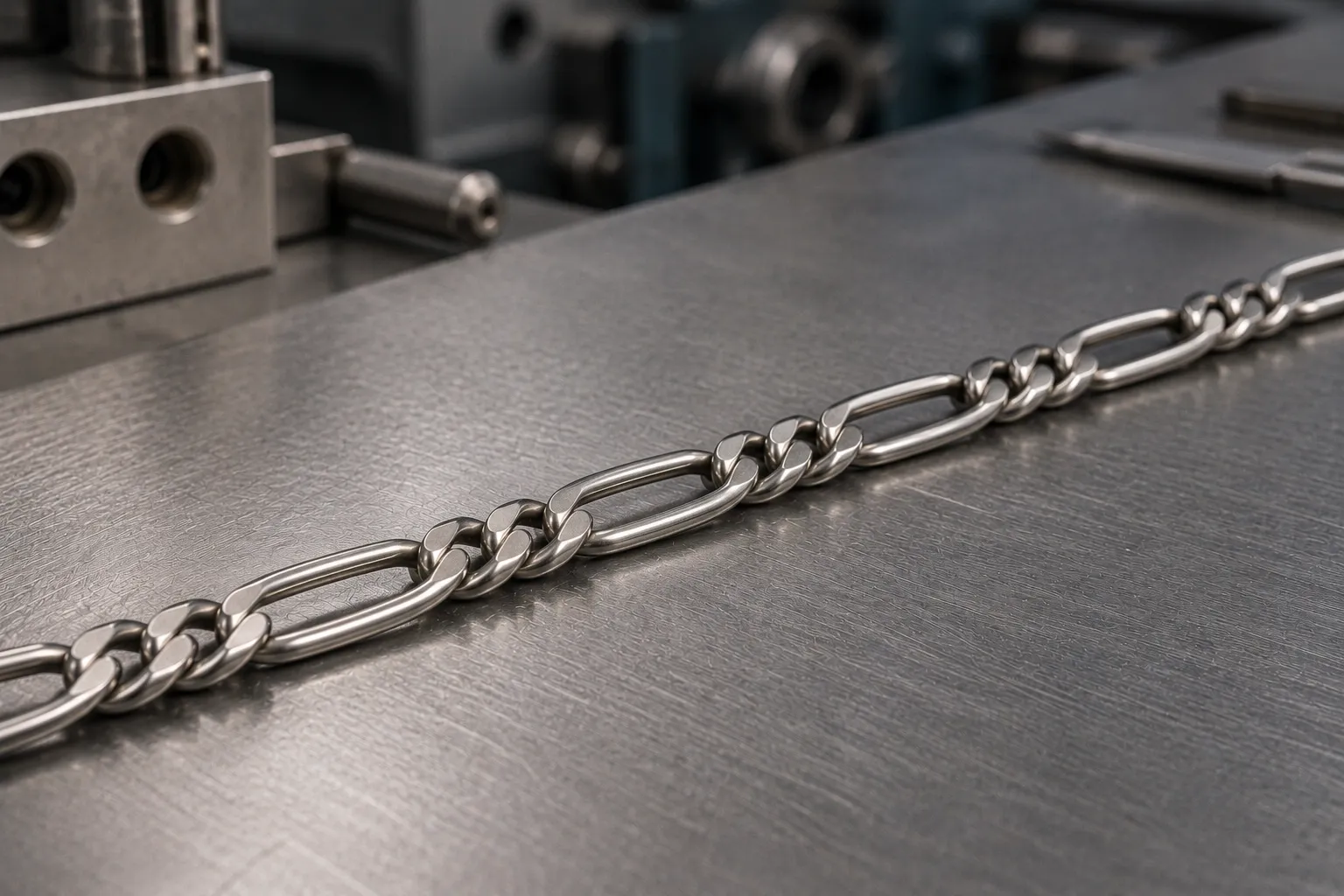
06FigaroRepeating run of one long link to two or three short 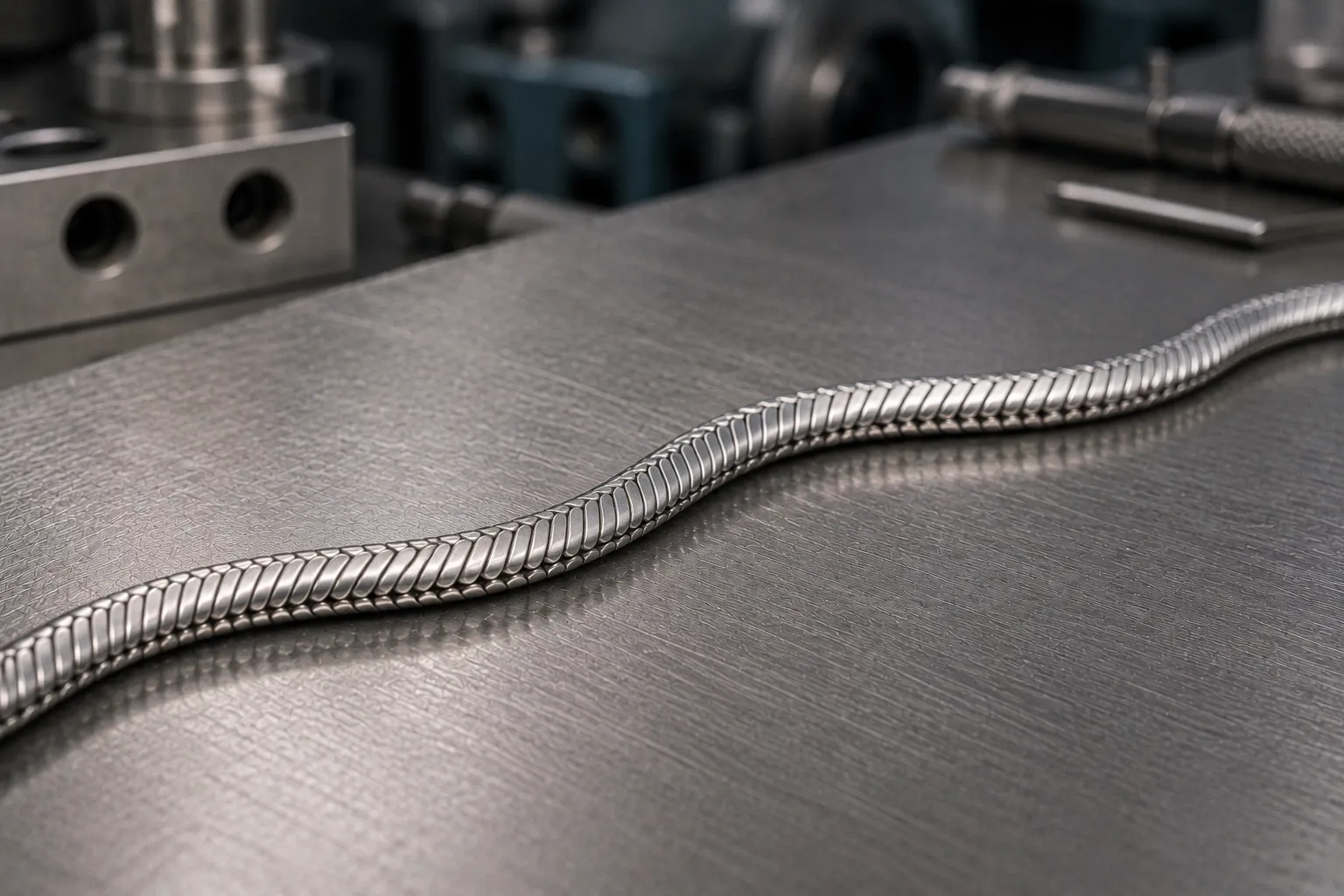
07SnakeWavy plates butted edge to edge, no open link 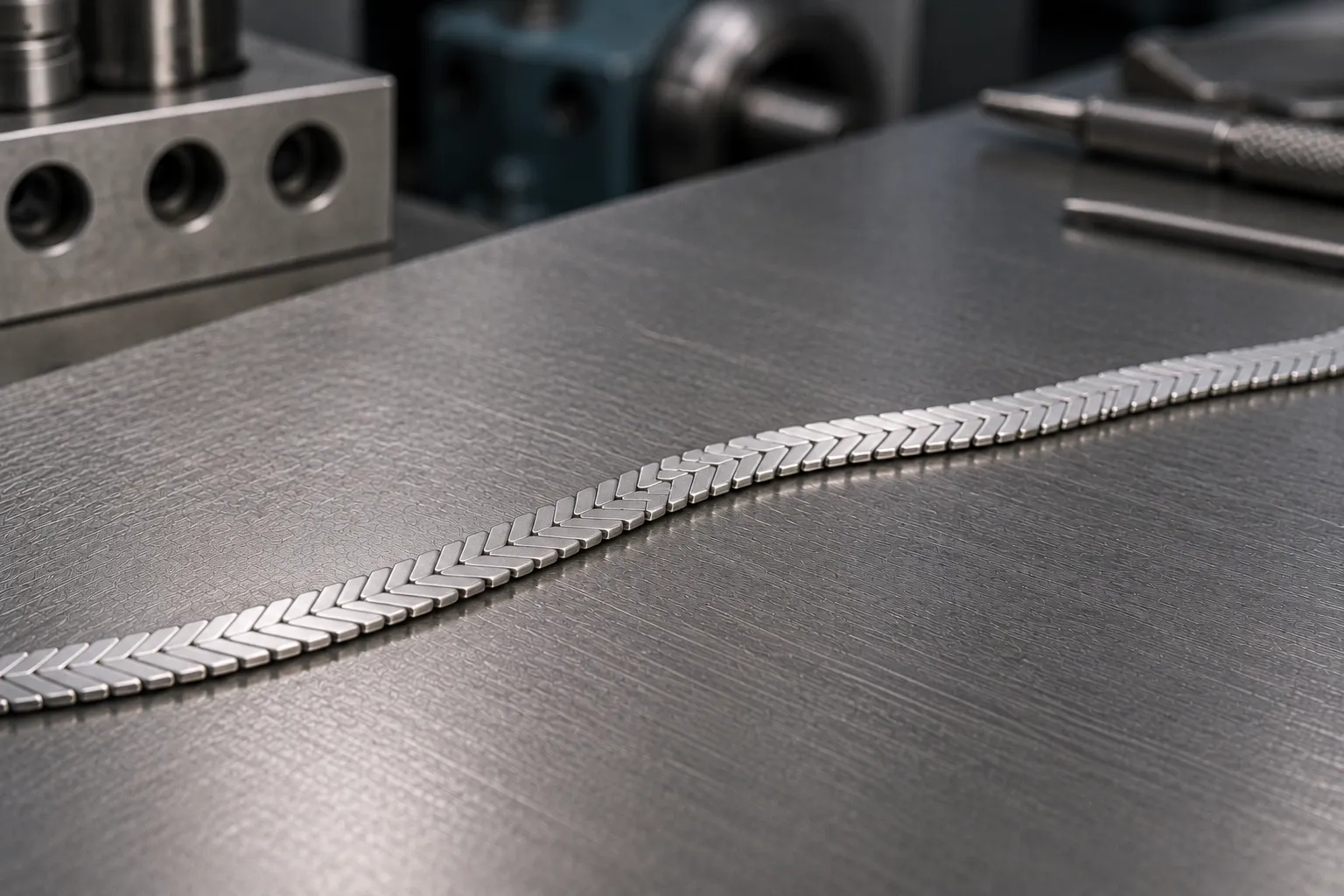
08HerringboneFlat V-shaped links laid in a single plane 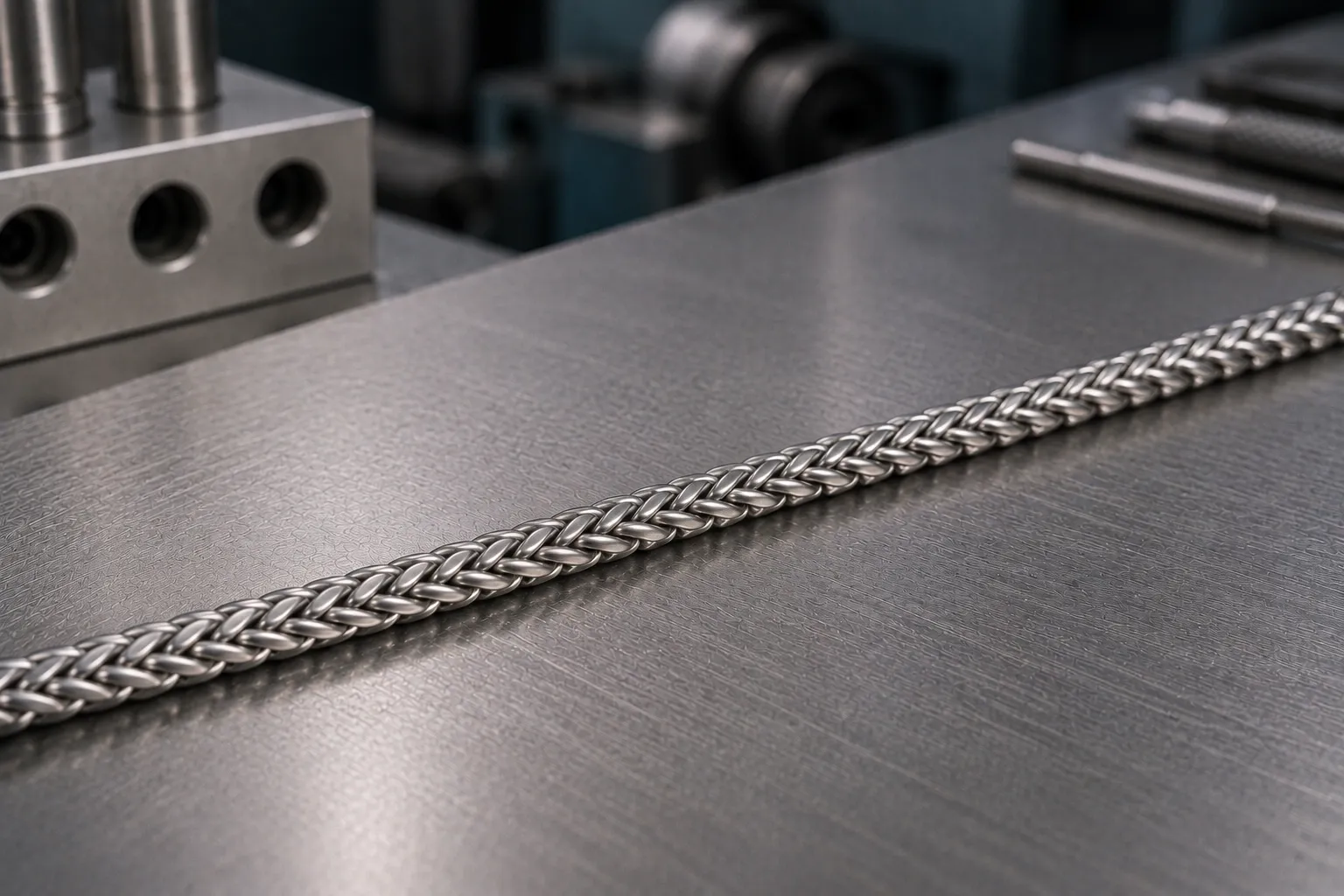
09WheatFour twisted oval links braided one way 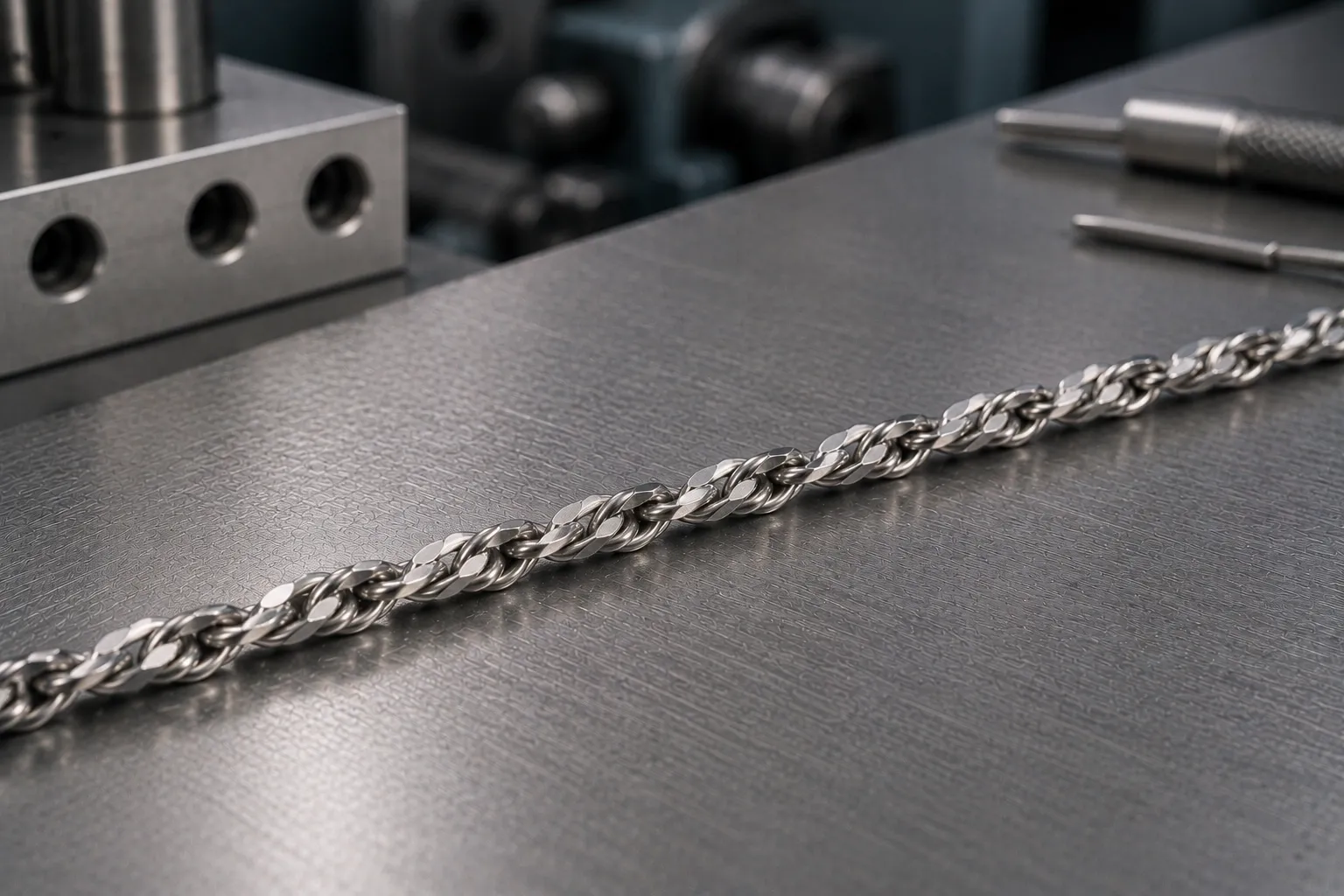
10SingaporeCurb links twisted along the length, faceted 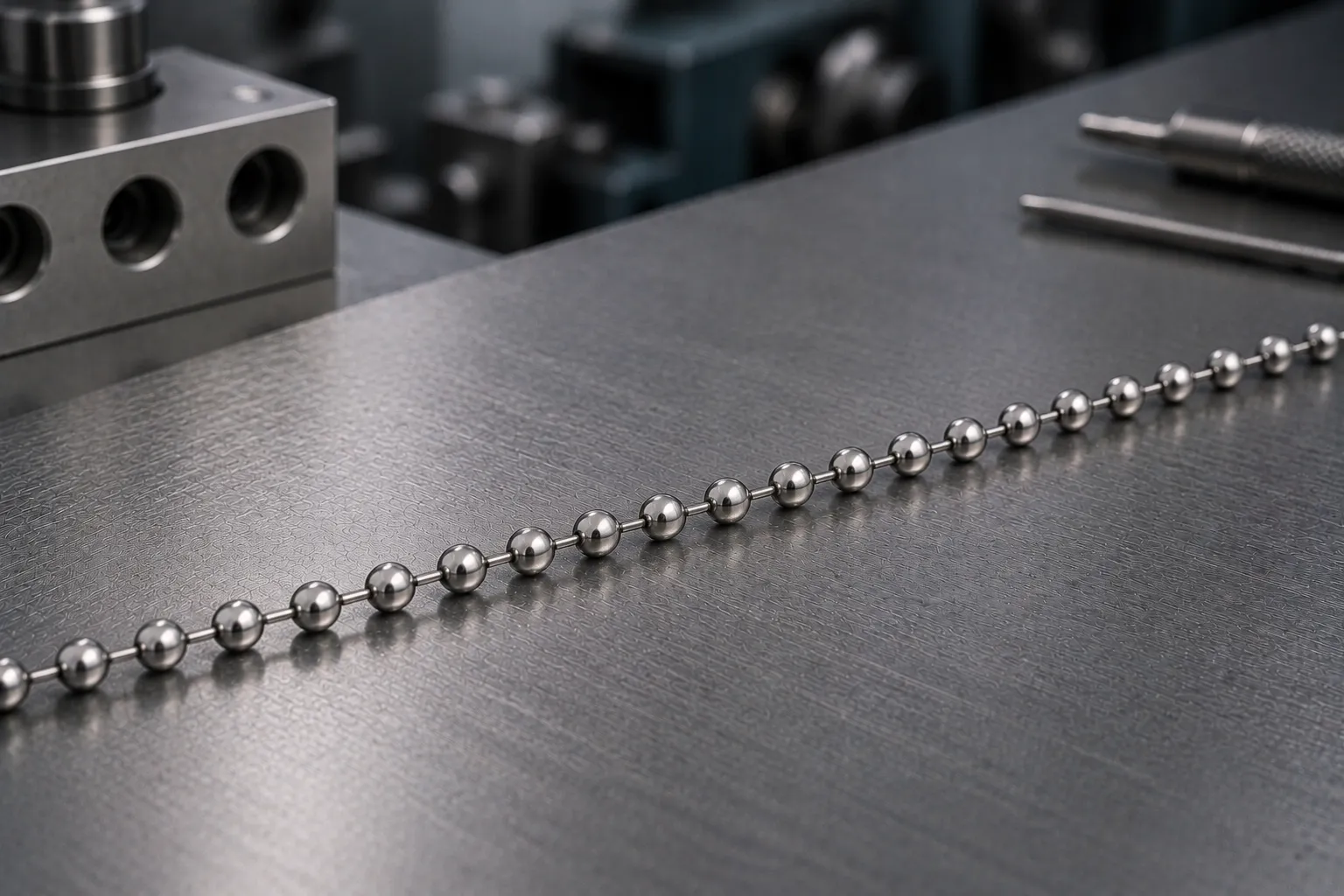
11BallSpheres joined by short connecting bars 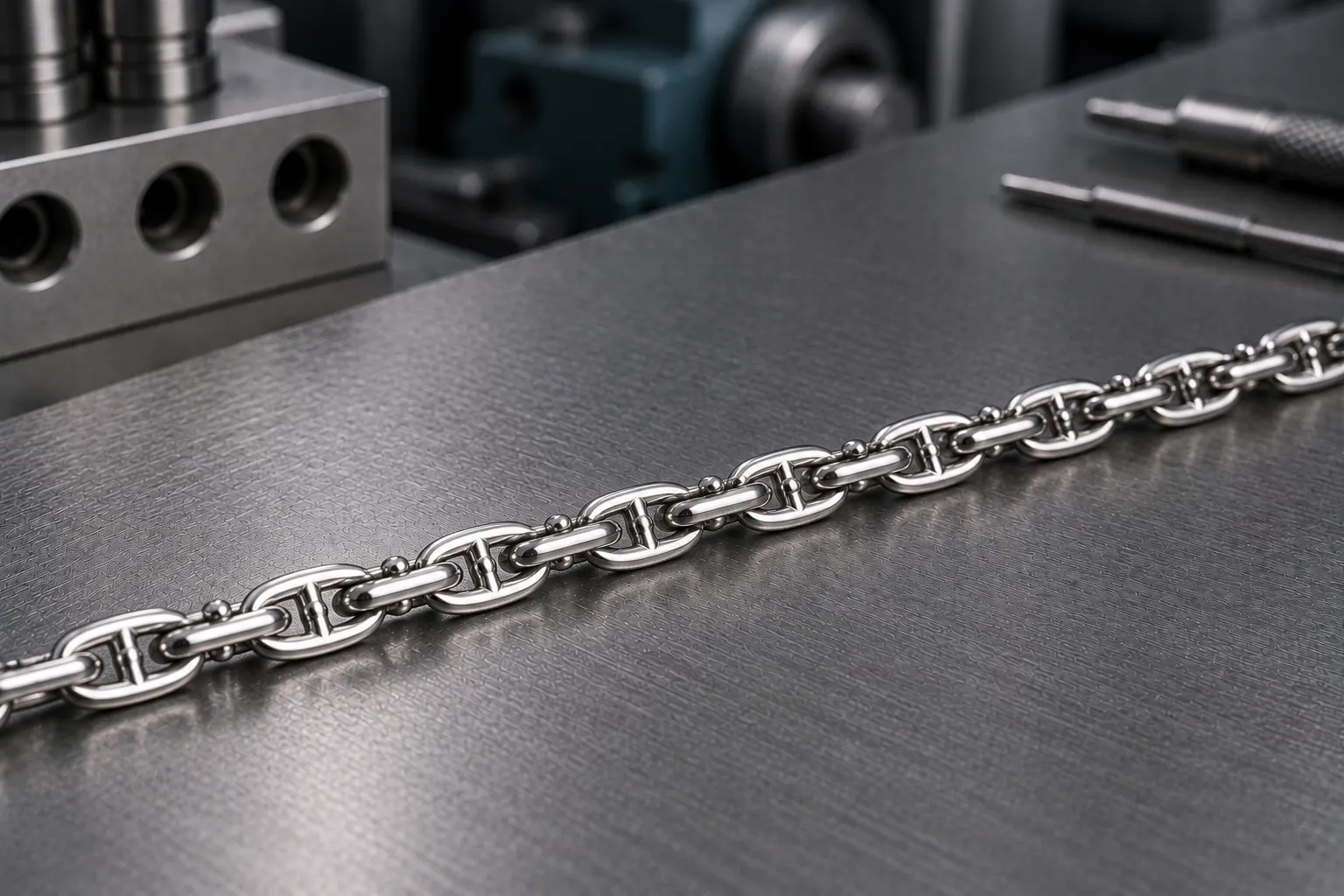
12MarinerOval links with a bar across the centre
Swipe · 12 styles
Production steps
Each step below is a separate labour operation, and labour is priced per operation rather than per piece. That is why a 6-step route costs what it does.
- 01Wire drawn to the specified gauge
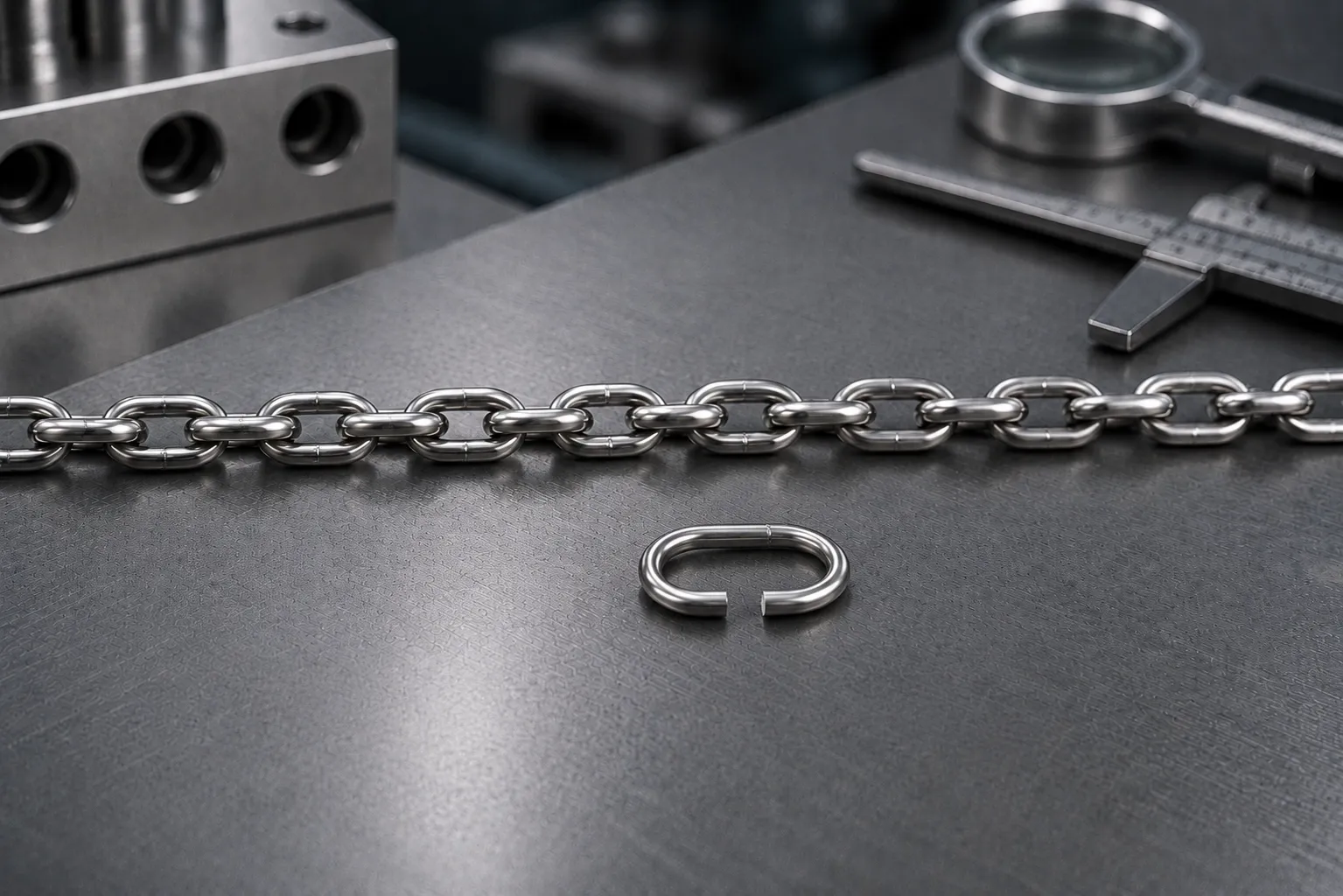
- 02Links formed and interlocked on the chain machine
- 03Links soldered or laser-welded closed
- 04Chain flattened, twisted or diamond-cut for the finish
- 05Cut to length and clasps attached
- 06Tumble polish and plate
Process parameters
These are engineering properties of the process itself. They hold at any competent factory and can be checked against a manufacturing reference.
| Dimensional tolerance | ±0.1 mm on link pitch |
|---|---|
| Minimum wall / section | 0.5 mm wire |
| Tooling cost | Machine setup per link style |
| Suited to | Continuous lengths, cut to order |
| Cycle time | Continuous |
| Materials accepted | 316L stainless steel, 925 silver, Brass |
Tooling ranges are industry-typical. A firm figure is quoted against your CAD file — see the cost breakdown.
Chain vs Stamping
Chain is made on dedicated machines; stamping produces the pendants and connectors that hang on it. Most necklace orders need both.
Compare with stamping →Materials and categories this suits
Process, material and product category are one decision seen from three sides. These are the combinations that actually work.
| 316L steel | ASTM A276 / EN 1.4404 |
|---|---|
| 925 silver | ASTM B700 / EN ISO 9202 (925 fineness) |
| Brass | ASTM B36 / EN CW508L |
| Necklaces & Pendants | Twelve link styles, 0.8–12 mm gauge |
|---|---|
| Bracelets & Bangles | Curb, Cuban and box link bracelets |
| Chains | Continuous forming and interlocking on dedicated machines |
What to watch out for
Chain making — buyer questions
Each answer stands alone and can be read without the rest of this page.
What tolerance can chain making hold?
Chain making holds ±0.1 mm on link pitch on production parts, with a minimum wall or section of 0.5 mm wire. Wire is fed, cut, bent into links and interlocked continuously by a chain machine, then soldered or welded closed and finished as a length. Tighter tolerances than this normally mean a secondary machining operation rather than a change to the primary process.
How much does tooling cost for chain making?
Tooling for this route is machine setup per link style, quoted as a one-off line and invoiced separately from the unit price. The buyer owns the tooling and it is not charged again on a reorder. Full tooling ranges for every route are on the manufacturing cost page.
What order quantity does chain making suit?
This route suits continuous lengths, cut to order. Below that range the setup cost dominates the unit price; above it, a different route is usually cheaper per piece. Chain is made on dedicated machines; stamping produces the pendants and connectors that hang on it. Most necklace orders need both.
Which metals can be processed this way?
316L stainless steel, 925 silver, Brass. Each link style needs its own machine setup, so mixing five chain styles in one order is five setups. Soldered links are stronger than butted ones — specify which, because butted chain opens under load.
Chain or stamping — which is right for my design?
Chain is made on dedicated machines; stamping produces the pendants and connectors that hang on it. Most necklace orders need both.
Not answered here? All buyer questions →
Quote a chain run
Send the CAD file or a sketch. You get the tooling cost as its own line, the unit price at your quantity, and a straight answer on whether chain is the right route for the design — we will say so if it is not. Production runs in Qingxi, Dongguan, Guangdong.
- 01Reply within one working day, Guangdong business hours.
- 02Itemised cost sheet — mold quoted separately, not folded into the unit price.
- 03NDA on request before any file is shared.