
Frosted and Florentine finishing
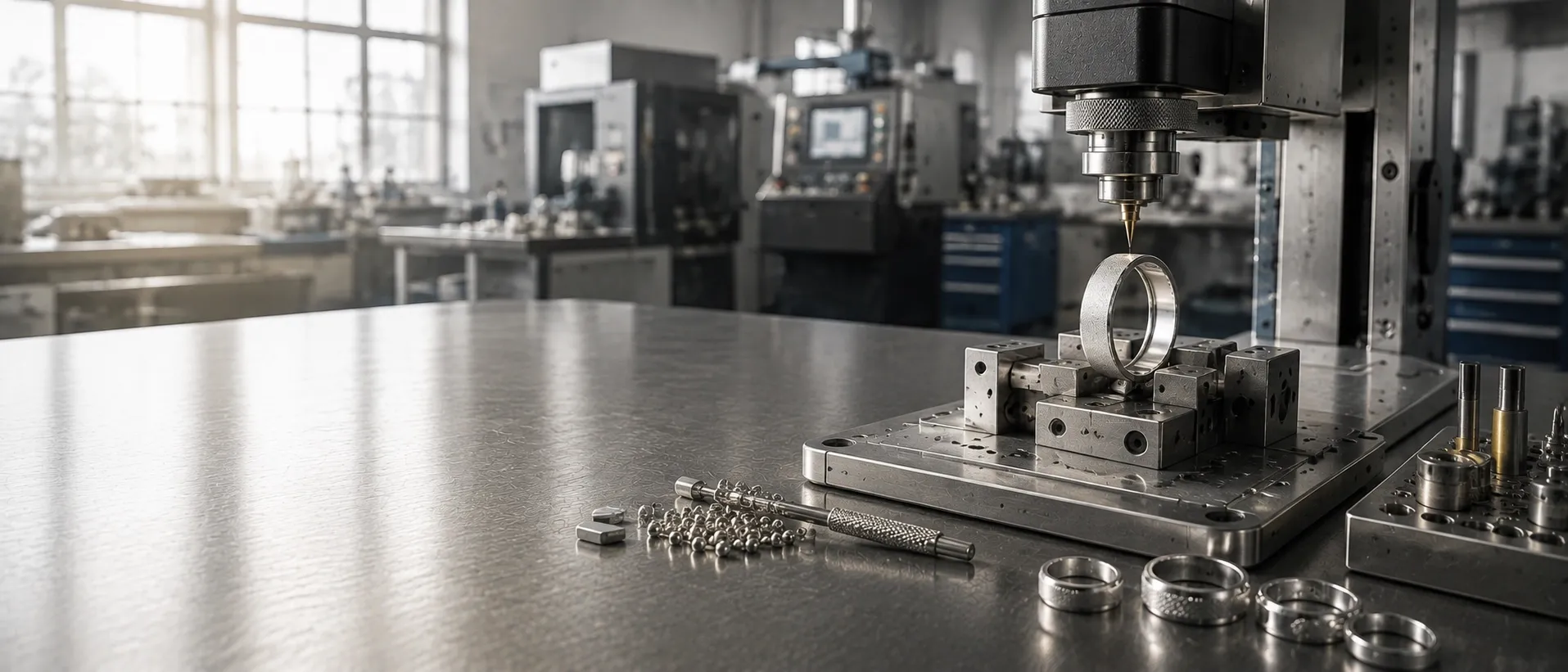
A diamond-tipped stylus strikes the surface thousands of times a minute, displacing metal instead of removing it. Each strike leaves a micro-facet, and the facets scatter light in every direction — the sparkle is geometry, not a coating and not a stone.
- Selective boundary accuracy
- Fixture- and geometry-dependent, validated per drawing
- Min. wall
- Adds no material but displaces it — thin sections can bruise or bow
- Tooling
- None for full-area work; programming and a fixture per design once zones are specified
- Batch fit
- Any quantity, but per-piece time does not fall with it
How it works
A diamond-tipped stylus strikes the surface thousands of times a minute, displacing metal instead of removing it. Each strike leaves a micro-facet, and the facets scatter light in every direction — the sparkle is geometry, not a coating and not a stone.
Sparkle without stones, frosted-then-plated ranges, and pieces that mix a textured face with polished bevels are the work this route is chosen for. It runs on 925 silver, Brass, Copper, Bronze, 316L stainless steel and suits any quantity, but per-piece time does not fall with it.
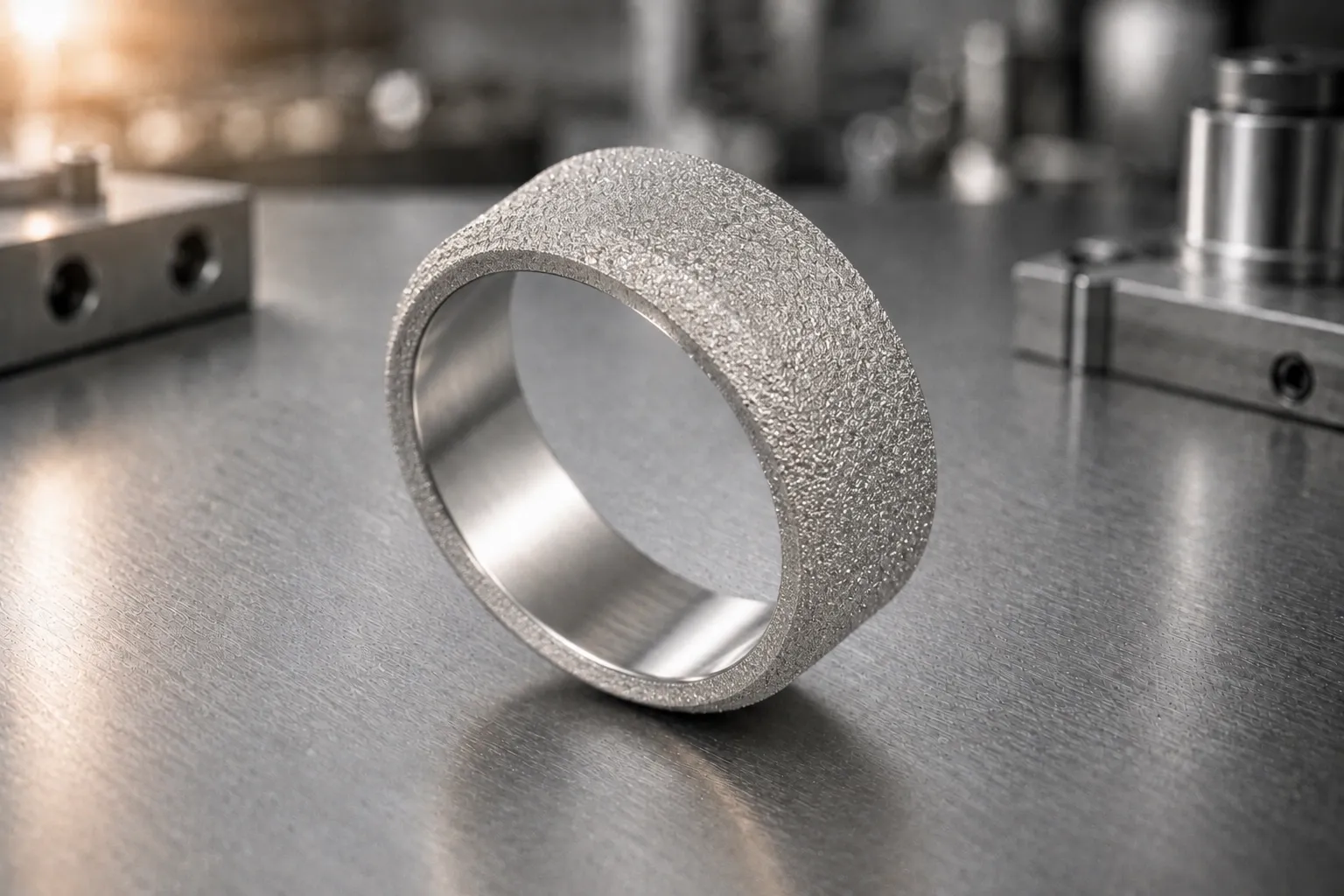
01Full-area frostingOne continuous path — the cheapest way to buy the texture 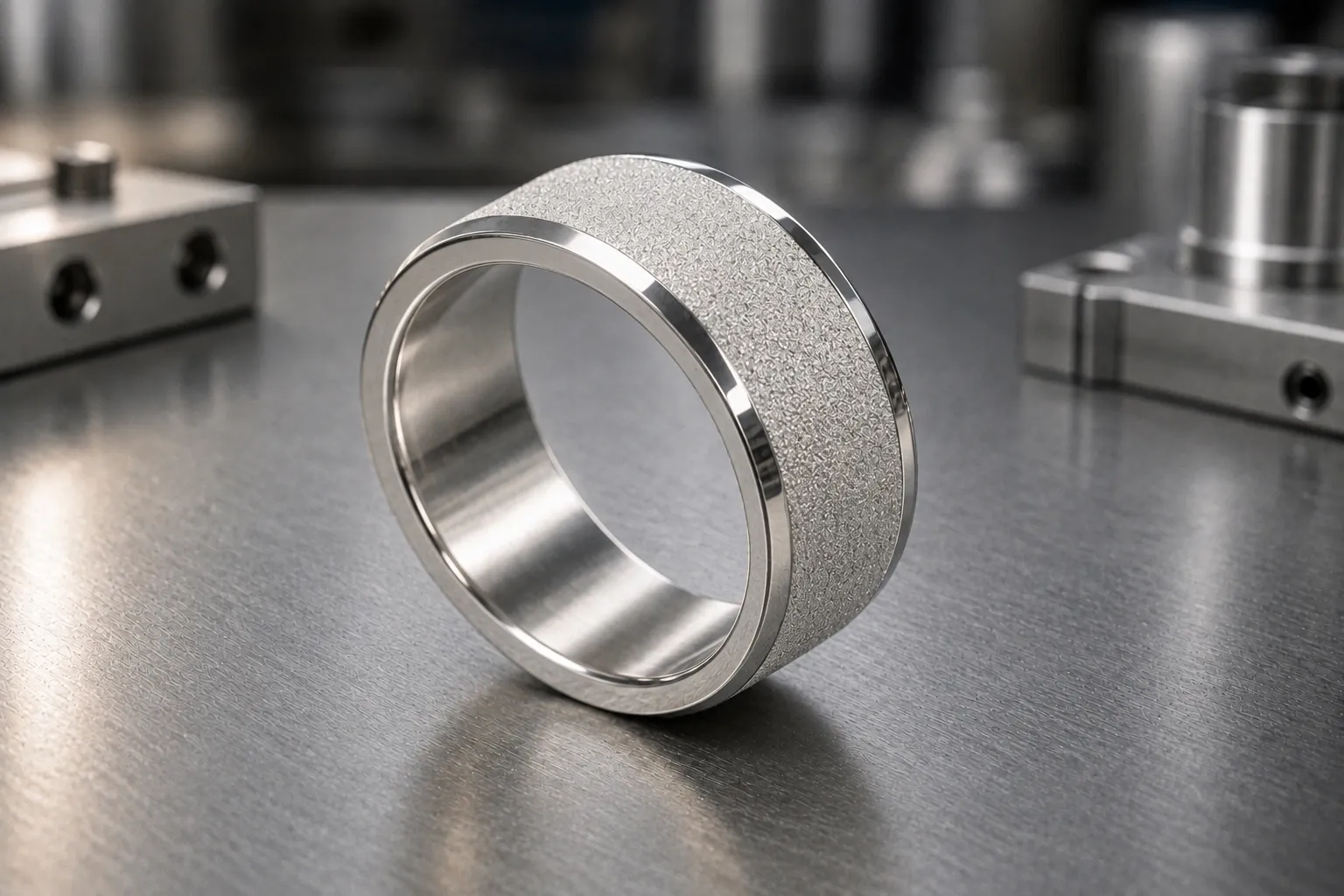
02Selective frostingFrosted face, mirror bevels — zones set by path, not by masking 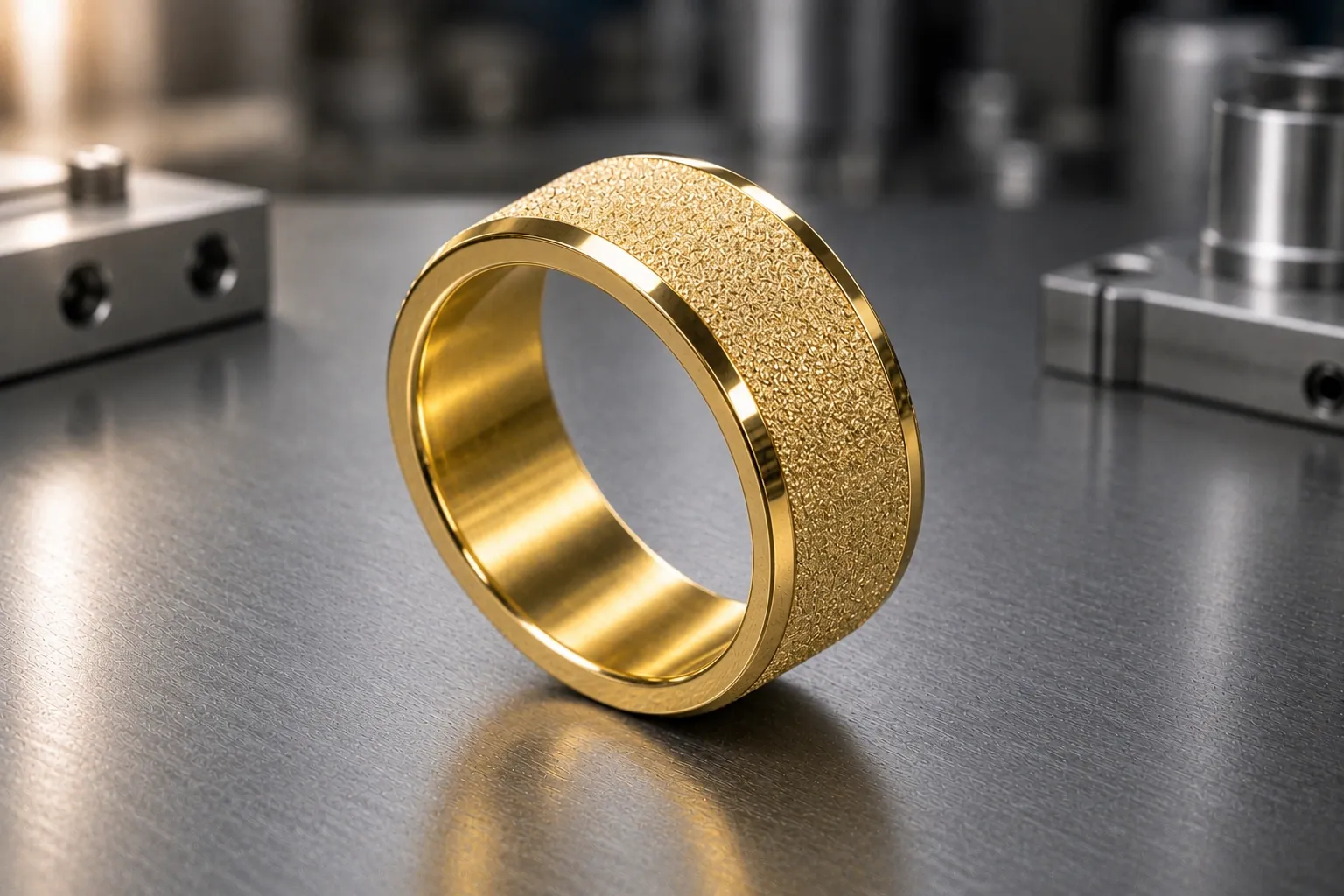
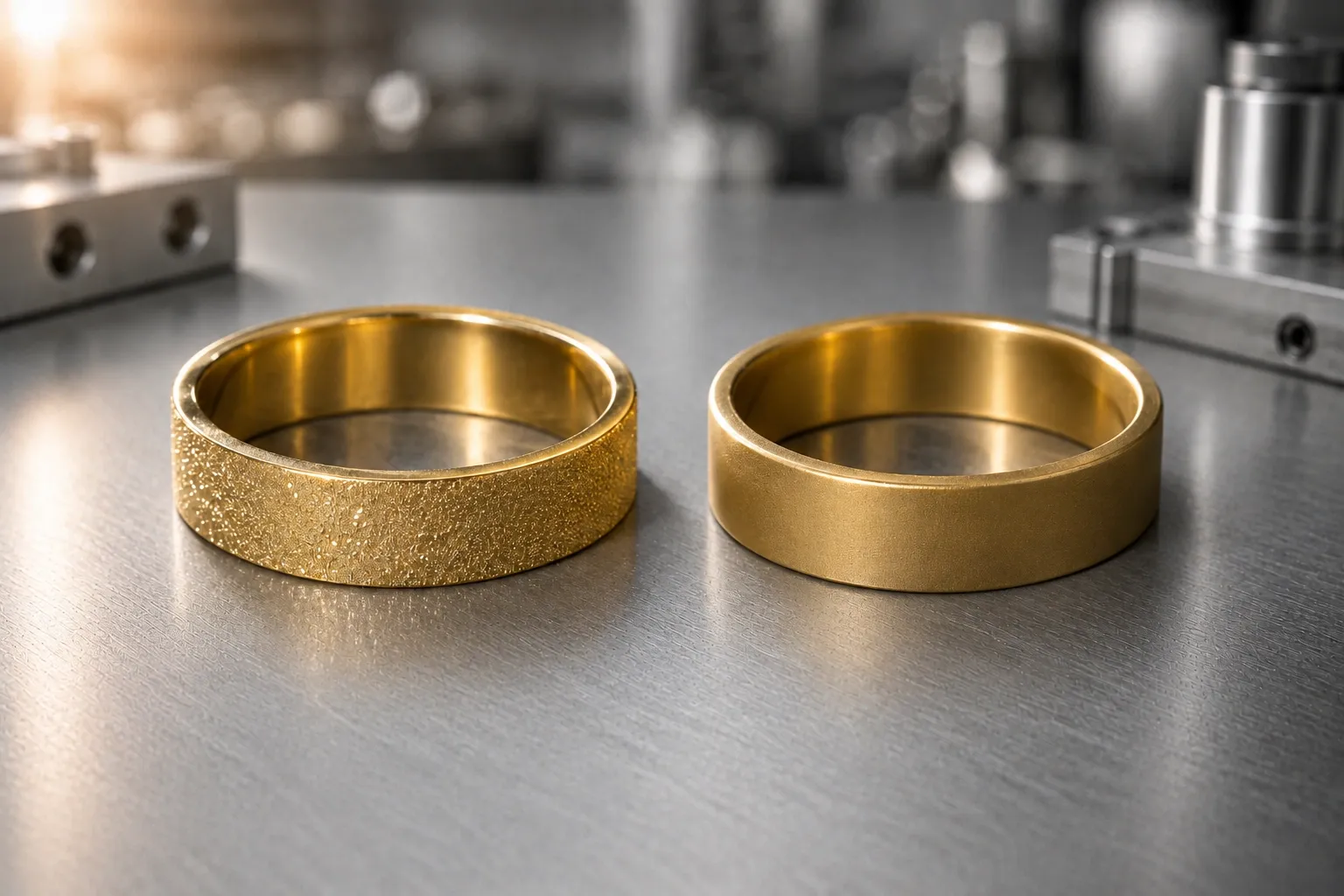
03Frosted then platedTexture first, colour second — the order is not reversible 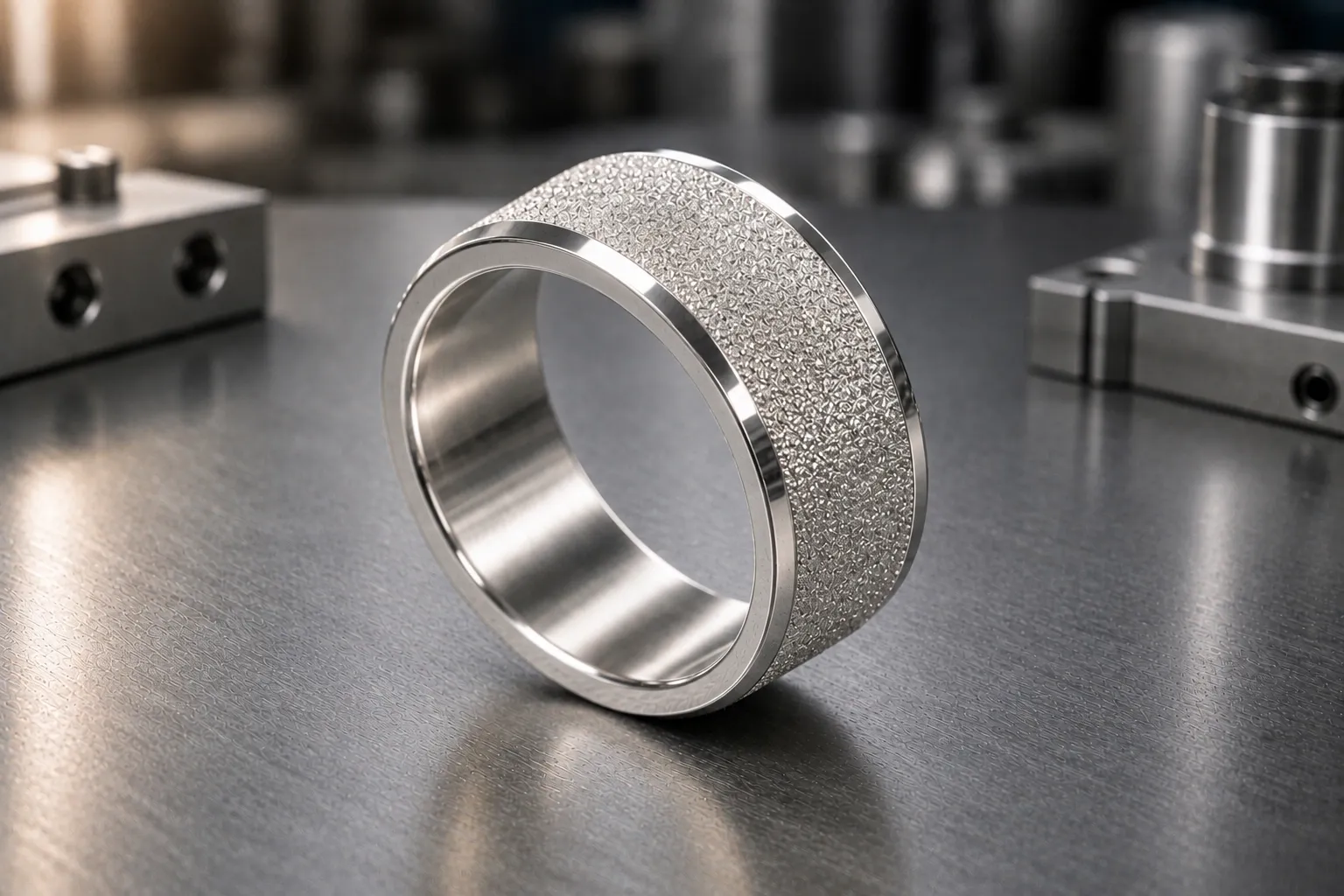
04High-density frostingRepeat passes over the same zone, 20–100% more cycle time
Swipe · 4 styles
Production steps
Each step below is a separate labour operation, and labour is priced per operation rather than per piece. That is why a 6-step route costs what it does.
- 01Piece finished to its base surface first — frosting follows polishing, never replaces it
- 02Zones defined and the stylus path programmed, once per design
- 03Piece located in a fixture and the boundary datum set
- 04Stylus driven across each zone at the specified density and depth
- 05Repositioned between zones — the step that decides what selective work costs
- 06Inspected against the approved sample, then plated if the finish calls for it
Process parameters
These are engineering properties of the process itself. They hold at any competent factory and can be checked against a manufacturing reference.
| Selective boundary accuracy | Fixture- and geometry-dependent, validated per drawing |
|---|---|
| Minimum wall / section | Adds no material but displaces it — thin sections can bruise or bow |
| Tooling cost | None for full-area work; programming and a fixture per design once zones are specified |
| Suited to | Any quantity, but per-piece time does not fall with it |
| Cycle time | 0.5–8 min per piece, set by the number of zones more than by the area |
| Materials accepted | 925 silver, Brass, Copper, Bronze, 316L stainless steel |
| Fixture capacity | 1 pc for ring fixtures; multi-piece loading for suitable small parts |
| Minimum untreated border | Specified per design and validated on the first article |
| Selective processing | Zones set by programmed stylus path, not by masking |
Tooling ranges are industry-typical. A firm figure is quoted against your CAD file — see the cost breakdown.
Frosting vs Bead blast
Both are mechanical matte textures and buyers routinely confuse them. Bead blast erodes the surface and absorbs light, reading flat and even; frosting raises micro-facets that scatter it, reading as sparkle. Choose bead blast for a uniform matte, frosting where a piece has to catch light without stones.
Compare with bead blast →Materials and categories this suits
Process, material and product category are one decision seen from three sides. These are the combinations that actually work.
| 316L steel | ASTM A276 / EN 1.4404 |
|---|---|
| 925 silver | ASTM B700 / EN ISO 9202 (925 fineness) |
| Brass | ASTM B36 / EN CW508L |
| Copper / bronze | ASTM B152 (Cu) / ASTM B505 (bronze) |
| See the product hub | All categories |
|---|
What to watch out for
Frosted and Florentine finishing — buyer questions
Each answer stands alone and can be read without the rest of this page.
Selective boundary accuracy — what does frosting hold?
Fixture- and geometry-dependent, validated per drawing. Adds no material but displaces it — thin sections can bruise or bow. A figure can be fixed for a specific geometry by measuring the boundary across a 30-piece first article and holding it through a fixture change; until that is done for your design, the drawing governs. Quoting a tolerance derived from machine repeatability alone would describe the mechanism rather than the finished edge.
How much does tooling cost for frosted and florentine finishing?
Tooling for this route is none for full-area work; programming and a fixture per design once zones are specified, quoted as a one-off line and invoiced separately from the unit price. The buyer owns the tooling and it is not charged again on a reorder. Full tooling ranges for every route are on the manufacturing cost page.
What order quantity does frosted and florentine finishing suit?
This route suits any quantity, but per-piece time does not fall with it. Below that range the setup cost dominates the unit price; above it, a different route is usually cheaper per piece. Both are mechanical matte textures and buyers routinely confuse them. Bead blast erodes the surface and absorbs light, reading flat and even; frosting raises micro-facets that scatter it, reading as sparkle. Choose bead blast for a uniform matte, frosting where a piece has to catch light without stones.
Which metals can be processed this way?
925 silver, Brass, Copper, Bronze, 316L stainless steel. Selective frosting is not cheaper than frosting the whole piece. Cost follows the number of separate zones, the precision demanded at each boundary, and the repositioning between them — not the area textured — so three small frosted panels routinely take longer than one face frosted end to end. Frosting is also done before plating, never after: the stylus cuts through a coating to the base metal at every strike.
Frosting or bead blast — which is right for my design?
Both are mechanical matte textures and buyers routinely confuse them. Bead blast erodes the surface and absorbs light, reading flat and even; frosting raises micro-facets that scatter it, reading as sparkle. Choose bead blast for a uniform matte, frosting where a piece has to catch light without stones.
Not answered here? All buyer questions →
Quote a frosting run
Send the CAD file or a sketch. You get the tooling cost as its own line, the unit price at your quantity, and a straight answer on whether frosting is the right route for the design — we will say so if it is not. Production runs in Qingxi, Dongguan, Guangdong.
- 01Reply within one working day, Guangdong business hours.
- 02Itemised cost sheet — mold quoted separately, not folded into the unit price.
- 03NDA on request before any file is shared.