
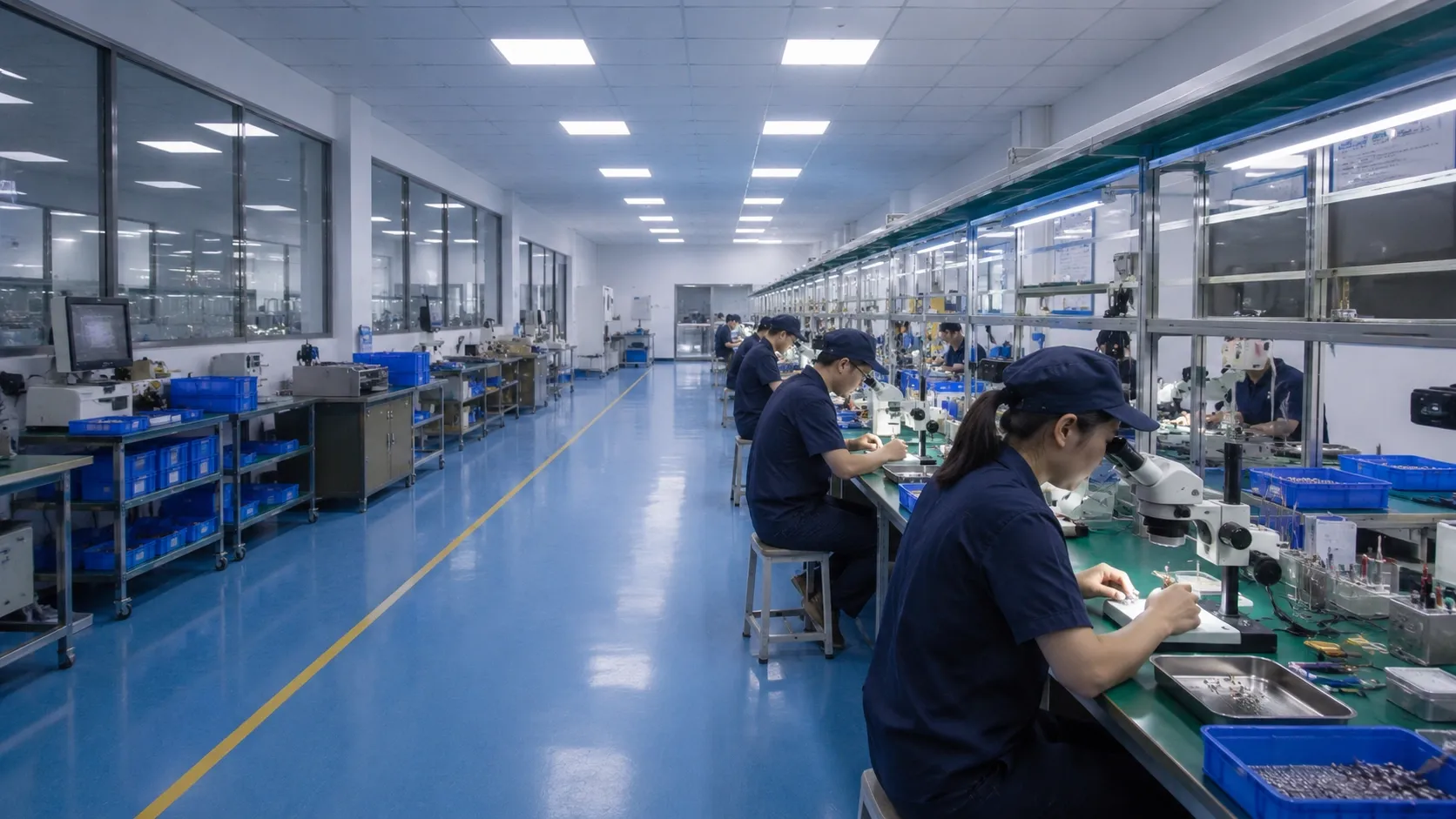
Qingxi, Dongguan · Manufacturer since 2011
We are the floor
your jewelry
gets made on.
OEM, ODM and private label in stainless steel, titanium, brass, zinc alloy and 925 silver. Stamping, wire-EDM die making, casting, drilling, laser welding and polishing on our own floor — and the cost, MOQ and compliance numbers published on the site instead of hidden behind a contact form.
- 01Itemised unit price at your quantity
- 02Mold cost, quoted as its own line
- 03Sample and bulk lead-time window
- 04Compliance route for your target market
Six product families, one production floor
Every category below runs from raw stock through finishing and packing under one production schedule. Each page states the size range, the processes available for that shape, and the finishes it can carry.
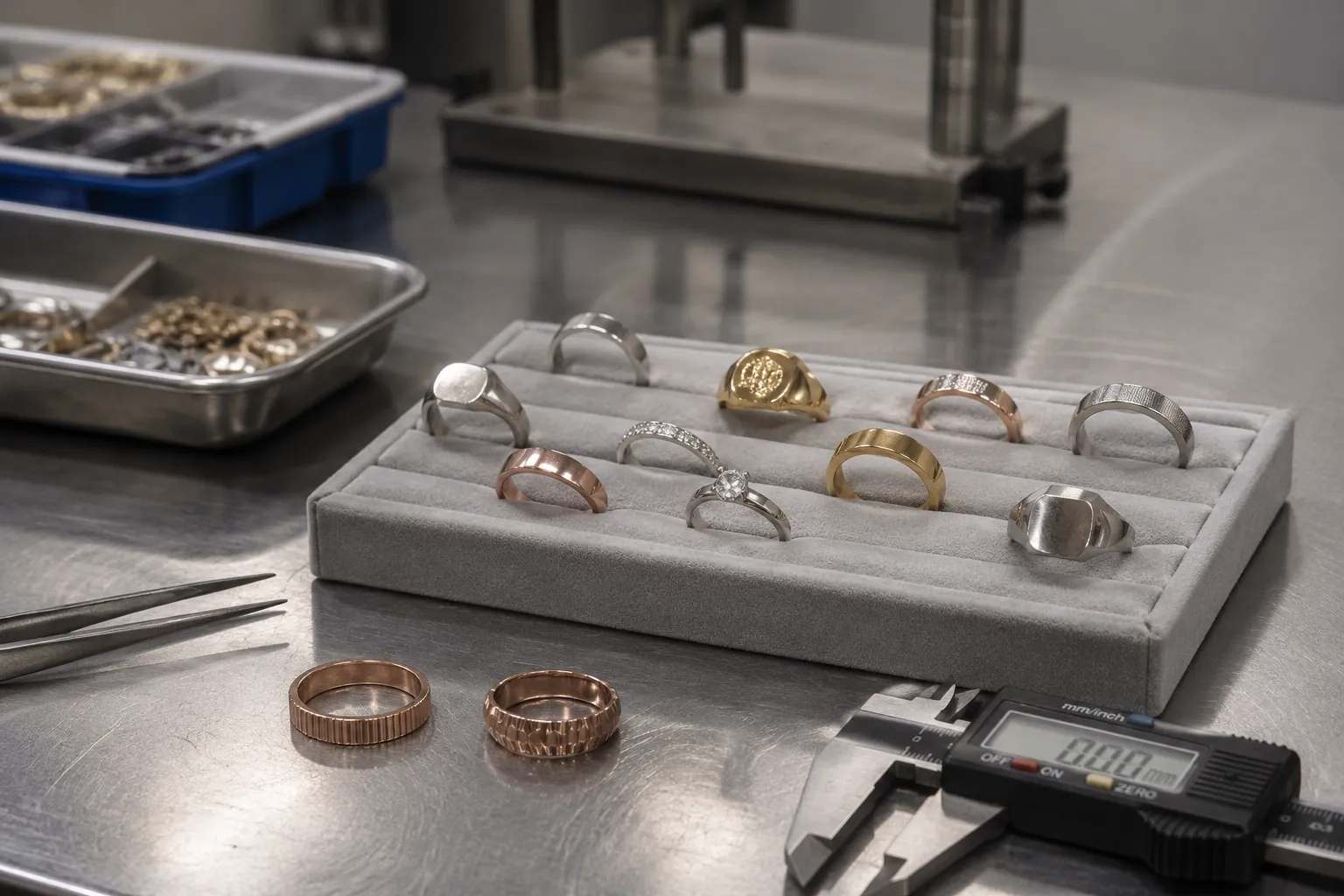
Rings
CAT-01Signet, band, stacking and stone-set rings.
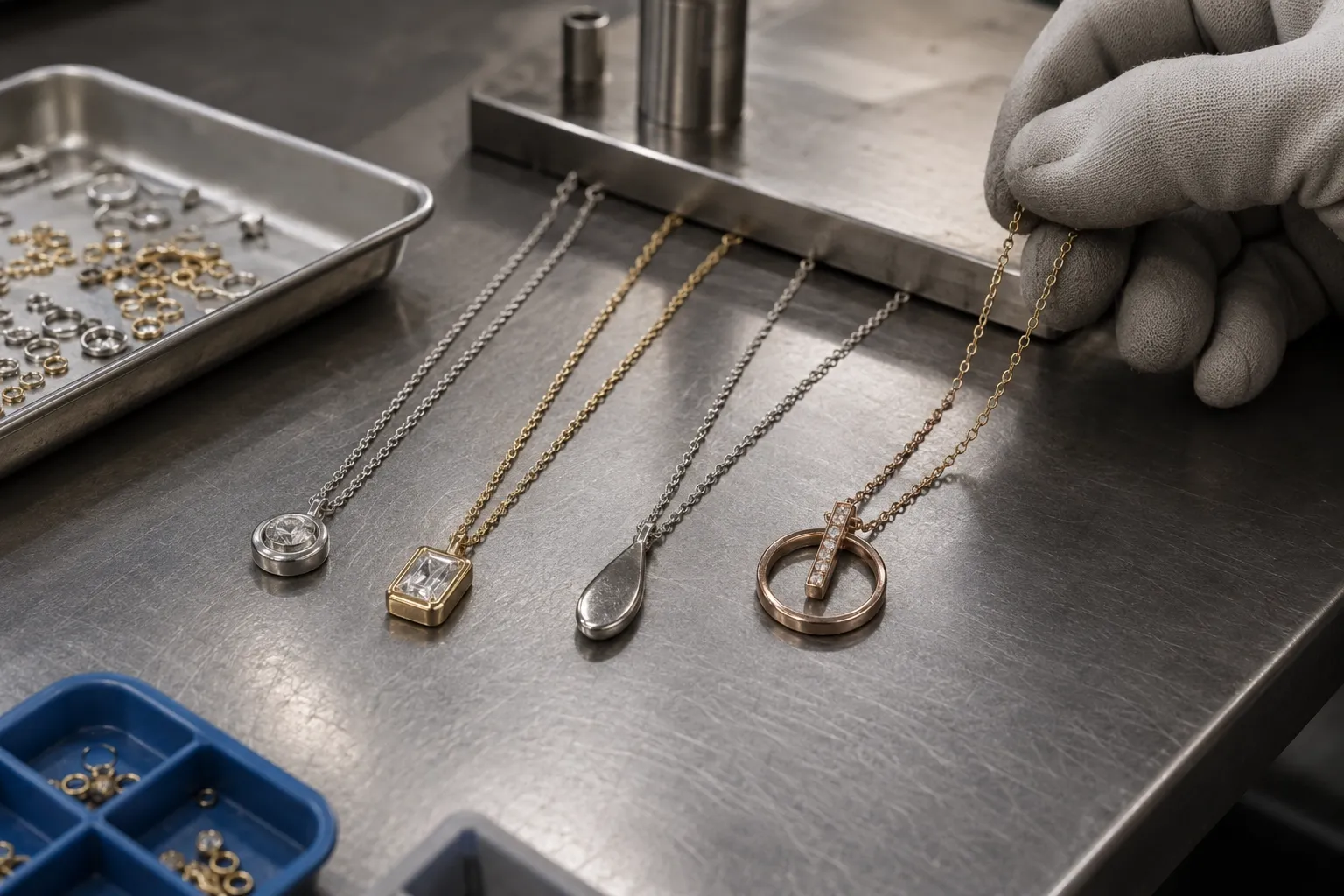
Necklaces & Pendants
CAT-02Cast and stamped pendants on finished chain.
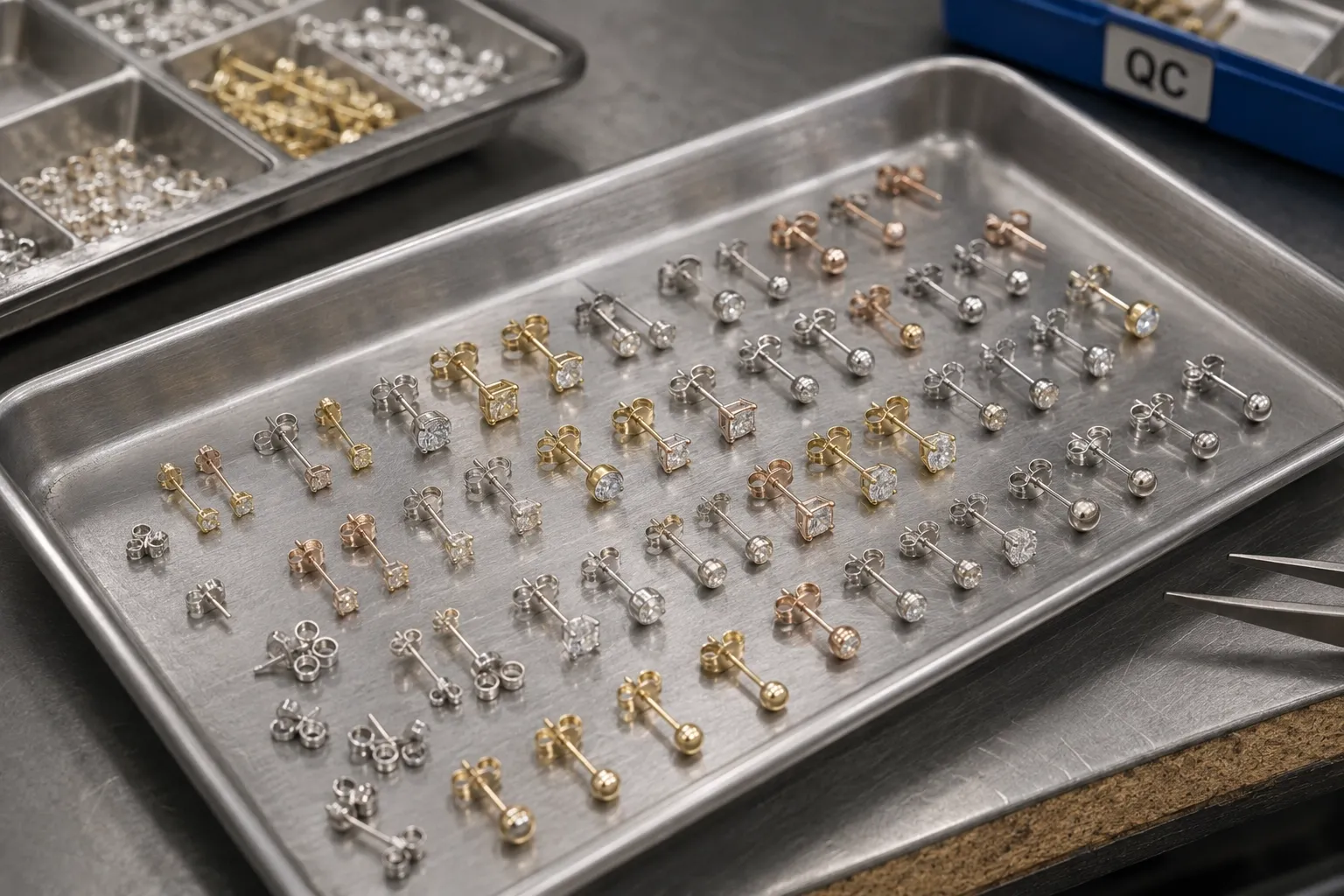
Earrings
CAT-03Studs, hoops and drops — nickel-release critical.
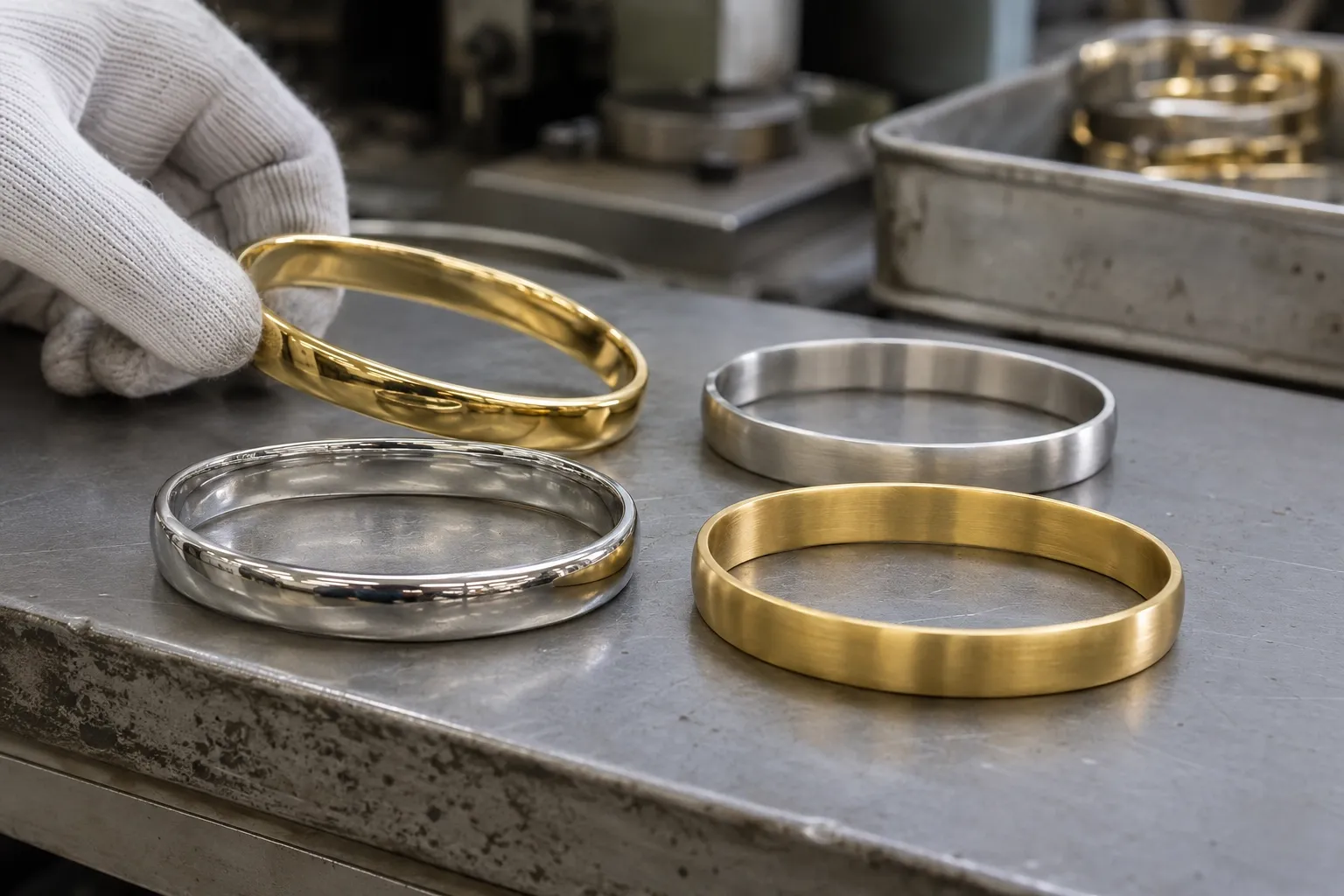
Bracelets & Bangles
CAT-04Cuffs, rigid bangles and link bracelets.
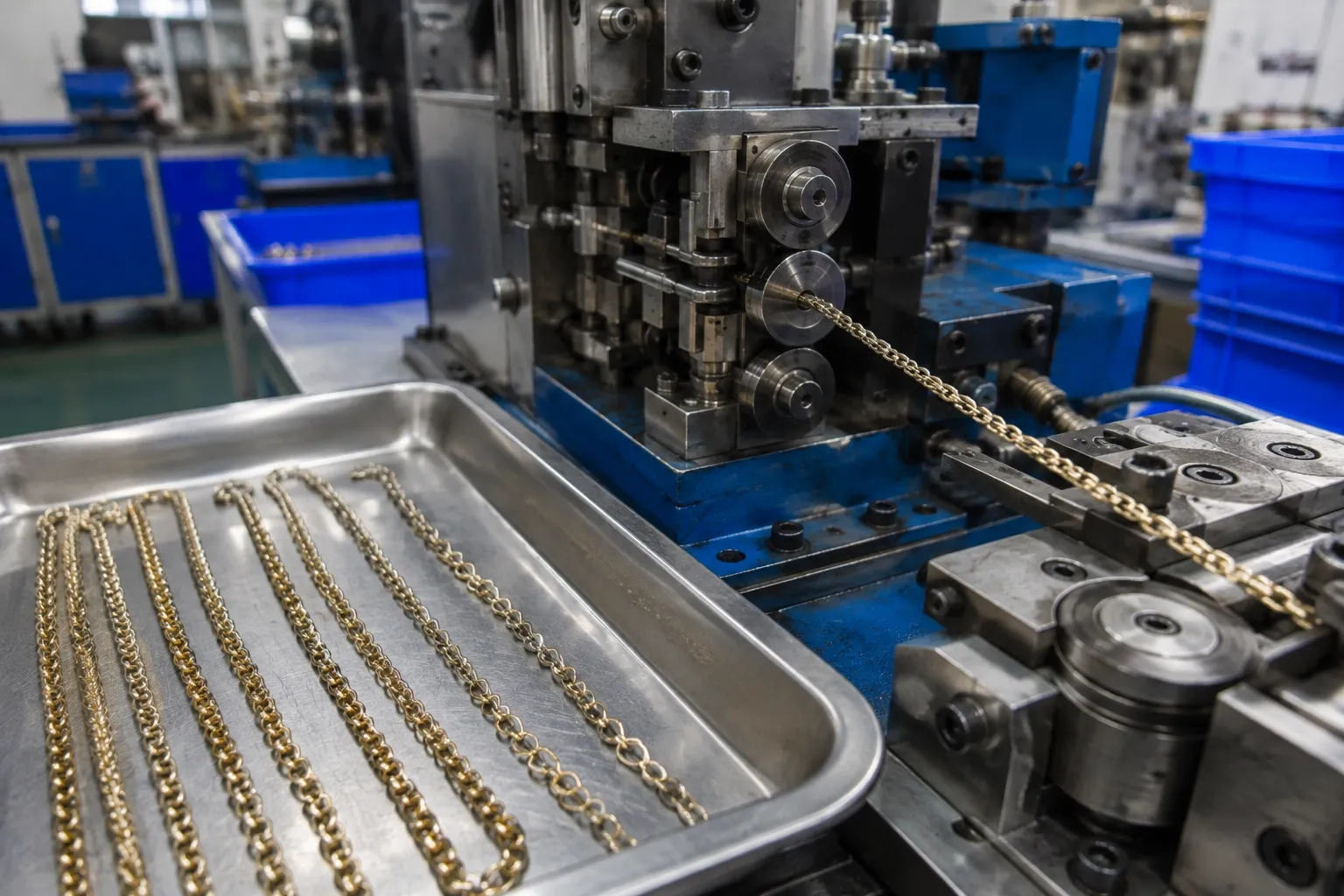
Chains
CAT-05Twelve link styles, 0.8–12 mm gauge.
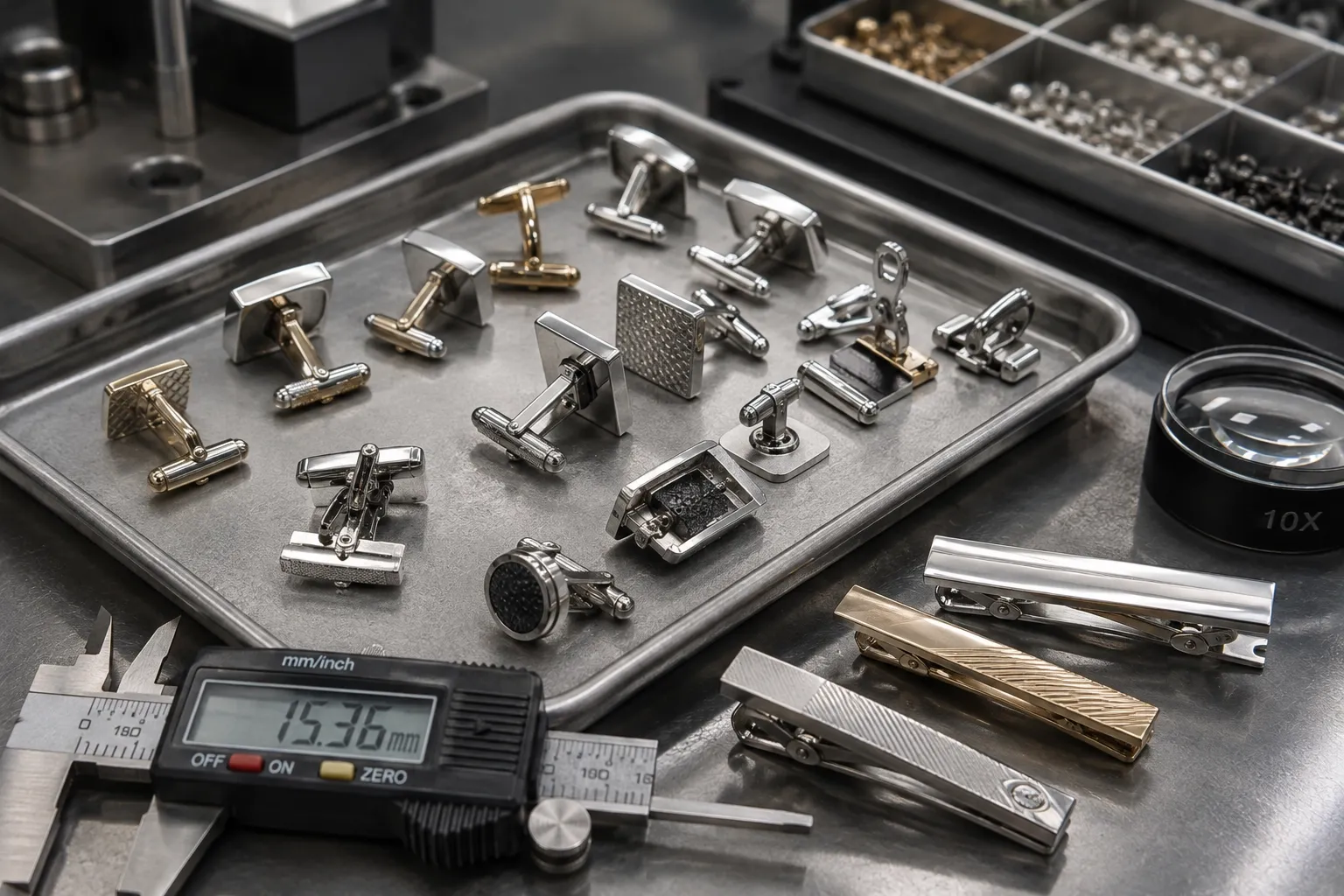
Cufflinks & Men's accessories
CAT-06Cufflinks, tie bars, lapel pins, money clips.
Pick the metal on data, not on a colour name
Density, hardness, corrosion behaviour and nickel release are properties of the alloy, published in ASTM and EN standards. They do not change from supplier to supplier — so they are the honest basis for choosing, and they are printed here in full.
| Material | Standard | Density g/cm³ | Hardness HV | Corrosion | Raw cost | Best for |
|---|---|---|---|---|---|---|
| Stainless steel 316L | ASTM A276 / EN 1.4404 | 7.98 | 150–190 HV | Excellent | $$$$$ | Rings, chains, men’s pieces, everyday-wear earrings |
| Titanium (Grade 2 / Grade 5) | ASTM B348 Gr.2 / Gr.5 (Ti-6Al-4V) | 4.51 | 145 HV | Excellent | $$$$$ | Hypoallergenic studs and hoops, lightweight rings, implant-grade posts |
| Sterling silver 925 | ASTM B700 / EN ISO 9202 (925 fineness) | 10.36 | 60–80 HV | Tarnishes | $$$$$ | Fine jewelry, stone setting, pieces sold on metal value |
| Brass (C2600 / C3604) | ASTM B36 / EN CW508L | 8.47 | 95–130 HV | Tarnishes and patinas | $$$$$ | Plated fashion jewelry, enamel work, detailed cast charms |
| Zinc alloy (Zamak 3 / 5) | ASTM B86 (Zamak 3 / Zamak 5) | 6.6 | 80–100 HV | Poor bare | $$$$$ | Large decorative pieces, bag hardware, low-cost statement jewelry |
| Copper & bronze | ASTM B152 (Cu) / ASTM B505 (bronze) | 8.96 (Cu) · 8.8 (bronze) | 50–100 HV | Patinas | $$$$$ | Vintage and antique finishes, cast charms, heritage-look ranges |
Hardness is typical annealed / as-supplied Vickers. Raw cost is a relative ranking of metal stock, not a quotation — see the manufacturing cost page for how a unit price is actually built.
316L steel
MAT-01- Corrosion
- Excellent
- Hardness
- 150–190 HV
- Density
- 7.98 g/cm³
- Nickel-safe
- Yes
Titanium
MAT-02- Corrosion
- Excellent
- Hardness
- 145 HV
- Density
- 4.51 g/cm³
- Nickel-safe
- Yes
925 silver
MAT-03- Corrosion
- Tarnishes
- Hardness
- 60–80 HV
- Density
- 10.36 g/cm³
- Nickel-safe
- Yes
Brass
MAT-04- Corrosion
- Tarnishes and patinas
- Hardness
- 95–130 HV
- Density
- 8.47 g/cm³
- Nickel-safe
- Plating-dependent
Zinc alloy
MAT-05- Corrosion
- Poor bare
- Hardness
- 80–100 HV
- Density
- 6.6 g/cm³
- Nickel-safe
- Plating-dependent
Copper / bronze
MAT-06- Corrosion
- Patinas
- Hardness
- 50–100 HV
- Density
- 8.96 (Cu) · 8.8 (bronze) g/cm³
- Nickel-safe
- Plating-dependent
Twelve processes, and which of them we can show you
Casting, stamping, CNC, chain, polishing and engraving run in departments photographed on this site, signage in frame. The rest are part of what we deliver and are marked as such rather than folded into one undifferentiated list — the About page names every capability that has our word but not yet a photograph. Each process page states its tolerance, its minimum wall thickness and the materials it accepts.
Evidence, not adjectives
Photographs of the actual production floor, with machine plates legible and people at the benches. No renders and no stock photography appear anywhere on this site — a buyer deciding whether to trust a first order deserves to see the real thing.
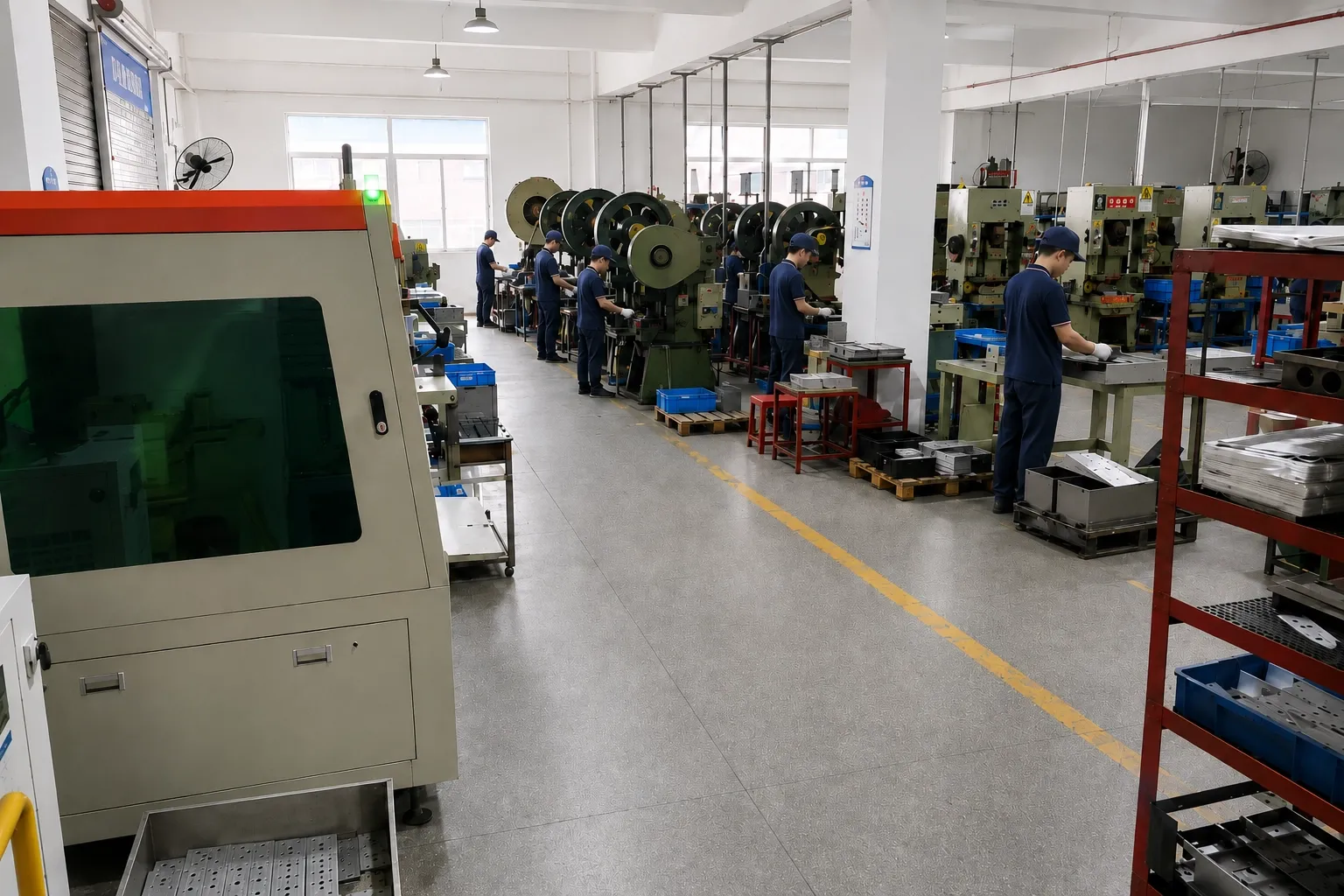
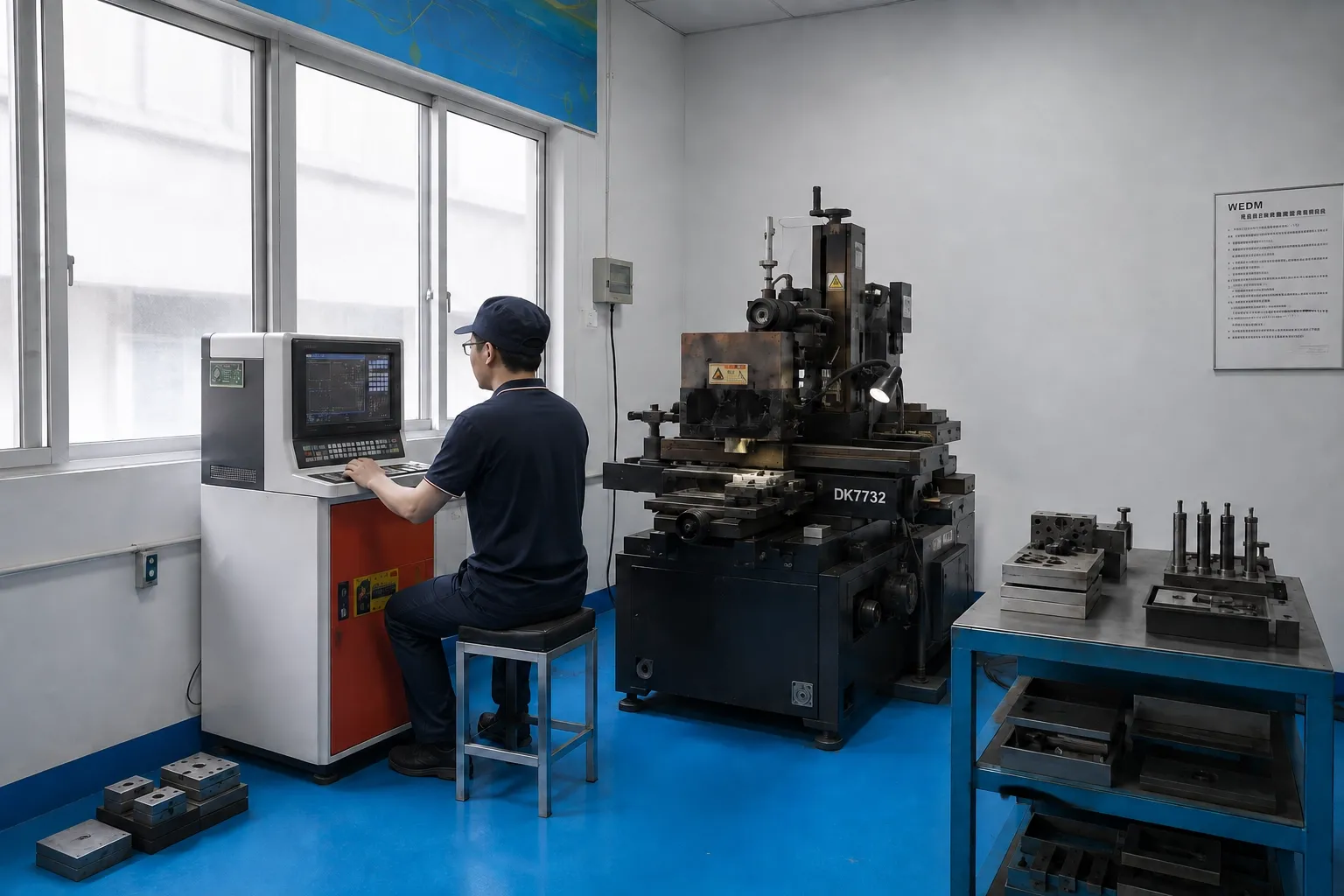
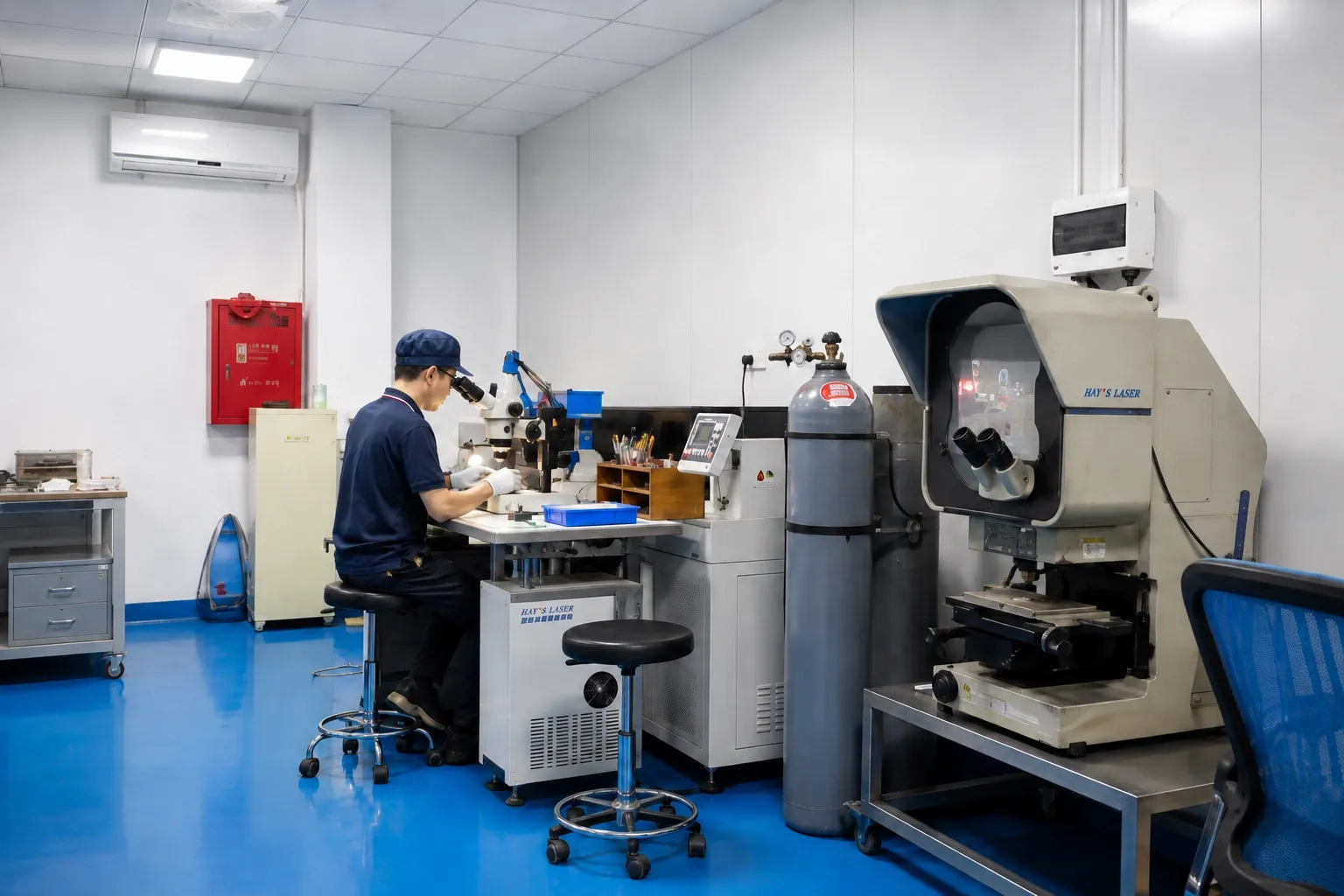
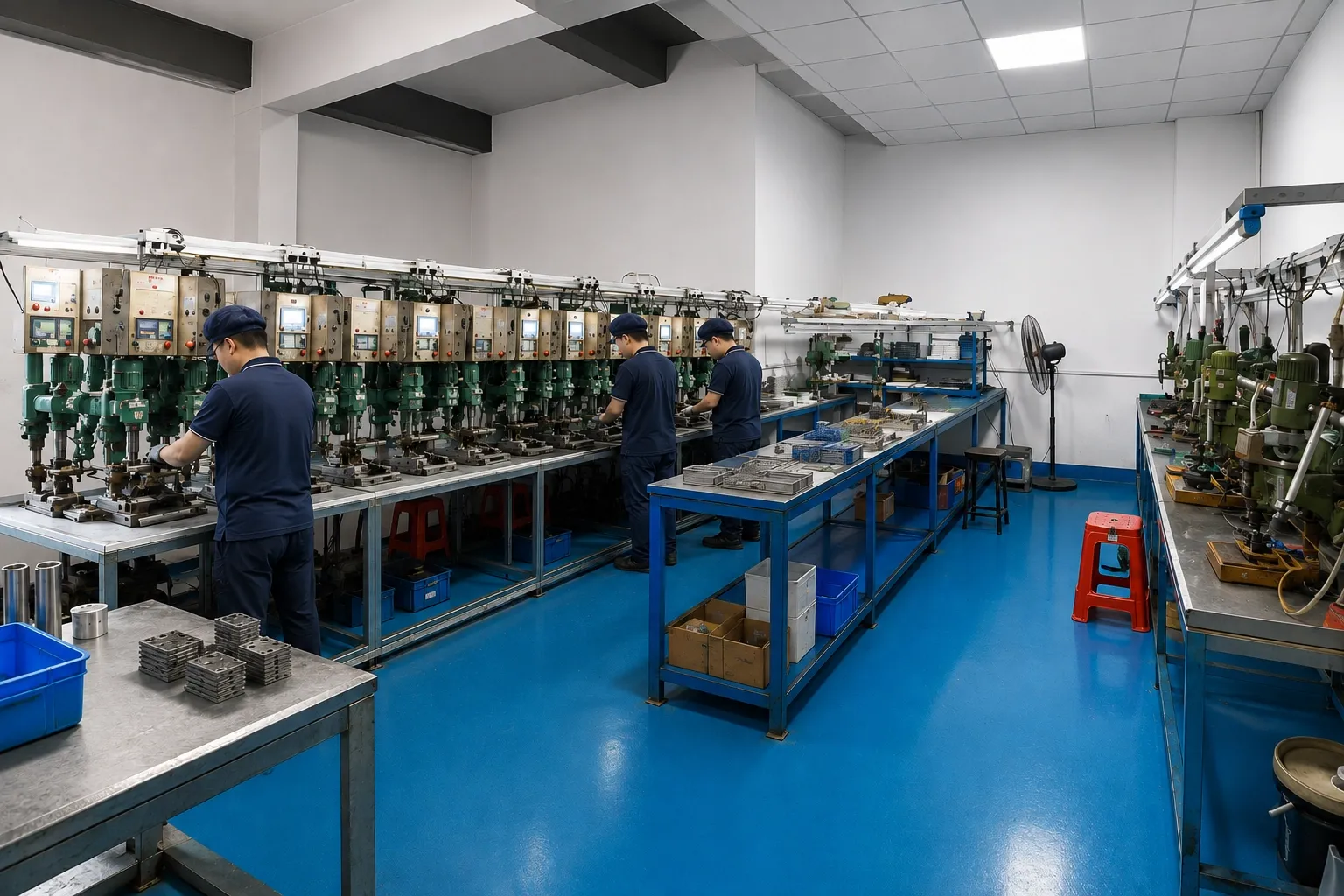
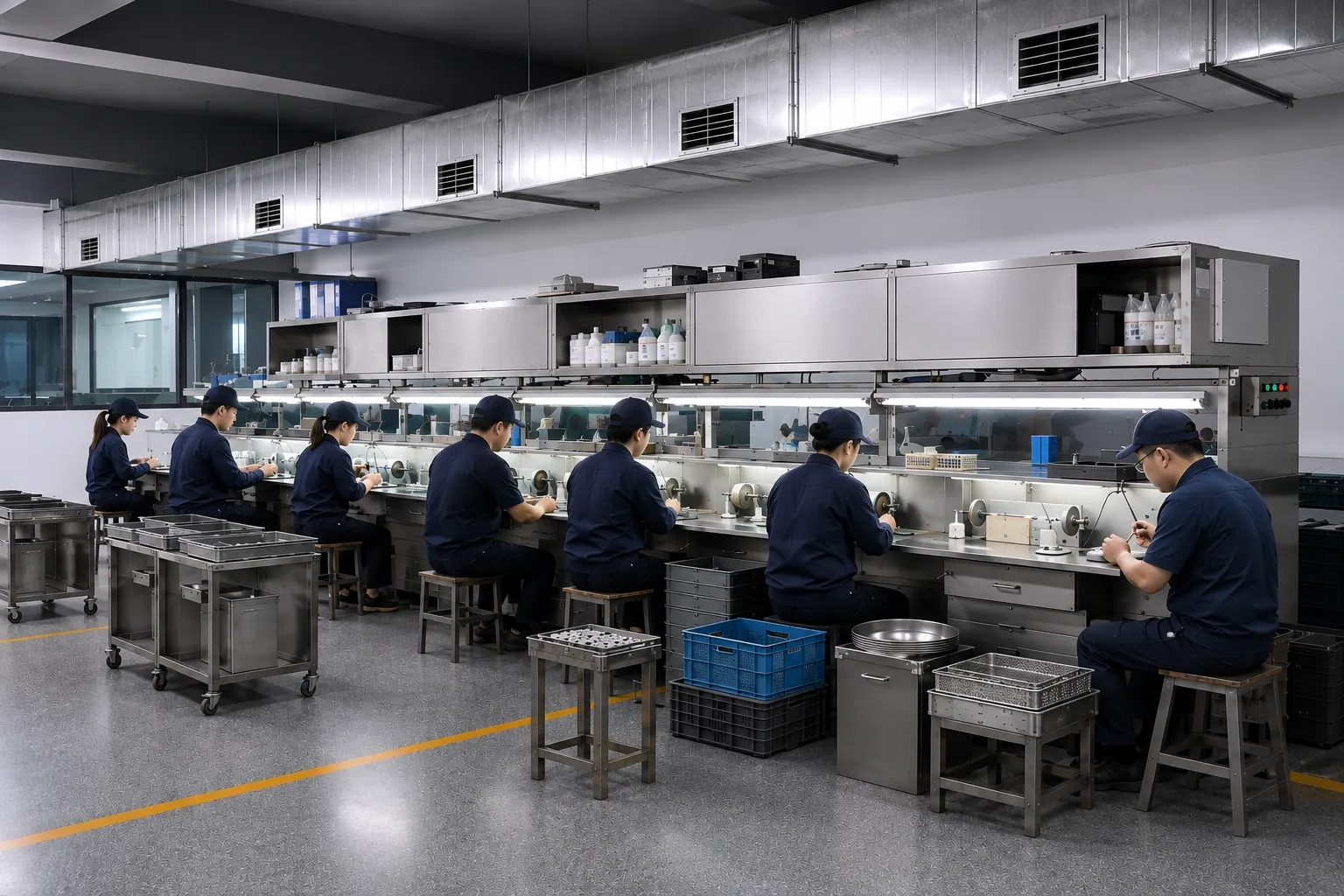
Shoot rules · natural light, no retouched renders, machines in use, at least one human hand per set, model plates legible.
From sketch to shipped, with the clock shown
Six stages run between an inquiry and a shipped carton. Sampling and production durations vary by process and are confirmed in writing in the quotation rather than promised generically.
- 01
≤ 24 hInquirySpec sheet, sketch or CAD in. NDA on request first.
- 02
1–2 daysQuotationMaterial, labour, plating and mold priced as separate lines.
- 03
2–5 days3D & moldCAD render signed off before any tooling is cut.
- 04
10 daysSamplingPhysical sample shipped for approval before bulk.
- 05
25 daysProductionIn-line QC during the run, not only at the end.
- 06
By incotermShipAQL inspection report travels with the shipment.
The four questions every supplier dodges
Cost structure, mold cost, MOQ tiers and compliance testing are the questions buyers actually need answered before they can plan a range. They get their own pages, with worked examples.
Manufacturing cost →
How a unit price is built: metal weight, labour per operation, plating by area and micron, scrap allowance.
Mold cost & MOQ →
What tooling actually costs by mold type, and why MOQ is set per finish variant rather than per style.
Nickel release / EN 1811 →
The 0.2 and 0.5 µg/cm²/week limits, which materials pass by default, and what the test costs.
Prop 65 compliance →
California lead and cadmium thresholds, which alloys and platings trip them, and the warning-label rules.
Which standard applies to your market
Jewelry entering the EU, the US and the UK is regulated on nickel release, lead, cadmium and restricted substances. The applicable standards are named here with their numbers and limits, because a buyer cannot plan against a claim of 'meets international standards'.
| Standard | Market | What it limits | Limit |
|---|---|---|---|
| EN 1811 (REACH XVII-27) | EU / UK | Nickel release from items in prolonged skin contact | 0.5 µg/cm²/week skin · 0.2 µg/cm²/week piercing |
| EN 12472 | EU / UK | Wear-and-corrosion simulation before EN 1811 testing | Method, not a limit |
| CA Prop 65 | US (California) | Lead and cadmium in jewelry substrates and coatings | Lead 100 ppm (children) · warning thresholds apply |
| CPSIA | US | Lead in children's products | 100 ppm total lead in substrate |
| REACH Annex XVII | EU | Nickel, lead, cadmium and restricted substances | Entry-specific |
| RoHS 2011/65/EU | EU | Hazardous substances in electronic-containing items | 0.1% Pb, Hg, Cr(VI) by weight |
Standards and limits above are published regulatory values, verifiable independently of this supplier. Which tests a given order requires is confirmed in the quotation — see EN 1811 compliance and Prop 65.
What buyers ask before a first order
Answers are written to stand on their own. Each one can be read, quoted or cited without the rest of the page.
Are you a factory or a trading company?
OEM Jewelry Lab is a manufacturer with its own production floor in Qingxi, Dongguan, Guangdong, operating since 2011 with 300+ production staff and a capacity of about 150k pieces a month. Casting, stamping, wire EDM die cutting, drilling, laser welding, laser marking, polishing, ultrasonic cleaning and chain making run on that floor, and every one of those departments is photographed on the about page with its own signage. Finishing stages that no photograph on this site evidences yet are listed there separately rather than folded into the same sentence.
What is the minimum order quantity for custom jewelry?
The MOQ is 500 pieces per style, per plating colour. The per-colour part matters: each finish is a separate production batch with its own setup, so three colours of one design is three batches of 500, not one. Below that quantity a sample batch is possible, at a materially higher unit price.
How long does custom jewelry production take?
Sampling takes about 10 days from an approved 3D file to a shipped sample, and bulk production about 25 days after sample approval. Tooling adds 2–5 days before sampling for cast pieces and longer for a progressive stamping die. Shipping time sits outside those figures and depends on the incoterm and the destination.
Which metal should I choose for earrings sold in the EU?
For pierced-ear jewelry the EU limit under REACH Annex XVII entry 27 is 0.2 µg/cm²/week of nickel release, measured to EN 1811 after EN 12472 wear simulation. Titanium is nickel-free by composition and passes by default; 316L stainless steel contains nickel but releases below the limit because the alloy is austenitic. Brass and zinc alloy usually fail unless the plating uses a nickel-free barrier layer.
Who owns the mold and the design?
The buyer does. Mold and tooling cost is quoted and invoiced as a separate line rather than amortised invisibly into the unit price, and the tooling is stored under the buyer's account. An NDA is signed before design files are received, and client designs are never resold or shown to other buyers.
Do you supply test reports for nickel release and lead content?
Yes — testing is arranged on request against whichever standards your market requires, most commonly EN 1811, EN 12472, CA Prop 65, CPSIA. Third-party testing is arranged on request. Which standards apply, what the laboratory charges and how long it takes depend on the market, the material and the batch size, so both are confirmed in writing in the quotation rather than quoted generically. Agreeing the applicable standards before production starts is what prevents a finished batch from being unsellable in its destination market.
How is a jewelry quotation actually built up?
A unit price is metal weight × metal cost, plus labour per operation, plus plating cost by area and micron thickness, plus finishing and packing, plus a scrap allowance. Mold cost sits outside the unit price as a one-off. The manufacturing cost page breaks each component out with worked examples rather than giving a single number.
Not answered here? All buyer questions →
Sources
Where the standards and legal limits quoted on this page are published. Every figure traceable to one of these can be checked at the issuer rather than taken on our word.
| Designation | Published by | What it specifies |
|---|---|---|
| REACH Annex XVII entry 27 | European Union | Nickel release limits for articles in prolonged skin contact and for pierced-ear posts |
| EN 1811 | CEN | Reference test method for nickel release from articles in contact with the skin · not freely published; the binding limit is in REACH Annex XVII entry 27 |
| California Proposition 65 | California OEHHA | Lead and cadmium exposure warnings for products sold in California |
| CPSIA | US Congress · govinfo | Consumer Product Safety Improvement Act 2008 — total lead limits for children’s products |
| ASTM A276 | ASTM International | Stainless steel bars and shapes — the 316L composition limits |
| ASTM B348 | ASTM International | Titanium and titanium alloy bars and billets — Grade 2 and Grade 5 |
| ASTM B700 | ASTM International | Electrodeposited coatings of silver — 925 fineness |
| ASTM B36 | ASTM International | Brass plate, sheet, strip and rolled bar — C2600 and neighbours |
| ASTM B86 | ASTM International | Zinc-alloy die castings — Zamak 3 and Zamak 5 |
| ASTM B152 | ASTM International | Copper sheet, strip, plate and rolled bar |
| ASTM B505 | ASTM International | Continuous-cast copper-alloy castings — bronze |
Every figure on this page traceable to one of these can be checked against the published standard rather than taken on our word.
Get a quote in one working day
Tell us the category, the material and the quantity. You get an itemised price, the mold cost as its own line, and a lead-time window — not a request to contact us.
- 01Reply within one working day, Guangdong business hours.
- 02Itemised cost sheet — mold quoted separately, not folded into the unit price.
- 03NDA on request before any file is shared.