
Everything buyers ask before a first order
Answers are written to stand on their own — each one can be read, quoted or acted on without the rest of the page. Where a question has a number attached, the number is here rather than an invitation to get in touch.
- MOQ
- 500 pcs / style / colour
- Sampling
- 10 days
- Production
- 25 days
- Quote turnaround
- One working day
Ordering
What is the minimum order quantity for custom jewelry?
500 pieces per style, per plating colour. The per-colour part is what surprises most buyers: each finish is a separate production batch with its own setup, so one design in three colourways is three batches of 500 pieces, not 500 split three ways. Below that quantity a sample batch is possible at a materially higher unit price.
How long does a custom jewelry order take?
Quotation within one working day, tooling 2–20 days depending on the mold type, sampling about 10 days from an approved 3D file, and bulk production about 25 days after sample approval. Tooling time runs before sampling rather than alongside it, so a realistic first-order timeline is 40–50 working days before shipment for a design needing a steel die.
What do you need from me to produce a quotation?
Category, material, quantity per style, finish with the plating thickness in microns, the sizing distribution for that category, and the market you ship to. Sending those six with the first enquiry is what turns a two-week back-and-forth into a one-working-day quotation, because each of them changes either the tooling or the unit price.
Can you work from a physical sample instead of a CAD file?
Yes. A physical piece can be measured and, where the geometry is complex, scanned to reconstruct a CAD model. What matters is agreeing in advance which properties must match exactly — dimensions, weight, plating colour, plating thickness, or all of them. A visual match at a lower plating micron is the usual way a "matched" sample becomes a different product.
Do you sign an NDA before receiving design files?
Yes, on request and before any files are received. Client designs are never resold or shown to other buyers, and tooling made for a buyer is stored under that buyer's account rather than being reused. For ODM work, where the factory develops the design, ownership should be settled in the agreement before development begins.
What payment terms do you work on?
Terms are agreed per order and stated in the quotation alongside the price. Tooling is invoiced as its own line rather than being folded into the unit price, which means it is paid once and not again on a reorder of the same design. Ask for the payment schedule in writing at quotation stage rather than after the sample is approved.
Materials
Which metal is best for jewelry worn every day?
316L stainless steel for most ranges. It does not tarnish, does not need a protective plating to be sold bare, does not stain skin, and at 150–190 HV it resists the deformation softer metals suffer in daily wear. Titanium is better where weight or a diagnosed nickel allergy decides it; 925 silver is better where fine cast detail or stone setting matters more than durability.
Is 316L stainless steel nickel-free?
No — 316L contains 10–14% nickel. It still passes EN 1811 comfortably, because the alloy is austenitic and the nickel is bound in the crystal structure rather than free at the surface. EU law limits nickel release (0.5 µg/cm²/week for skin contact, 0.2 µg/cm²/week for pierced ears), not nickel content, and those two things do not correlate.
Do you work with 925 sterling silver?
Yes. Sterling silver at 925 fineness is within our capability, and it is the right choice where a piece is sold on metal value or needs fine cast detail and stone setting. Note that silver is priced against the daily spot market, so quotations expire — usually within days — and a reorder three months later legitimately carries a different metal cost.
What is the difference between 316L and 304 stainless steel?
316L adds 2–3% molybdenum, which 304 does not contain, and holds carbon at or below 0.03%. Molybdenum sharply improves resistance to chloride pitting — sweat, seawater, pool water — and the low carbon prevents carbide precipitation at weld seams. Both are sold as "surgical steel", which is a marketing term with no standard behind it, so ask for the grade designation.
Can zinc alloy be PVD coated?
No. A PVD chamber runs hotter than Zamak's melting point of 381–387 °C, so the part would deform. Anything sold as "PVD zinc alloy" is electroplated. Where a PVD finish is required, the substrate has to be stainless steel or titanium.
Process
Should my design be cast or stamped?
Cast it if the form is three-dimensional, organic or has undercuts a die cannot release. Stamp it if the shape is flat or shallow and the quantity justifies a steel die. Stamping holds ±0.05 mm against ±0.1–0.3 mm for casting, carries fewer operations and less scrap, and costs far less per piece — but the die is $150–2,000 against $30–120 for a casting mold, and it cannot be modified once cut.
Do you cut your own tooling?
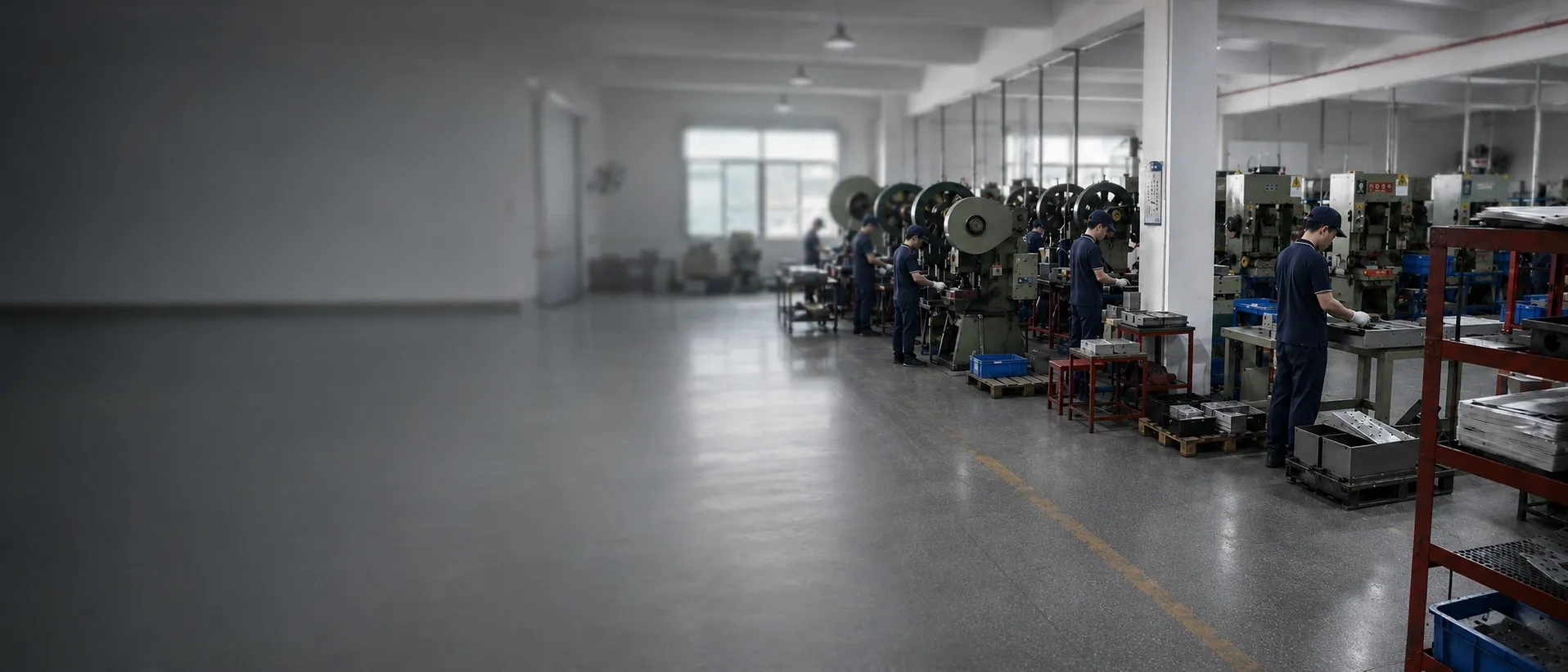
Stamping dies are cut in our own wire EDM room. The practical consequence is speed: a tooling revision during sampling does not queue behind an outside die shop's other work, so a design change costs days rather than weeks. Most factories of this size send die cutting out.
What is the minimum wall thickness you can produce?
0.8 mm for lost-wax casting, 0.3 mm for stamping, and 0.5 mm for CNC machining. Below the casting minimum, molten metal fails to fill the cavity reliably and pieces come out with misruns. Designs with very fine elements are often better stamped, machined, or split into components assembled afterwards.
How thick should gold plating be?
It depends on the wear the piece will see, and it must be specified in microns rather than by colour name. Flash plating at 0.05–0.175 µm wears through in weeks. Standard plating at 0.5–1.0 µm lasts months to a couple of years. Heavy plating at 2.5–5 µm lasts several years, and vermeil requires at least 2.5 µm over sterling silver under US FTC rules.
What is the difference between PVD and electroplating?
PVD deposits a ceramic compound — usually titanium nitride and relatives — in a vacuum chamber, bonded at the atomic level and harder than the base metal, lasting years on stainless steel. Electroplating deposits metal from a bath, offers a wider colour range at lower cost, works on substrates PVD cannot handle, and wears through faster at contact points.
Cost
How much does custom jewelry cost per piece?
A unit price is metal weight × metal cost, plus labour per operation, plus plating by surface area and micron thickness, plus finishing, packing and a 3–8% scrap allowance. At 1,000 pieces, a stamped 316L ring with gold PVD is in the region of $0.87–1.71 ex-works and a cast brass pendant with 1 µm gold plating $1.31–2.77. Those are industry-typical ranges, not a quotation for a specific design.
How much does a jewelry mold cost?
A silicone casting mold is roughly $30–80, a vulcanised rubber mold $50–120, a simple steel stamping die $150–500, a progressive die $500–2,000, and a zinc die-casting die $600–2,500. CNC machining needs no tooling at all — only programming and setup, which is why it suits small runs and designs still being revised.
Is mold cost included in the price per piece?
Not here, and it should not be anywhere. Tooling is invoiced as its own one-off line, the buyer owns it, and there is no second charge on a reorder. When a supplier folds tooling into the unit price it is amortised across an assumed quantity — which is why a smaller reorder from that kind of supplier silently costs more per piece with no line item to point at.
Why do two quotations for the same design differ so much?
Almost always because the two assumed different plating thickness, different metal grade or a different scrap allowance, and because one folded tooling into the unit price while the other quoted it separately. Two quotes both described as "18k gold plated" can mean 0.1 µm and 1.0 µm — a tenfold difference in deposited gold. Fix the grade, the microns and the tooling treatment in writing before comparing.
How much does quantity change the unit price?
Metal cost per piece barely moves, because it is set by weight and market price. Labour and setup per piece fall sharply, because the same machine setup, plating bath preparation and first-article inspection are spread across more pieces. The steep part of the curve is roughly between 500 and 2,000 pieces; beyond a few thousand it flattens as metal comes to dominate.
Shipping and logistics
How do you ship jewelry orders?
By air courier for samples and small lots, air freight for mid-size orders, and sea freight where volume and timeline allow. The incoterm is agreed in the quotation, because it determines who carries cost and risk at each stage — an ex-works price and a delivered price for the same order are very different numbers.
Does the price include shipping and duties?
Only if the quotation says so, which is what the incoterm records. Prices quoted ex-works exclude freight, insurance, import duty and customs clearance in the destination country. Ask for the incoterm to be stated explicitly rather than assumed — it is the most common source of a surprise on a first order.
How is jewelry packed for shipment?
Individually bagged, then boxed and cartoned, with anti-tarnish barrier material for unplated silver and copper. Custom retail packaging — pouches, boxes, cards, barcode labels — is quoted as its own line, and on low-cost pieces it can exceed the cost of the piece itself, so it deserves a decision rather than a default.
Can you ship to Amazon FBA or a 3PL directly?
Yes, with the labelling and packing requirements supplied in advance. FBA in particular has specific carton, labelling and polybag rules, and non-compliance means the shipment is rejected at the fulfilment centre. Send the requirements at order stage rather than at packing stage, because some of them affect how pieces are bagged during production.
Compliance and testing
What is the EN 1811 nickel release limit?
Under REACH Annex XVII entry 27, jewelry sold in the EU and UK must release no more than 0.5 µg/cm²/week of nickel in prolonged skin contact, and no more than 0.2 µg/cm²/week for items inserted into pierced ears. Release is measured by EN 1811, after EN 12472 wear-and-corrosion simulation for coated items, and the limit must still hold after two years of normal use.
Which metals pass the EU nickel limit for earrings?
Titanium passes by composition, being nickel-free. 316L stainless steel passes despite containing 10–14% nickel, because the alloy is austenitic and the nickel is locked in the crystal structure. Brass and zinc alloy pass only where the plating barrier layer is specified nickel-free — the industry default barrier is nickel, sitting directly under the surface that touches skin.
What does California Prop 65 require for jewelry?
California's jewelry materials law limits lead to 600 ppm in most materials and 200 ppm in surface coatings, with 100 ppm total lead for children's products under the federal CPSIA and 300 ppm cadmium in children's jewelry. Prop 65 itself sets no composition limit but requires a warning where exposure exceeds the safe-harbour level of 0.5 µg of lead per day.
Do you provide test reports?
Third-party testing is arranged on request. Which standards apply, what the laboratory charges and how long it takes depend on the market, the material and the batch size, so both are confirmed in writing in the quotation rather than quoted generically.
Does one test report cover future orders?
No. A report certifies the batch that was sampled. Plating chemistry, bath age and layer thickness vary between production runs, so a report from an earlier order is evidence of capability rather than proof of compliance for the current one. For regulated markets, agree at quotation stage which batches get tested and who bears the cost.
What inspection standard do you work to?
AQL 2.5 for major defects and 4.0 for minor, under ISO 2859-1 general inspection level II. At 1,000 pieces that is an 80-piece random sample accepting on 5 major defects and rejecting on 6. An inspection report travels with the shipment, and a lot failing against the agreed standard is remade at our cost including freight.
Question not answered here?
The factory is in Qingxi, Dongguan, Guangdong, operating since 2011. Email reaches an engineer rather than a sales inbox.
Ask it directly.
Email support@oemjewelrylab.com or send the design through the quote form — you get a numbered answer, not a brochure.
Sources
Where the standards and legal limits quoted on this page are published. Every figure traceable to one of these can be checked at the issuer rather than taken on our word.
| Designation | Published by | What it specifies |
|---|---|---|
| REACH Annex XVII entry 27 | European Union | Nickel release limits for articles in prolonged skin contact and for pierced-ear posts |
| EN 1811 | CEN | Reference test method for nickel release from articles in contact with the skin · not freely published; the binding limit is in REACH Annex XVII entry 27 |
| California Proposition 65 | California OEHHA | Lead and cadmium exposure warnings for products sold in California |
| CPSIA | US Congress · govinfo | Consumer Product Safety Improvement Act 2008 — total lead limits for children’s products |
| ISO 2859-1 | ISO | Sampling plans indexed by acceptance quality limit (AQL) for lot-by-lot inspection |
| ASTM A276 | ASTM International | Stainless steel bars and shapes — the 316L composition limits |
Every figure on this page traceable to one of these can be checked against the published standard rather than taken on our word.
Get a quote in one working day
Tell us the category, the material and the quantity. You get an itemised price, the tooling cost as its own line, and a lead-time window — not a request to contact us.
- 01Reply within one working day, Guangdong business hours.
- 02Itemised cost sheet — mold quoted separately, not folded into the unit price.
- 03NDA on request before any file is shared.