
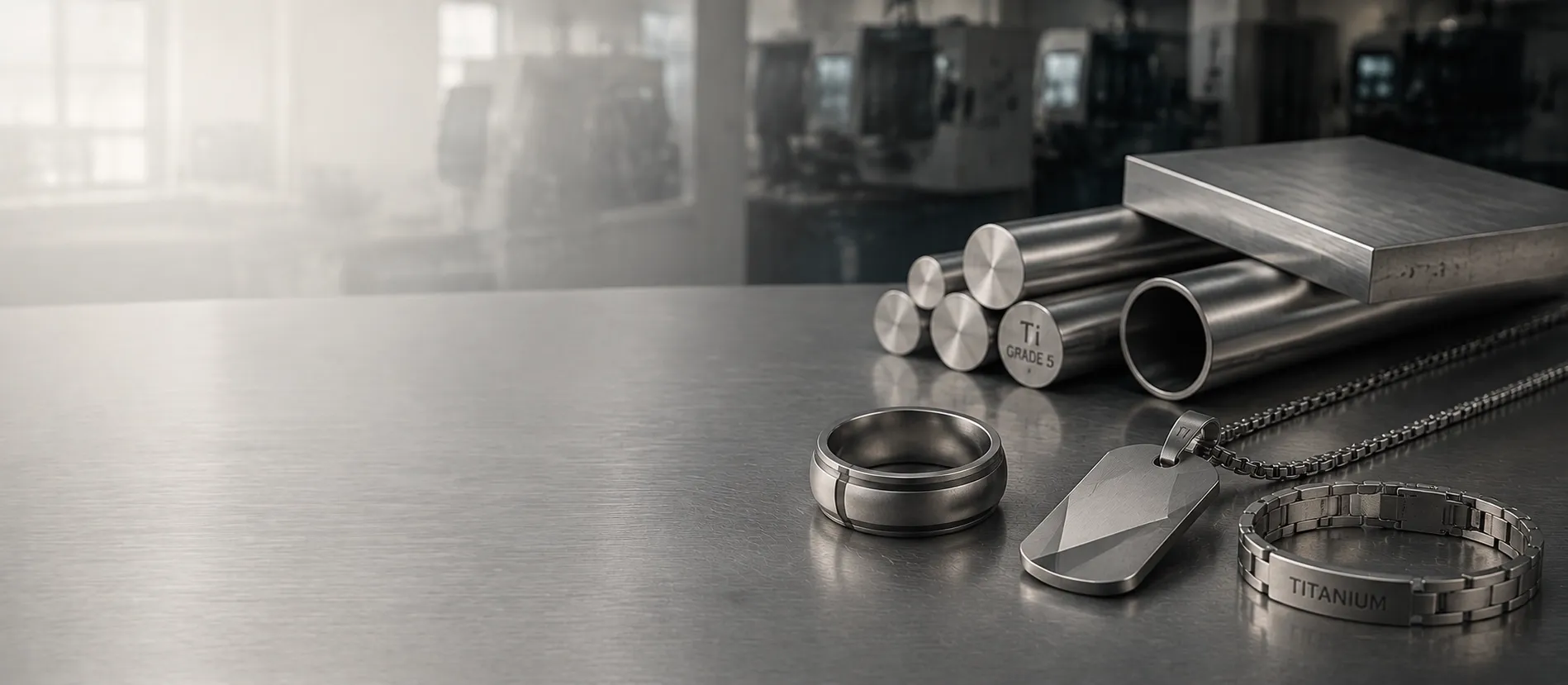
Titanium (Grade 2 / Grade 5)
Titanium (Grade 2 / Grade 5) is specified as ASTM B348 Gr.2 / Gr.5 (Ti-6Al-4V). Hypoallergenic studs and hoops, lightweight rings, implant-grade posts are what it is normally chosen for, and its corrosion behaviour — excellent — passive oxide layer, seawater stable — decides whether it needs a protective finish or can be sold bare.
- Standard
- ASTM B348 Gr.2 / Gr.5 (Ti-6Al-4V)
- Density
- 4.51 g/cm³
- Hardness
- 145 HV
- Corrosion
- Excellent
What Titanium is
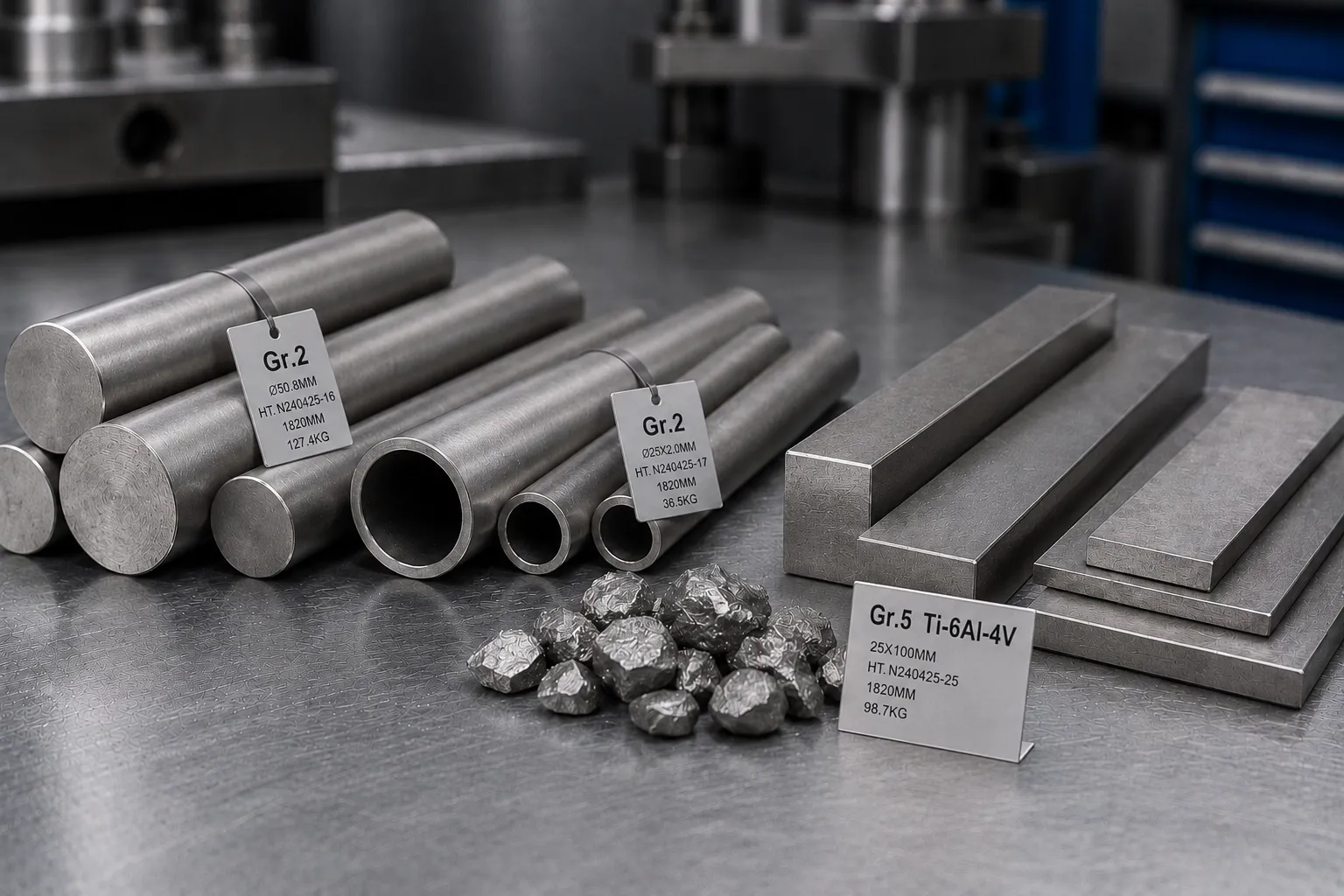
Titanium (Grade 2 / Grade 5) is specified as ASTM B348 Gr.2 / Gr.5 (Ti-6Al-4V), with a composition of Gr.2: Ti ≥ 99.2%. Gr.5: Ti 90%, Al 6%, V 4%. It has a density of 4.51 g/cm³, a typical hardness of 145 HV (Gr.2) · 349 HV (Gr.5), and melts at 1668 °C.
Its defining behaviour for jewelry is corrosion: excellent — passive oxide layer, seawater stable. That single property decides more about a range than appearance does, because plating can make most metals look alike on arrival — what differs is how the piece looks after six months against skin.
Hypoallergenic studs and hoops, lightweight rings, implant-grade posts are the applications this alloy is normally specified for.
Measured properties
Values below are properties of the alloy as defined in ASTM B348 Gr.2 / Gr.5 (Ti-6Al-4V), not claims about this supplier. They can be checked against the standard independently.
| Standard designation | ASTM B348 Gr.2 / Gr.5 (Ti-6Al-4V) |
|---|---|
| Composition | Gr.2: Ti ≥ 99.2%. Gr.5: Ti 90%, Al 6%, V 4% |
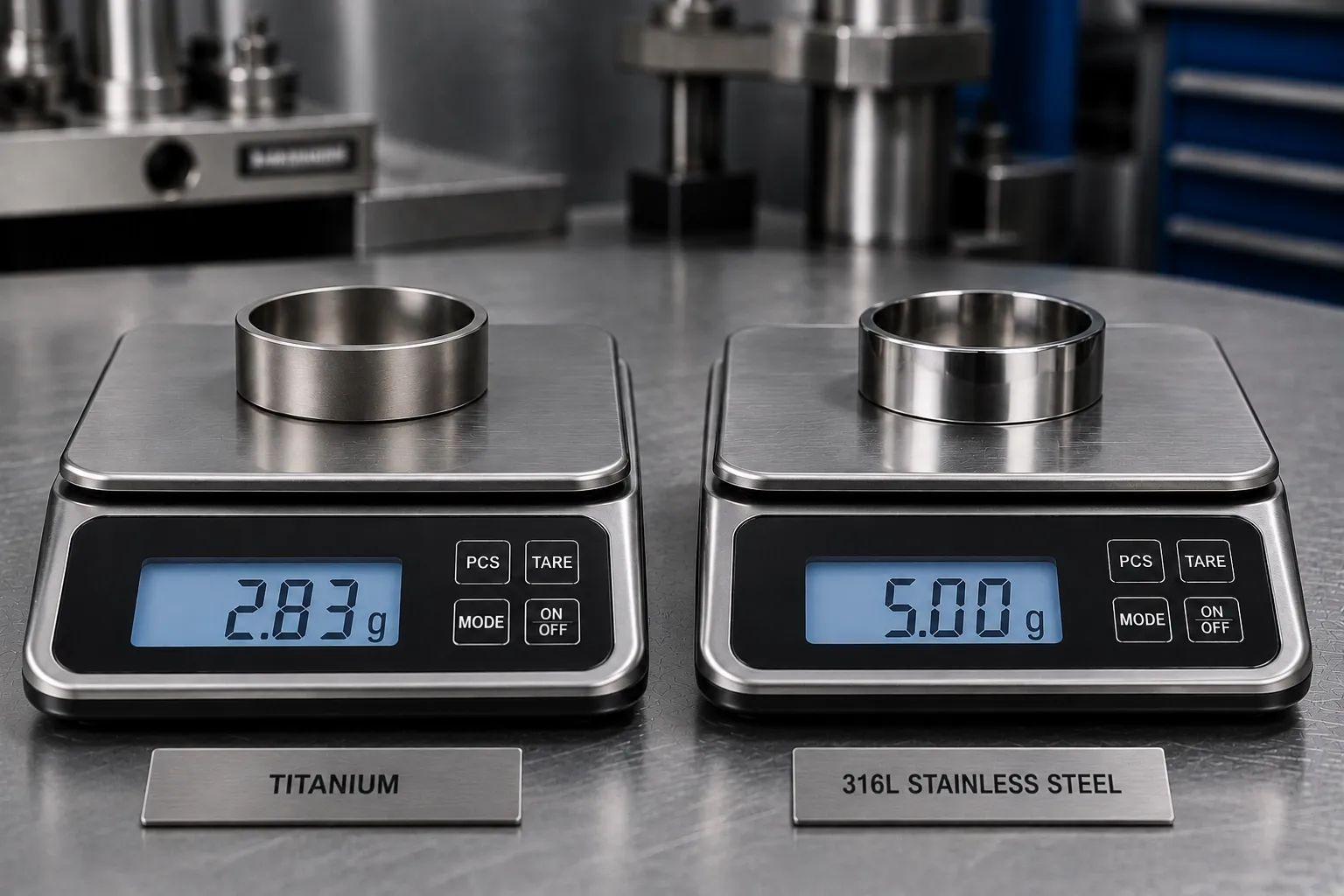
| Density | 4.51 g/cm³ |
| Hardness (Vickers) | 145 HV (Gr.2) · 349 HV (Gr.5) |
| Melting point | 1668 °C |
| Corrosion resistance | Excellent — passive oxide layer, seawater stable |
| Plating & finishing | Anodising (colour by oxide thickness, no pigment), PVD |
| Indicative raw stock | $30–60/kg · Low volatility |
| Nickel-safe for skin contact | Yes — passes EN 1811 by composition or alloy behaviour |
Hardness is typical for the annealed or as-supplied condition and rises with cold work. Raw stock cost is an indicative market range, not a quotation.
Nickel release and skin contact
Nickel-free by composition. The default choice for pierced ears and for buyers with a diagnosed nickel allergy.
| Application | Limit under REACH Annex XVII entry 27 | Test method | Titanium |
|---|---|---|---|
| Pierced ears, during epithelialisation | 0.2 µg/cm²/week | EN 1811 | Passes |
| Prolonged skin contact (rings, chains, bracelets) | 0.5 µg/cm²/week | EN 1811 after EN 12472 | Passes |
| Coated items | Limit must hold for 2 years of normal use | EN 12472 wear simulation, then EN 1811 | Passes |
Limits are set by REACH Annex XVII entry 27 and are independent of supplier. A batch-specific report is what proves a particular production run complies — see EN 1811 compliance.
Finishing options
Anodising (colour by oxide thickness, no pigment), PVD.
Specify plating in microns, never by colour name. Two quotations both described as "18k gold plated" can differ tenfold in deposited thickness — 0.1 µm wears through within weeks of daily wear, 2.5 µm lasts years — and the cheaper quote is usually the one that assumed less.
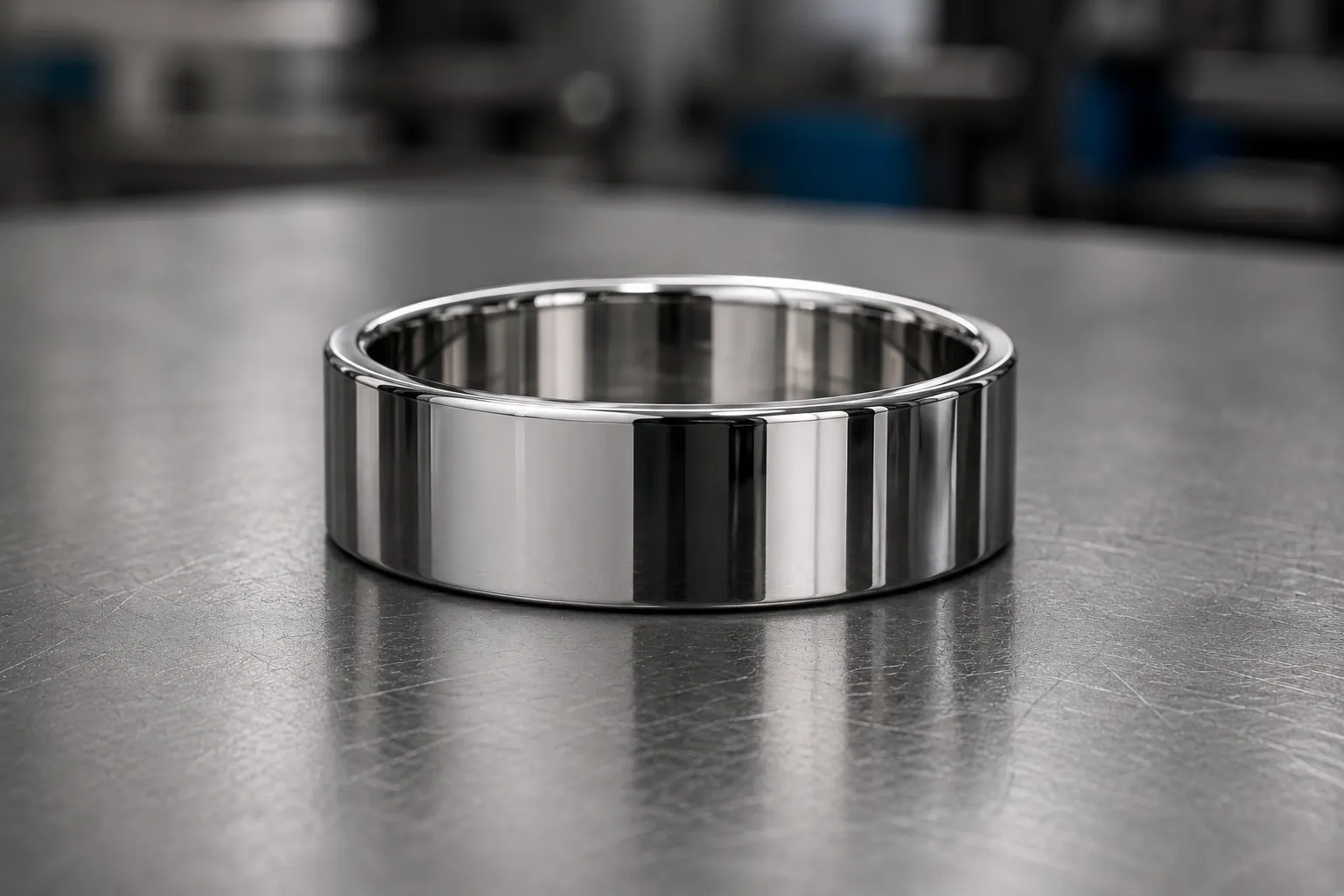
01Mirror polishMechanical — no coating to fail 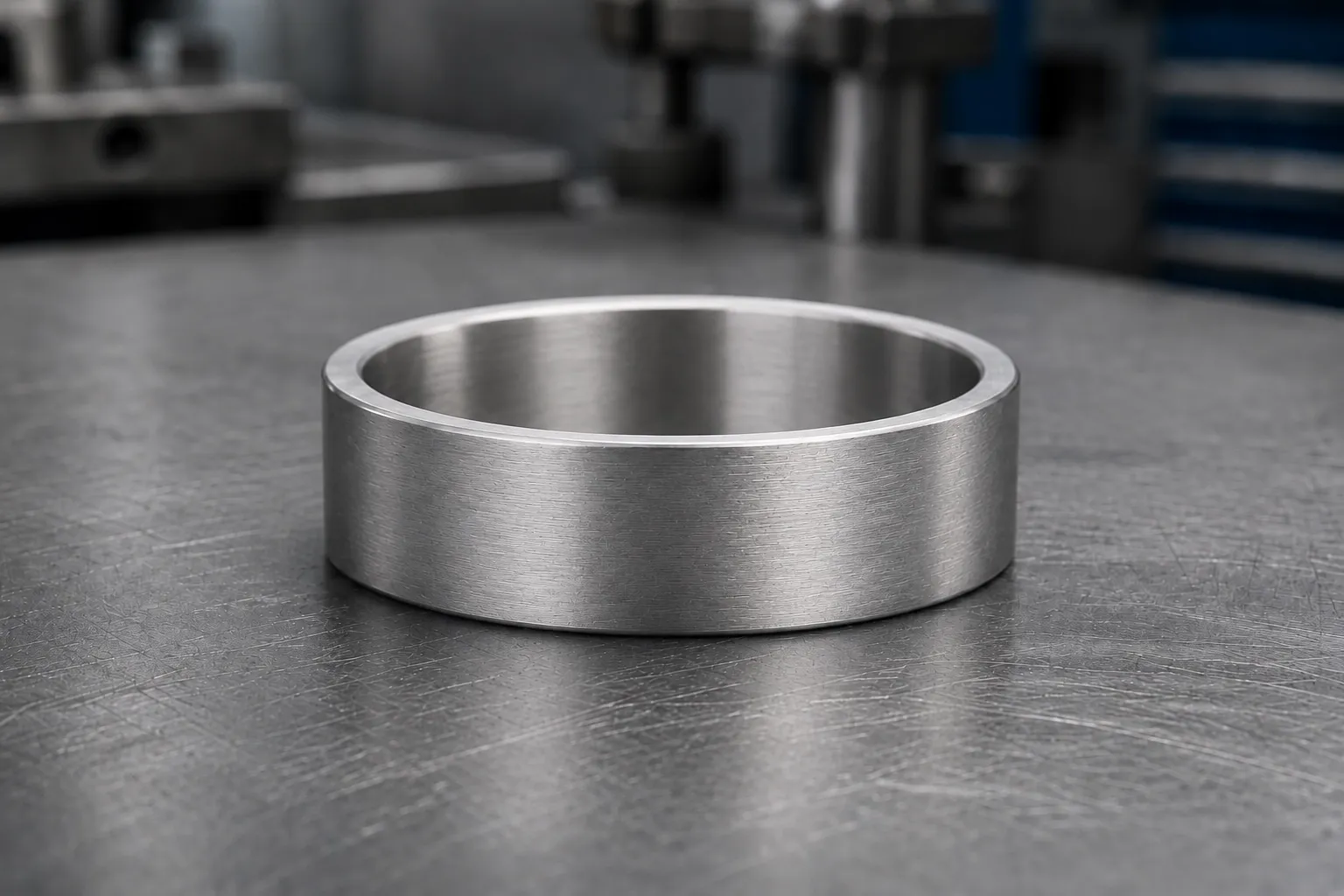
02Satin / brushedMechanical — hides wear scratches 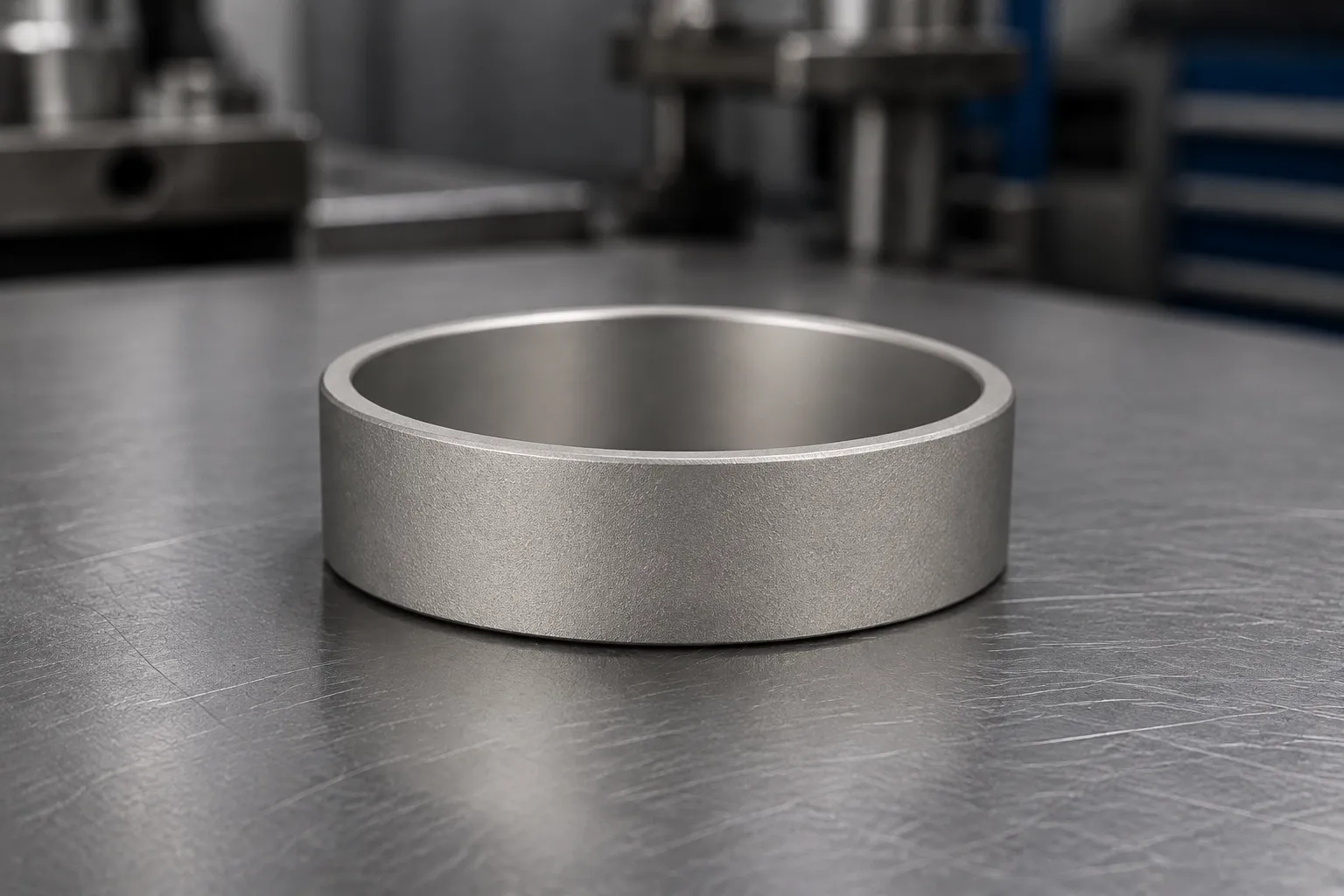
03Bead blastMechanical — matte, uniform 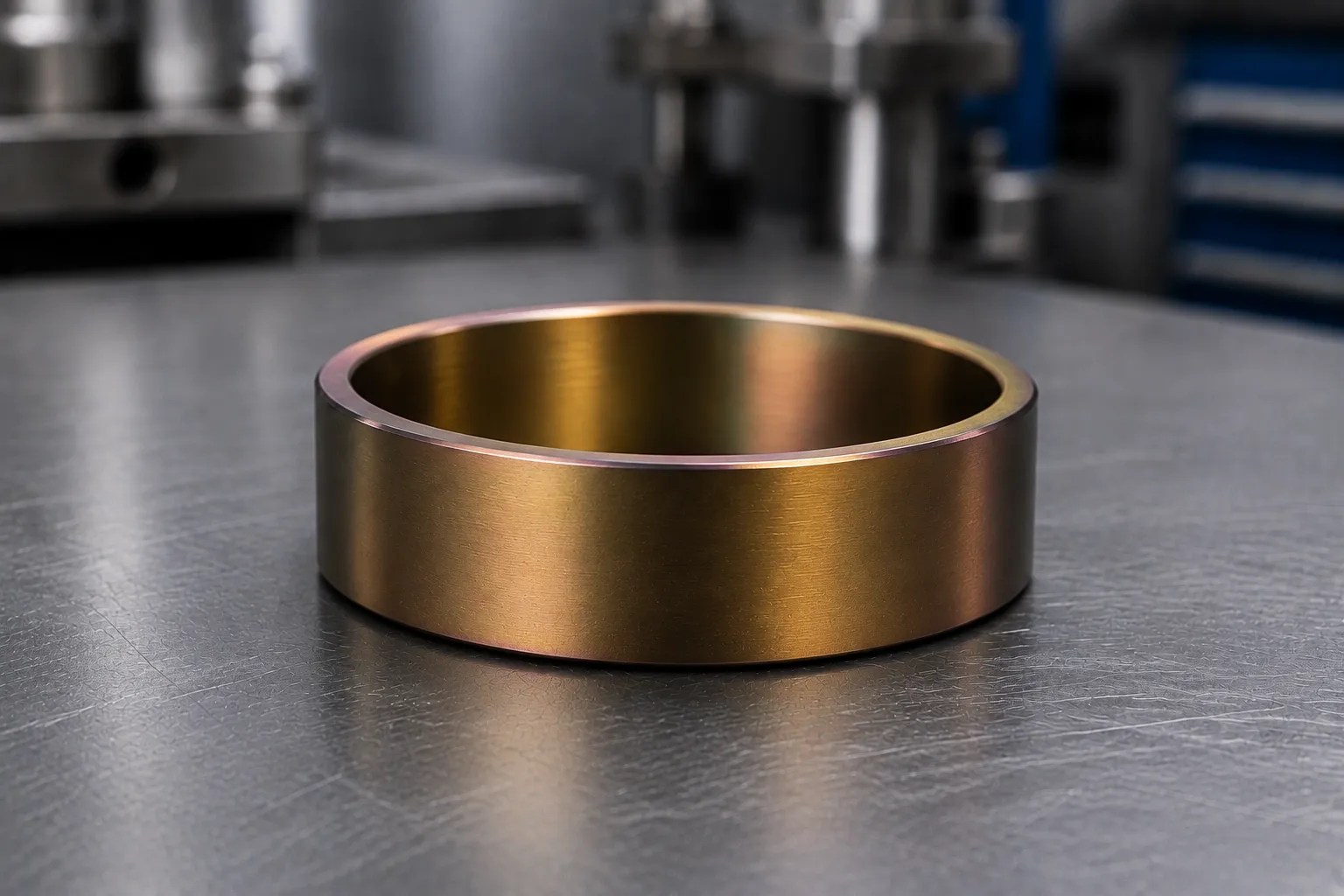
04Anodised bronzeOxide thickness, no pigment 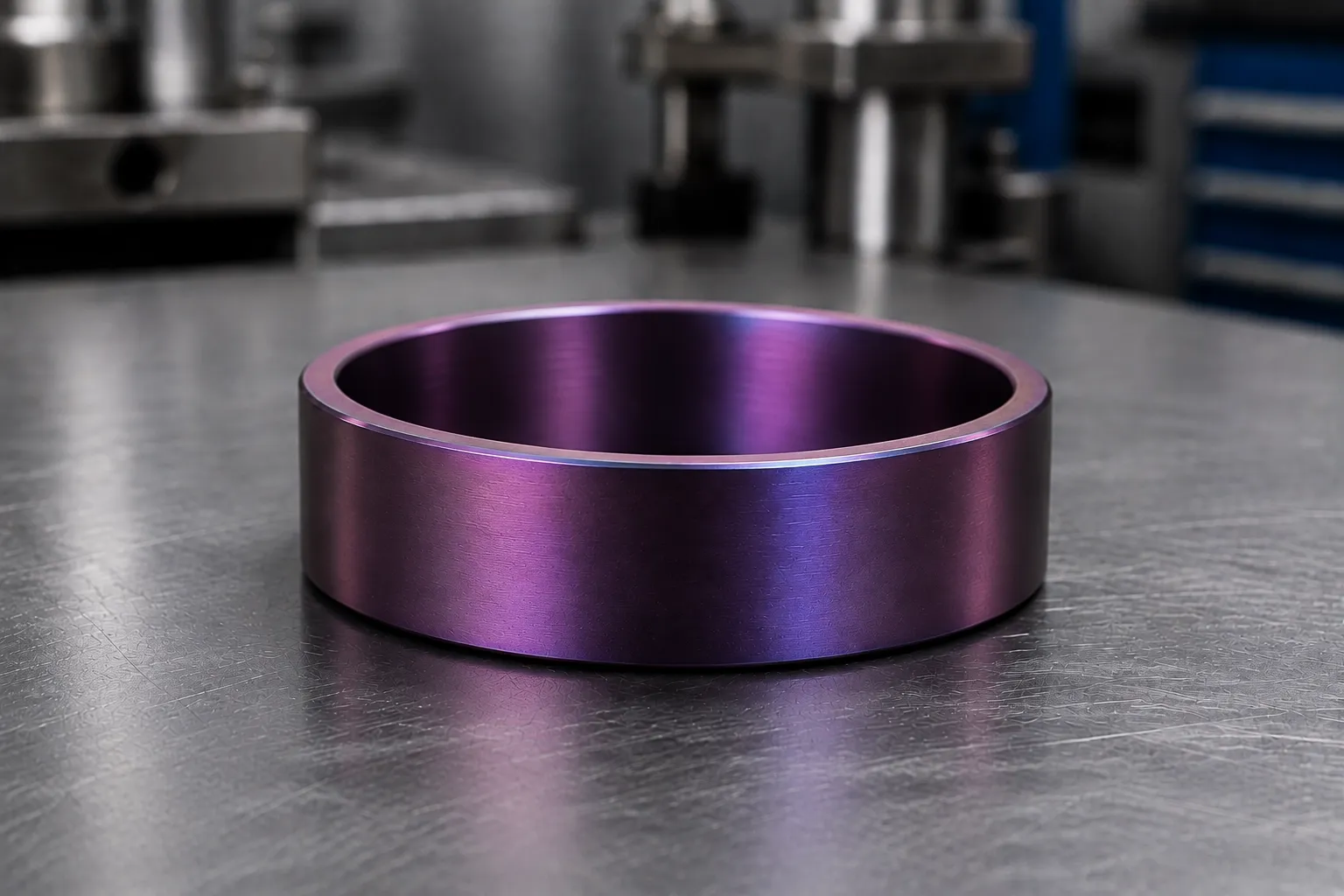
05Anodised purpleOxide thickness, no pigment 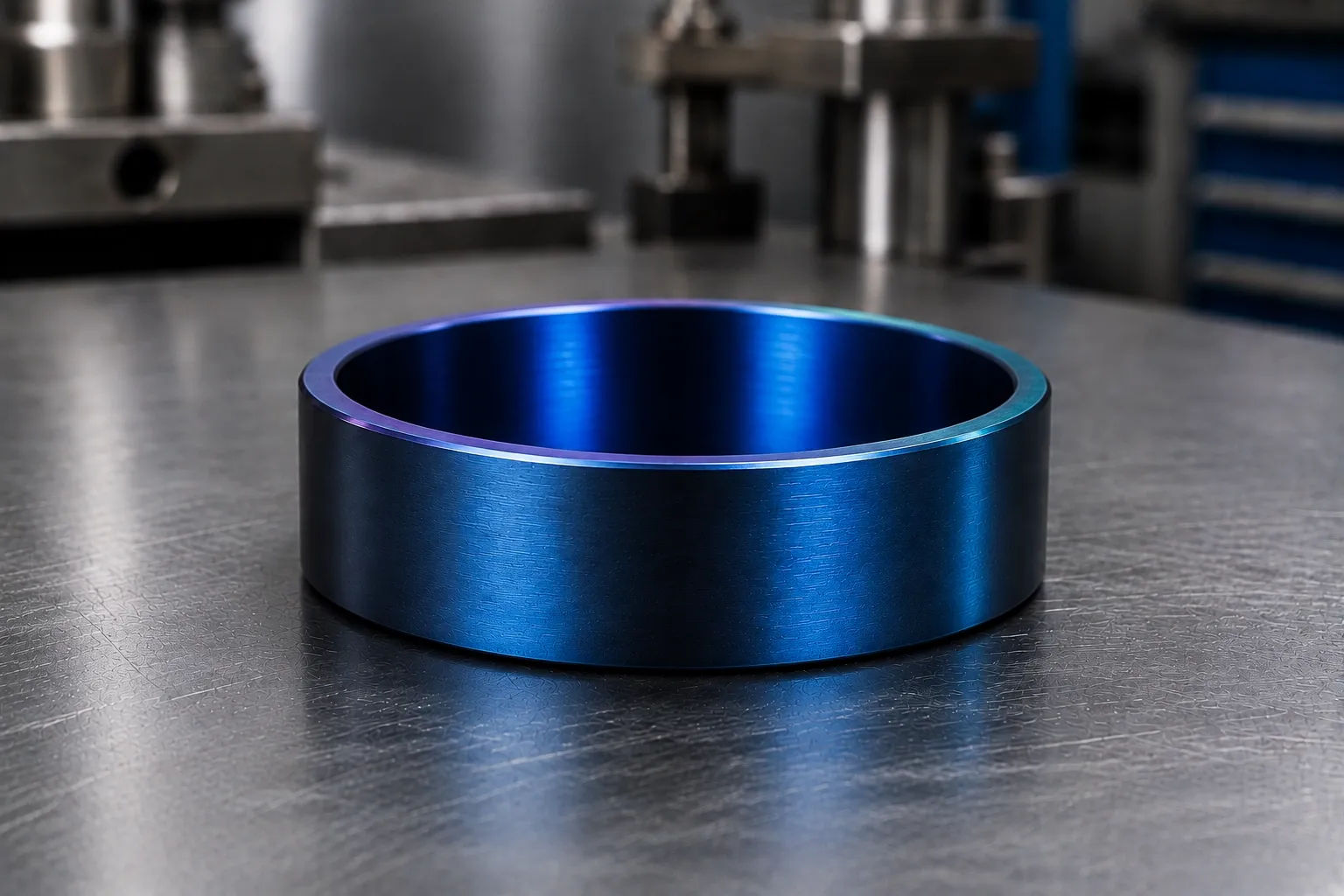
06Anodised blueOxide thickness, no pigment 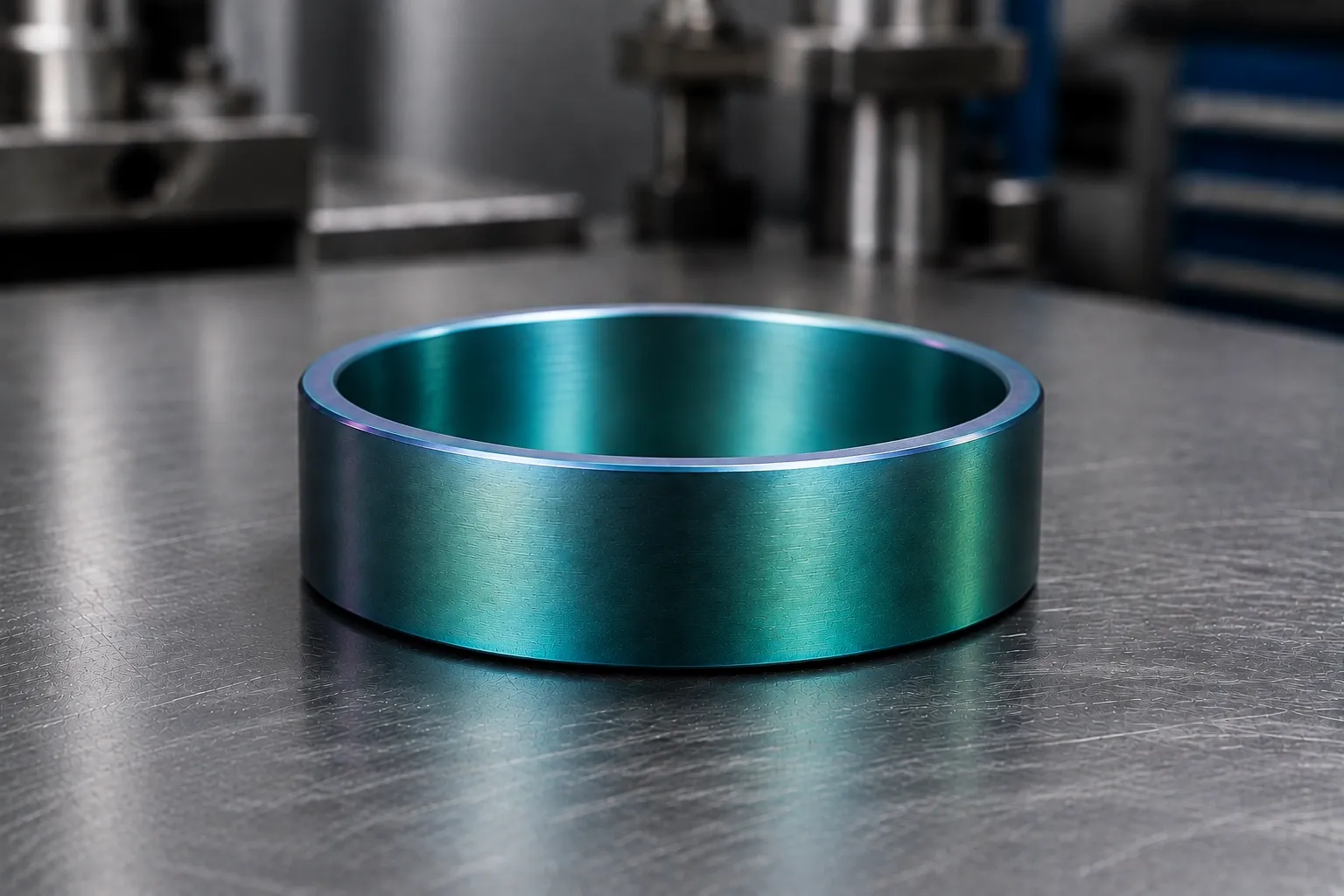
07Anodised tealOxide thickness, no pigment 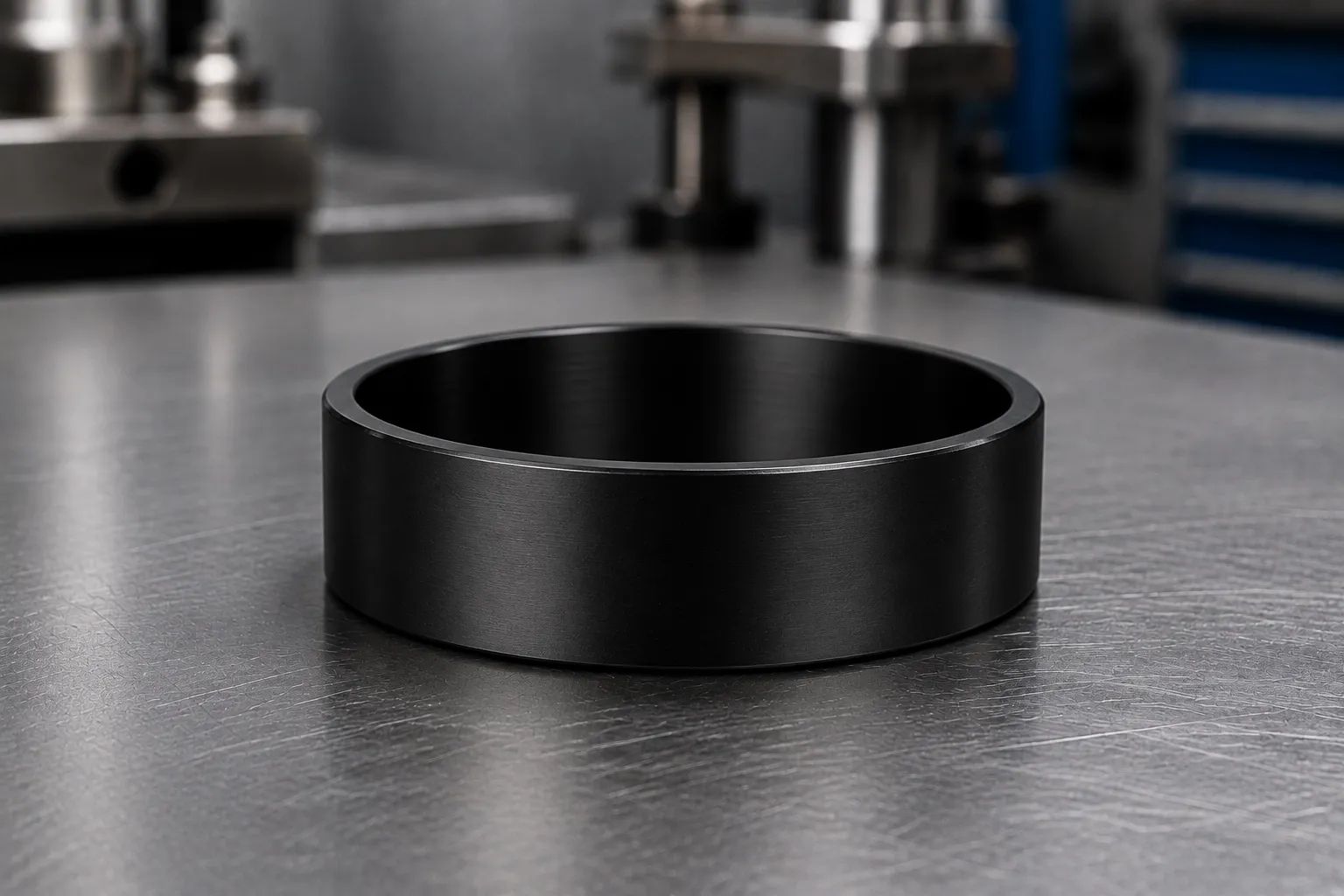
08Black PVDTitanium-nitride family
Swipe · 8 styles
Not sure which finish this material needs?
Send the design and the market you ship to. We reply with the finish options priced side by side.
Which categories suit Titanium
Ranked by how well this alloy performs in each product shape, not by how often it is used.
| Category | Why it suits, or does not |
|---|---|
| Rings | Lightest, nickel-free — but cannot be resized after production |
| Necklaces & Pendants | Lightweight pendants for sensitive wearers |
| Earrings | Nickel-free by composition — the default specification for posts |
| Bracelets & Bangles | Half the weight of steel at the same size |
Compared with the alternatives
Composition, density, hardness and corrosion behaviour are published properties of each alloy. They do not vary from supplier to supplier, which makes them the only honest basis for choosing between these six metals.
| Material | Standard | Density g/cm³ | Hardness HV | Corrosion | Raw cost | Nickel-safe bare |
|---|---|---|---|---|---|---|
| Titanium (Grade 2 / Grade 5) | ASTM B348 Gr.2 / Gr.5 (Ti-6Al-4V) | 4.51 | 145 HV | Excellent | $$$$$ | Yes |
| Stainless steel 316L | ASTM A276 / EN 1.4404 | 7.98 | 150–190 HV | Excellent | $$$$$ | Yes |
| Sterling silver 925 | ASTM B700 / EN ISO 9202 (925 fineness) | 10.36 | 60–80 HV | Tarnishes | $$$$$ | Yes |
| Brass (C2600 / C3604) | ASTM B36 / EN CW508L | 8.47 | 95–130 HV | Tarnishes and patinas | $$$$$ | Plating-dependent |
| Zinc alloy (Zamak 3 / 5) | ASTM B86 (Zamak 3 / Zamak 5) | 6.6 | 80–100 HV | Poor bare | $$$$$ | Plating-dependent |
| Copper & bronze | ASTM B152 (Cu) / ASTM B505 (bronze) | 8.96 (Cu) · 8.8 (bronze) | 50–100 HV | Patinas | $$$$$ | Plating-dependent |
Raw cost is a relative ranking of metal stock. Metal is one line in a unit price — see the manufacturing cost breakdown.
What to watch out for
Titanium — buyer questions
Each answer stands alone and can be read without the rest of this page.
Is Titanium jewelry hypoallergenic?
Nickel-free by composition. The default choice for pierced ears and for buyers with a diagnosed nickel allergy. The EU limits nickel release rather than nickel content: 0.5 µg/cm²/week for prolonged skin contact and 0.2 µg/cm²/week for pierced-ear items, both measured to EN 1811 under REACH Annex XVII entry 27.
What is Titanium actually made of?
Titanium (Grade 2 / Grade 5) is specified as ASTM B348 Gr.2 / Gr.5 (Ti-6Al-4V), with a composition of Gr.2: Ti ≥ 99.2%. Gr.5: Ti 90%, Al 6%, V 4%. Its density is 4.51 g/cm³ and typical hardness 145 HV (Gr.2) · 349 HV (Gr.5), melting at 1668 °C. Those are properties of the alloy defined in the standard, so they can be checked independently of any supplier.
Does Titanium tarnish or corrode?
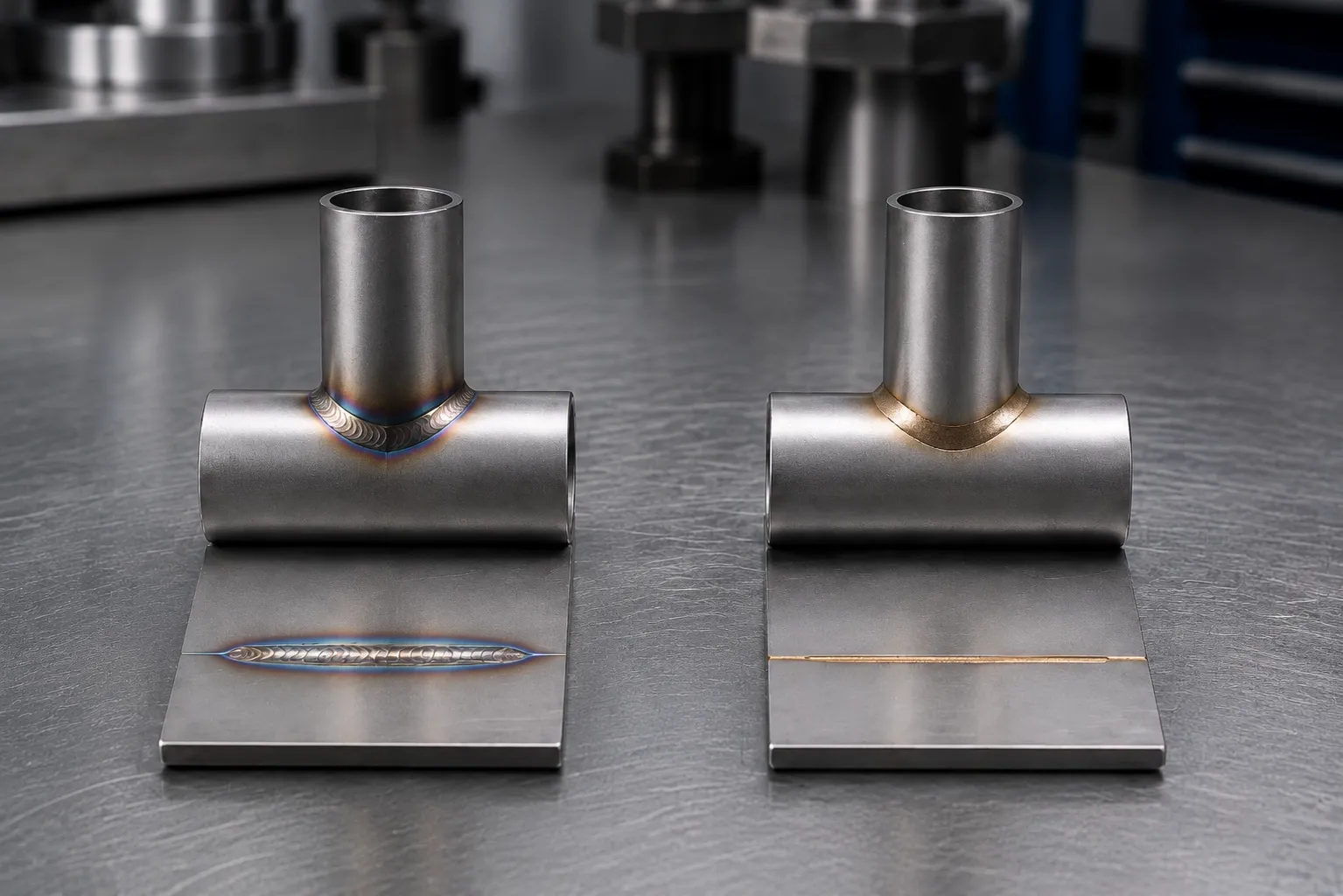
Corrosion behaviour: excellent — passive oxide layer, seawater stable. Cannot be soldered with conventional jewelry solder and work-hardens quickly. Sizing a titanium ring after production is not possible — size must be right at order.
What finishes can be applied to Titanium?
Anodising (colour by oxide thickness, no pigment), PVD. Plating must always be specified in microns rather than by colour name — "18k gold plated" describes a colour and covers everything from 0.1 µm, which wears through in weeks, to 2.5 µm, which lasts years.
How much does Titanium cost as raw stock?
Indicative raw-stock cost is $30–60 per kilogram, priced against stock list, with low volatility. Metal is only one line in a unit price — labour, plating, finishing, packing and a scrap allowance make up the rest, and on lighter pieces they dominate.
What should I use Titanium for?
Hypoallergenic studs and hoops, lightweight rings, implant-grade posts. Cannot be soldered with conventional jewelry solder and work-hardens quickly. Sizing a titanium ring after production is not possible — size must be right at order.
Not answered here? All buyer questions →
Quote a Titanium run
Send the category, the finish and the quantity. You get an itemised unit price, the tooling cost as its own line, and the compliance route for your market. Production runs on our own floor in Qingxi, Dongguan, Guangdong.
- 01Reply within one working day, Guangdong business hours.
- 02Itemised cost sheet — mold quoted separately, not folded into the unit price.
- 03NDA on request before any file is shared.